
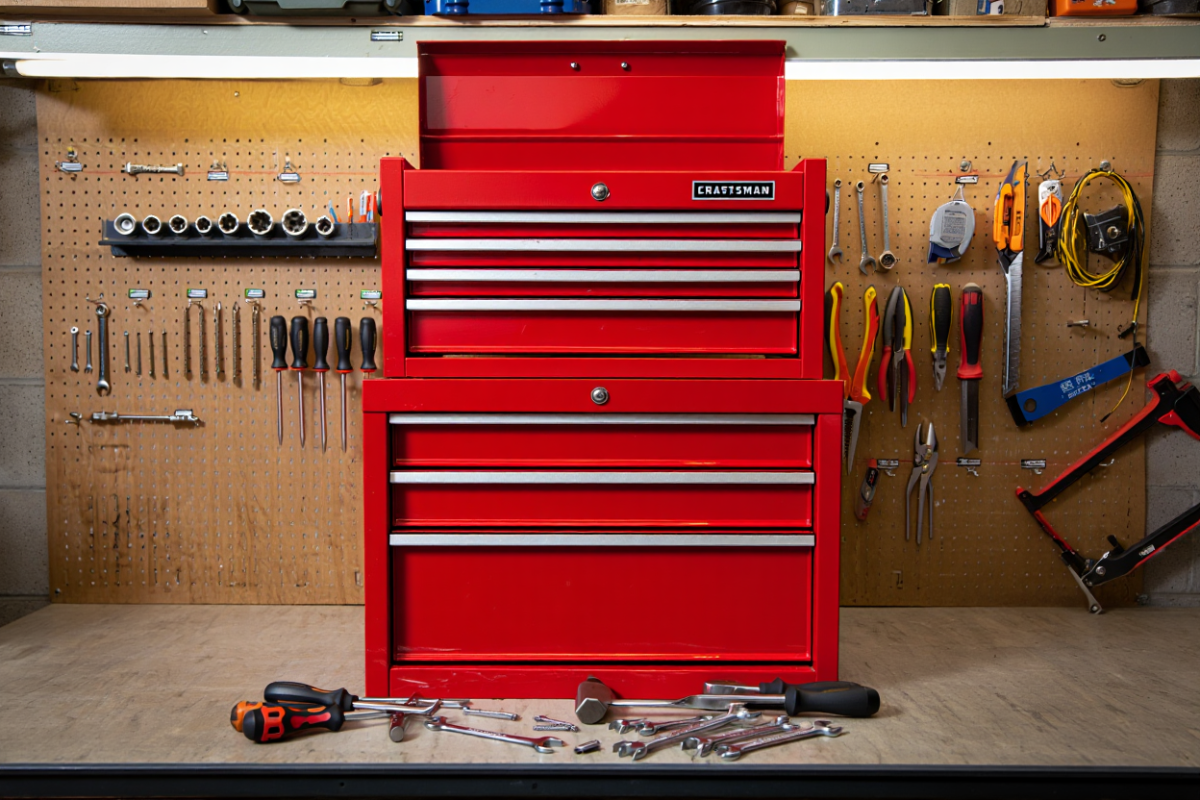
A Craftsman tool box is more than a storage container – it’s the cornerstone of an organized, efficient garage or workshop. Whether you’re a DIY enthusiast or a professional mechanic, having a sturdy toolbox keeps your tools secure, accessible, and in good shape. In this guide, we explore why Craftsman chests and carts are trusted storage solutions (Craftsman has been a trusted brand since 1927), the types available (from massive rolling cabinets to portable cases), key features to look for, and tips on choosing the perfect model. With these insights, you’ll find a Craftsman tool box that fits your garage and keeps every tool right where it belongs.
Why Choose a Craftsman Tool Box?
-
Durable Construction: Many Craftsman chests use heavy-gauge steel and sturdy welds. For example, the S2000 Series 41″ cabinet has a solid steel frame that supports over 1,500 lbs. This rugged build handles far more than most home workshops require.
-
Robust Features: Craftsman uses high-quality components. Most models have 100-lb ball-bearing drawer slides, thick latch bolts, reinforced edges, and lockable casters with brakes. Soft-close drawers are common too. One reviewer noted their Craftsman chest was “comfortable, reliable” even under heavy use, attesting to its solidity.
-
Lifetime Warranty: Craftsman tool boxes often come with a lifetime warranty (with proof of purchase). This means if any part breaks, Craftsman will replace it free of charge, giving confidence that your box is built to last.
-
Excellent Value: You get exceptional storage for the price. As one owner put it, a Craftsman box “is a solid product for much less” than comparable modular systems. For example, a 26″ 5-drawer Craftsman cabinet with ball-bearing slides often sells for about $269 at Lowe’s (regular $329), which is a bargain given its capacity and build.
-
Trusted Brand: Craftsman has a decades-long reputation among mechanics and DIYers. It may not be as flashy as some elite brands, but reviewers highlight that a Craftsman chest “wins” on storage capacity and cost-efficiency. Once users experience its durability, they rarely switch brands.
Types of Craftsman Tool Boxes
Craftsman offers a wide variety of tool storage solutions to suit every need:
-
Rolling Tool Cabinets: Large steel cabinets on caster wheels with multiple drawers. For example, the Craftsman S2000 41″ 10-drawer cabinet can handle 1,500 lbs and provides over 14,000 cubic inches of space. These cabinets maximize storage and allow you to roll your entire tool collection to the work area.
-
Tool Chest Combos: Two-piece stacks (a bottom rolling cabinet plus a top chest). These save floor space by stacking vertically. Car and Driver notes that combos “stack vertically, which is ideal when floor area is limited”. Craftsman sells combos (e.g. 26″ or 36″ wide) where the top chest adds more drawers and a hinged lid on top of the wheeled base.
-
Toolbox Carts/Mobile Workstations: Smaller rolling carts with a few drawers and often a flat top shelf or work surface. They typically have 2–4 drawers. A toolbox cart gives portability in a small footprint. Car and Driver calls them perfect for rolling your essential tools to where you’re working. For example, a 26″ Craftsman 3-drawer cart is ideal for tight garages or as a secondary tool station.
-
Portable Tool Boxes: Handheld cases (plastic or metal) for taking tools on-the-go. Craftsman’s VERSASTACK system includes 17″ and 20″ plastic portable boxes with handles. These are lightweight and weather-resistant. The 20″ Versastack box even has 7″ wheels and heavy-duty latches, allowing it to roll and lock other Versastack units on top. Such portable boxes are perfect for plumbers, electricians, or anyone who carries their tools between jobs.
-
Versastack Stackable System: A modular red plastic system of stackable storage. The 20″ rolling Versastack toolbox (mentioned above) can lock multiple units together. There are also small parts organizers (e.g. a 10-compartment hardware box) that clip onto the Versastack base. This system is ideal for technicians who need a configurable kit – you can build a stack tailored to each project.
-
Organizer Boxes and Sets: Craftsman sells accessory organizers, like compartmentalized boxes for screws/bolts, and sets of trays. The Versastack 10-compartment organizer is one example. Some retailers bundle tool boxes with organizers or trays to form a complete kit. These help sort small items inside your toolbox, preventing clutter.
-
Vintage Craftsman Tool Boxes: Older Sears-era Craftsman chests (1970s–1980s) were all steel with simple friction slides and locks. While not sold new today, these “vintage” Craftsman boxes are beloved by collectors. They are very overbuilt and often found on resale markets. Some DIYers restore these classic red-and-grey chests for a nostalgic garage look.
Key Features to Look For
When picking a Craftsman toolbox, focus on these critical features:
-
Material & Build: Most Craftsman cabinets use heavy-gauge steel. The S2000 Series, for example, has a solid welded steel frame. (Versastack cases use reinforced plastic for a lighter option.) A thick steel cabinet will outlast a flimsy one.
-
Weight Capacity: Check the load ratings. High-end Craftsman chests list up to 1,500 lbs total. Individual drawer slides often carry 75–100 lbs each. Always note these limits and never overload a drawer. Storing heavier tools in lower drawers helps maintain balance and safety.
-
Drawer Slides: Look for ball-bearing drawer slides, which open smoothly under load. These are standard on most Craftsman rolling cabinets. Avoid boxes with cheap roller or friction slides if you plan to store heavy tools – they will wear out faster. Smooth ball-bearing slides also prevent drawers from slamming shut.
-
Mobility – Wheels & Handles: Examine the wheels (casters) and handles. Robust cabinets use 7–8″ locking casters that support weight and lock to keep the box stationary. Handles should be solidly attached. Good mobility features let you move your tools easily without fear of the box drifting.
-
Security Features: Many Craftsman boxes include keyed locks or padlock hasps. For example, S2000 cabinets have an internal keyed lock system on all drawers. This keeps tools safe from theft or curious hands. If security is important, choose a model that emphasizes a built-in lock.
-
Drawer Configuration: Count drawers and note their depths. Craftsman offers various layouts – a common one is multiple shallow top drawers and deeper bottom drawers. A mixed layout is versatile. Also check for liners or trays; many Craftsman boxes include rubber drawer liners to protect tools and reduce noise.
-
Total Storage Volume: Total cubic inches (or liters) tells you capacity. For instance, a 41″ S2000 chest has over 14,000 cu. in.. Don’t just compare outside dimensions; a box with more drawers or taller drawers may hold more than one of the same width with fewer drawers.
-
Finish and Durability: Craftsman cabinets are usually powder-coated red, which resists chips and rust. Ensure the finish is smooth and even. Powder coat plus regular cleaning will keep the metal from corroding.
-
Ease of Assembly: Check if the box ships fully assembled or requires some assembly (like adding wheels, handles, or caster plates). Craftsman carts and cabinets typically need minimal assembly with basic tools. Look for models where Lowe’s or other delivery includes help if needed.
Benefits of a Reliable Toolbox
Investing in a quality Craftsman tool box brings many advantages:
-
Superior Organization: With multiple drawers and compartments, every tool has a home. No more rummaging through piles – you can sort wrenches, sockets, and bits into dedicated spaces. This keeps the garage neat and your tools easy to find.
-
Increased Efficiency: An organized toolbox speeds up your work. Instead of running back and forth, you can roll your entire tool chest to the task. As Car and Driver notes, wheeled toolboxes let you “roll your essential tools” right to the work area. Spending less time searching means projects get done faster.
-
Tool Protection: A sturdy chest shields tools from dust, moisture, and accidental drops. Drawers often include liners that cushion tools. Locking your toolbox prevents theft or misuse. By keeping tools in a proper box, you extend their life – sharp bits stay sharp and metal tools stay rust-free.
-
Portability (When Needed): A rolling Craftsman cabinet or portable box means your tools come to you. If you work on different parts of a vehicle or move around a large garage, simply wheel your toolbox along. Portable cases (or Versastack modules) can even travel to outside jobs. This convenience is a huge benefit over fixed bench storage.
-
Space Efficiency: Tall chests and combos maximize vertical space, freeing up floor area. For example, a single 5-drawer Craftsman cart can replace what might otherwise require several stacked plastic bins. Reviewers point out that the Craftsman roller cabinet “wins” on storage capacity while occupying minimal floor space.
-
Long-Term Reliability: Craftsman tool boxes are built like tanks. Many owners report their Craftsman chest still works smoothly decades later. The brand’s quality and warranty mean you can rely on it year after year. A well-maintained Craftsman box becomes a lifetime investment for your garage.
How to Choose the Right Craftsman Tool Box
Follow these steps to match a Craftsman toolbox to your needs:
-
Inventory Your Tools: Count and categorize your tools (hand tools, power tools, fasteners, etc.). If you have hundreds of items, aim for a larger cabinet with many drawers. A small set (socket set + wrenches) might fit a compact cart or portable box.
-
Match Size to Space: Compare box dimensions and storage volume (cubic inches) to your garage space. Tall 6–10 drawer cabinets offer maximum room, but need more floor area. A 3–4 drawer rolling cart or a wide low-profile chest might fit better in a cramped workshop. Check if the toolbox will fit under shelving or in a corner.
-
Consider Mobility: Decide how often you’ll move the box. If it mostly stays put, wheels are optional. If you move around a lot, choose a wheeled cabinet with locking casters. For taking tools offsite, pick a portable box or Versastack unit – they’re much lighter. For mixed use, some people keep a big Craftsman chest in their home shop and a smaller portable case for outside jobs.
-
Material Preference: Choose between steel and plastic based on your work. Heavy-duty auto or metalworking favors steel cabinets (like Craftsman’s S2000, rated 1500 lbs). Lighter work (or outdoor use) can use plastic storage (such as Versastack) for easy carrying. Remember, steel is far tougher, while plastic is less strong but more portable.
-
Set Your Budget: Craftsman tool boxes range from a few hundred dollars (for small carts) to over a thousand (for large combos). Decide what you can spend. Look for sales or bundles – for example, Lowe’s frequently discounts the 26″ 5-drawer chest around $269. Factor in the warranty: paying a bit more upfront can be worth it for a lifetime guarantee.
-
Read Reviews: Check user and expert reviews for any specific model. Real-world feedback can alert you to quirks (e.g. known assembly issues or quality variations). For instance, one review highlighted the Craftsman 26″ cabinet as one of the best values under $300. Look for comments about build quality, ease of use, and any common defects.
Maintenance and Care Tips
A little upkeep keeps your Craftsman toolbox running smoothly:
-
Regular Cleaning: Wipe out drawers and the cabinet interior to remove dirt and debris. Keeping it clean prevents grit from wearing out slides and blocks moisture.
-
Lubricate Slides: Spray a light lubricant (like silicone spray) on drawer slides and hinges periodically. This ensures the drawers glide smoothly even under heavy loads.
-
Avoid Overloading: Always respect the weight limits. Never exceed the rated capacity (e.g. 1,500 lbs total on a Craftsman cabinet, and typically 100 lbs per drawer). Store the heaviest tools in lower drawers to reduce strain and prevent tipping.
-
Protect from Moisture: Keep the toolbox in a dry area. If your garage is humid, consider putting desiccant packs inside or applying rust inhibitor spray on metal surfaces. Wipe up any spilled liquids (like oil or cleaners) immediately. Craftsman’s powder-coated finish resists rust, but standing water or salt can still cause corrosion.
-
Inspect Hardware: Periodically check that casters, handles, and hinges are tight. Tighten any loose bolts. Replace any cracked wheels or broken sliders right away. Small issues left unattended can become big problems.
-
Reorganize Periodically: Occasionally empty and reorganize your toolbox. Remove tools you no longer use and clean out any dust. A well-organized toolbox not only works better but also makes it easier to notice wear or damage (for example, if a drawer liner is worn out or a slide is starting to stick).
With these simple steps, your Craftsman toolbox will stay reliable for years. Many users report their Craftsman cabinets running like new even after decades, thanks to minimal care.
Where to Buy and How Much
Craftsman tool boxes are widely available at major retailers:
-
Lowe’s: The primary retailer for Craftsman storage. Lowe’s carries the full Craftsman lineup (from small carts to 10-drawer cabinets). Look for Lowe’s promotions and bundles. For example, Lowe’s often sells the 26″ 5-drawer Craftsman cabinet for around $269 with free delivery.
-
Home Depot: Offers select Craftsman chests and carts (especially under Craftsman Professional or other lines). Home Depot also price-matches, so you can often get a Lowe’s deal at HD. Not every model is carried, but it’s worth checking their stock.
-
Ace Hardware: Stocks smaller Craftsman items like portable cases and rolling carts. Ace’s strength is for quick local pickup and occasional coupons. If you need something fast and small, Ace can be a good option.
-
Online: Amazon and the official Craftsman website (which links to Lowe’s) carry many models. Amazon Prime delivery is convenient for medium and small boxes, and sometimes they have sales too.
-
Used/Vintage: For deals on older models, check eBay, Craigslist or Facebook Marketplace. You can find vintage Craftsman Industrial chests (often made in the USA) at low cost. Just inspect carefully—used chests may need touch-up or new slides, and warranties won’t apply. Still, a used Craftsman can be a bargain if it’s in good shape.
Prices vary widely: a basic 3-drawer cart can be under $200, while a full 10-drawer setup may cost $800–$1000 or more. Always compare models: for instance, an expert noted that the Craftsman 26″ cabinet at Lowe’s was “the best value for under $300”. Keep an eye on major sale events (Black Friday, end-of-season) for extra savings.
Conclusion
A Craftsman tool box offers a blend of durability, capacity, and value that makes it a top choice for garage organization. Built with heavy steel, smooth ball-bearing drawers, lockable wheels, and thoughtful design, Craftsman cabinets and chests are workhorse storage solutions. Reviewers consistently find them “comfortable, reliable, and convenient to use” for the price. Whether you need a massive 10-drawer workstation, a mid-size chest-and-cabinet combo, or a portable case for weekend projects, Craftsman’s range covers every need.
Check Lowe’s or Home Depot for the latest Craftsman models. Invest in the size and features that fit your workshop, and you’ll enjoy a cleaner, more efficient garage. Share this guide or leave a comment with your own tips – your insights help others build the ultimate garage setup!
Frequently Asked Questions
Q: What makes Craftsman tool boxes reliable?
A: Craftsman boxes use heavy materials and smart design. Thick welded steel frames and high-quality drawer slides mean they stand up to heavy use. For example, ball-bearing slides in many models hold ~100 lbs, and large cabinets can support 1,500+ lbs. Built-in locks and sturdy casters add security and stability. Combined with Craftsman’s lifetime warranty, this makes them very dependable.
Q: Are Craftsman tool boxes worth the price?
A: Yes. Craftsman boxes offer exceptional value. They match or exceed features of more expensive brands at lower cost. For instance, a 26″ Craftsman steel cabinet with ball-bearing drawers costs around $269, which most users call a bargain. In reviews, owners say these boxes “win” on storage and price. The quality and warranty often justify the price tag for serious users.
Q: Where can I buy Craftsman tool boxes?
A: The main seller is Lowe’s, which carries almost all Craftsman storage products. Lowe’s often runs sales and bundles (e.g. cabinet + chest sets). Home Depot sells select Craftsman models and will price-match Lowe’s. Smaller retailers like Ace Hardware stock some cases and carts. Online, check Amazon or the Craftsman website (via Lowe’s). Always compare prices across retailers; Lowe’s and Home Depot frequently have different promotions on Craftsman items.
Q: How do I choose between a rolling cabinet and a portable toolbox?
A: Think about mobility versus capacity. If your toolbox mostly stays in the garage, a large rolling cabinet (with wheels) gives you maximum storage. If you often take tools to jobsites, a portable box or Versastack module is better (lighter and with handles). A common approach is to have both: a big Craftsman chest at home for full storage, plus a smaller portable kit for travel. Use the criteria above (tool count, space, and usage) to guide your choice.
Q: How should I maintain my Craftsman toolbox?
A: Basic care keeps it running like new. Keep it clean and dry: wipe out drawers and surfaces regularly. Lubricate the drawer slides and hinges with a light spray every few months so drawers glide smoothly. Don’t overload drawers beyond the rated capacity. Store heavy items low and lighter ones higher. Check the casters and handles periodically, tightening any loose screws. With minimal maintenance (and using it within spec), a Craftsman box will last for decades.
Feel free to ask any other questions below – we’re happy to help you choose the perfect Craftsman tool box for your garage!