
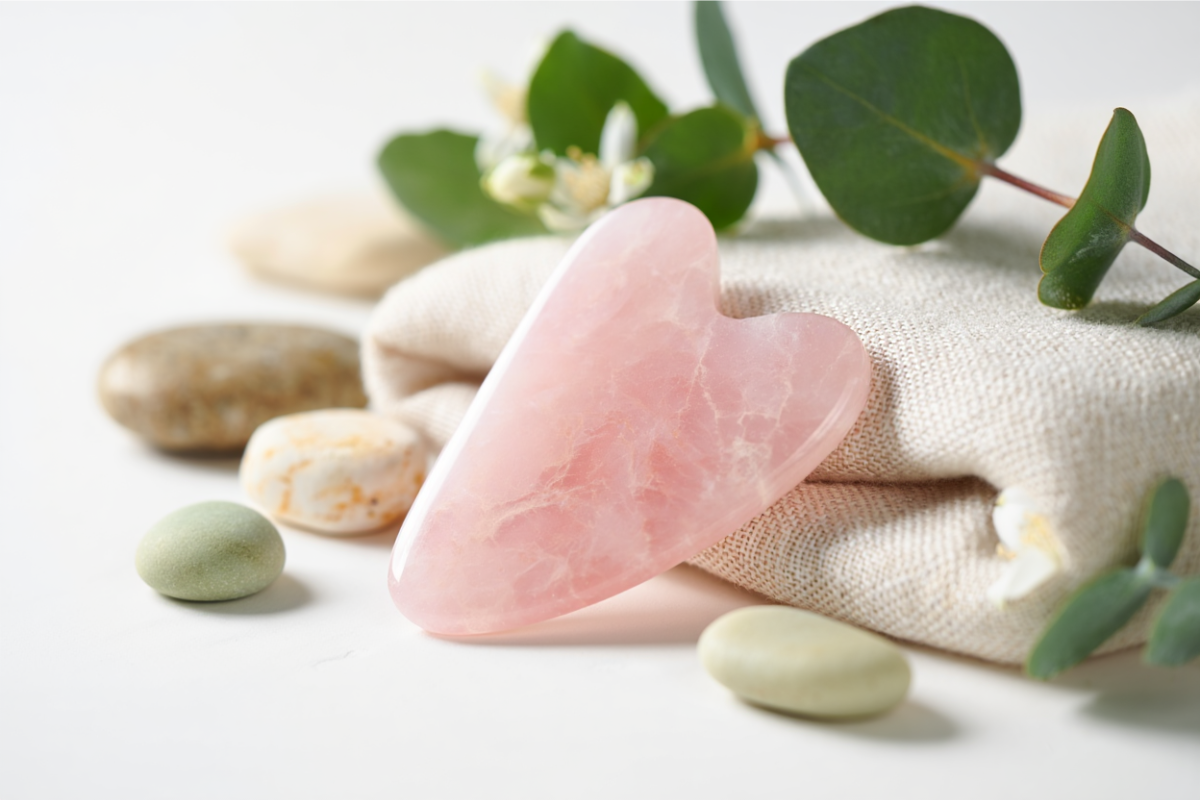
Discover the ancient Chinese wellness secret of the gua sha tool, designed to soothe and rejuvenate your skin and muscles. Using a smooth-edged stone or metal instrument, the gua sha tool is gently scraped over the face and body to boost circulation and encourage lymphatic drainage. This relaxing technique can help reduce puffiness, sculpt facial contours (including the jawline), and leave skin feeling refreshed and radiant. In this guide, we explain how to use your gua sha tool safely and effectively to achieve a glowing, healthier complexion while enjoying a spa-like experience at home.
Practicing gua sha is also a wonderful act of self-care. Massaging your skin with a smooth stone tool can melt away stress and tension after a long day. Many beauty enthusiasts incorporate gua sha into their nighttime routine as a way to wind down. Not only does it have physical benefits, but the mindful, meditative aspect of gently massaging your face can improve mood and relaxation. In an era when people are spending more time on skincare routines, gua sha offers a simple at-home treatment that feels luxurious.
Today, gua sha is more popular than ever. Beauty influencers and wellness experts regularly post tutorials showing how to use these tools. Unlike some high-tech beauty devices, a gua sha stone is affordable and simple—you might even have one sitting in a drawer from your last spa kit. Because of this accessibility, people from all over the world (even outside Asia) now practice gua sha at home. It’s often touted as a “DIY facial spa” experience. As you experiment with your tool, remember that consistency and gentle technique are key. Even if you miss a day or two, your skin can bounce back—just pick it up again when you can. Gua sha is not a quick-fix but a gradual practice. Over weeks or months of regular use, you’re likely to notice subtle improvements in how your skin looks and feels.
A Brief History of Gua Sha
Gua sha has a long, rich history in Traditional Chinese Medicine. Historical texts from thousands of years ago describe rubbing and scraping the body with smooth stones or tools to relieve pain and improve health. Practitioners in ancient China used bian stones (shaped from herbs and minerals) to scrape the skin, a practice mentioned in medical classics dating back to 2,500 years ago. Over the centuries, gua sha evolved into a common folk remedy across East Asia. It was traditionally used to treat fevers, muscle aches, and what TCM called “stagnant blood” or qi. Even the famous Huangdi Neijing texts refer to stone scraping for healing purposes. Today’s gua sha facial massage is a refined version of these ancient methods—moving a smooth tool across the skin rather than the stronger strokes used on the body—adopted to promote beauty and wellness rather than treat illness directly.
What is a Gua Sha Tool?
Gua sha (pronounced “gwah shah”) literally means “scraping skin” in Chinese. It’s a traditional Chinese medicine technique where a smooth massage tool is gently scraped along the skin to boost circulation and relieve tension. Tools are typically made of polished stone (such as jade or rose quartz) or stainless steel, each with smooth, curved edges for comfort. When used on the face and neck, a much gentler approach is applied to avoid bruising. This practice is believed to help release stagnant “chi” energy and reduce inflammation. Today, the gua sha tool is often part of modern skincare routines. When used regularly, it can help lift and sculpt facial features (like the jawline and cheekbones) and reduce puffiness. Many people find this soothing facial massage feels like a relaxing home spa treatment, leaving skin refreshed with a healthy glow.
Benefits of Using a Gua Sha Tool
Using a gua sha tool can enhance both skin health and relaxation. Popular benefits of gua sha massage include:
-
Boosted circulation and blood flow, helping to brighten dull skin.
-
Reduced inflammation and tension in facial muscles (which can relieve headaches or jaw tightness).
-
Improved lymphatic drainage, aiding detoxification and reducing puffiness in the face.
-
Natural contouring of the face, as regular gua sha sessions can help lift and define areas like the jawline and cheekbones.
-
Better absorption of products: The rolling and scraping motions help your skin soak in oils and serums more deeply, increasing their effectiveness.
-
A relaxing, spa-like experience that may help relieve stress (similar to the calming effects of a light facial massage).
-
According to a recent study, an 8-week gua sha program significantly improved facial contours and reduced muscle stiffness.
Science and Research
While gua sha is an ancient technique, researchers are beginning to study its effects. Studies show gua sha may truly improve circulation: a 2007 pilot study found that just five minutes of gua sha significantly increased microcirculation in the skin. In another analysis, participants had higher levels of anti-inflammatory molecules (like IL-10) and lower levels of pro-inflammatory markers (IL-8) after gua sha.
Clinical trials also hint at therapeutic benefits. For example, a trial on adults with chronic neck pain showed that those receiving gua sha experienced greater pain relief and improved mobility than those receiving heat therapy. While more research is needed, these findings support the idea that gua sha’s gentle scraping can trigger beneficial biological responses—boosting blood flow and easing inflammation—that contribute to its skin and muscle healing effects. In summary, modern science is starting to catch up with tradition: increased circulation, reduced toxins, and pain relief have been observed in studies, lending credibility to gua sha’s centuries-old reputation as a healing massage.
Choosing Your Gua Sha Tool: Materials & Shapes
A jade gua sha facial massage tool and roller on a wooden tray with rosemary.
Gua sha tools come in many materials and shapes, each with unique qualities:
-
Jade stone: A dense, smooth, and naturally cool stone that feels refreshing on the skin. Jade gua sha tools are traditional and are believed to help relax tight muscles.
-
Rose quartz: Another popular crystal, softer and slightly more porous than jade, but still cool to the touch. Rose quartz is prized for its gentle energy and may feel extra soothing on sensitive skin.
-
Stainless steel (metal): A modern alternative, extremely durable and easy to clean. Because metal conducts cold, you can chill a steel gua sha in the fridge for an enhanced cooling massage.
-
Shape & edges: Many gua sha stones have different edges and curves for specific uses. A broad curve can cover cheeks and forehead, a pointed corner can target the jawline or brow bone, and a small notch can fit around the eye area. Choose a shape that fits comfortably in your hand and contours well to your face.
-
Other materials: Some tools use natural horn, Bian stone, or high-quality plastic. These tend to be more porous or less cool than jade/metal, but are typically more affordable. Wood-handled or multi-tool sets may include a gua sha stone plus a facial roller for convenience.
-
Gua Sha tool sets: Many skincare brands sell sets that include the gua sha stone with matching tools (like jade rollers, face scrapers, or massage wands). Sets can be a good value and provide all the tools needed for a complete facial massage routine.
When choosing a gua sha tool, pick a material and shape that feels comfortable and smooth against your skin. All are effective for massage, so personal preference usually guides the choice.
How to Use the Gua Sha Tool: Step-by-Step Guide
Follow these steps for a safe, effective gua sha massage:
-
Clean your skin and tool. Begin with a fresh face and wash your gua sha tool with mild soap and warm water.
-
Apply oil or serum. Add a thin layer of facial oil or hydrating serum to your skin. This allows the tool to glide smoothly without pulling.
-
Hold at the right angle. Grip the gua sha tool at a 15–30° angle to the skin. Too flat won’t have effect and too steep may irritate. Use gentle pressure—firm enough to feel resistance, but not enough to bruise.
-
Scrape outward and upward. Starting at the center of your face, sweep the tool slowly outward. For instance, glide from your chin toward your ear along the jawline, from the sides of your nose outward across the cheeks, and from the center of your forehead up to the hairline.
-
Use strategic strokes. Direct strokes toward key points: on the face always scrape up toward the temples or hairline, and on the neck scrape downward toward the collarbone. For example, when working the jaw area, tilt the tool so its curve hugs the underside of the jaw from chin to ear.
-
Target specific areas. Apply special care under the eyes (very light strokes from the inner corner outward) to reduce under-eye bags, and on the forehead (from brows to hairline). For the neck and décolletage, use long strokes toward the lymph nodes (e.g. from under the chin down towards the clavicle).
-
Repeat each stroke. Go over each section 3–5 times before moving on. Consistent, smooth motions are more effective than one-time pressure.
-
Clean and end with moisturizer. After the massage, wipe off any residual oil and wash the tool again. Finish your routine with a moisturizer to seal in hydration.
It’s best to do gua sha for about 3–5 minutes per session, once per day or a few times a week. Pay attention to how your skin feels; over time you’ll learn the perfect pressure and technique that works for you.
Gua Sha for Body and Other Uses
While facial gua sha is done gently, this tool can also be used on larger body areas. Massage therapists often use gua sha on the back, shoulders, arms, and legs to relieve muscle tension and pain. For body treatments, use a larger tool (or a bigger side of the tool) and firmer strokes with massage oil. Start from tight muscle areas and sweep toward lymph nodes (e.g. stroke from the lower back upward toward the mid-back).
In fact, many people use gua sha on the neck, shoulders, and back to relieve muscle stiffness and pain, much like a deep tissue massage. For instance, to ease a stiff neck, gently scrape the back of your neck and shoulders, always moving from the head down toward the heart. Some studies support these effects: one trial found gua sha significantly reduced neck pain compared to heat treatment.
A gua sha session on the body may be integrated into sports massage or physical therapy. The tool can be used with massage oil on areas like the calves, thighs, or arms to help relax tight muscles after exercise. Whenever you use gua sha on the body, cover a larger area with steady, even strokes. You might hear practitioners call the characteristic red petechiae “sha,” which is believed in Eastern medicine to indicate toxins being released.
Remember to be gentle: on the body, it’s okay if your skin turns pink or red, but it should not be painful. After body gua sha, you can apply a soothing lotion or take a warm shower to relax.
Tips and Precautions
-
Always use a lubricant (oil or serum) to prevent tugging on the skin. Rubbing a dry tool can cause irritation.
-
Start with light pressure. Your skin should not hurt. You may see a slight pink flush from increased blood flow, but if bruising occurs, use less pressure next time.
-
Move in one direction only. Push the tool upward or outward in smooth strokes rather than scrubbing back and forth.
-
Pay attention to your skin. Stop if you feel pain or if your skin becomes overly red or sensitive. Use caution on acne, eczema, or other inflamed skin areas.
-
Always direct strokes toward lymphatic drainage points (e.g. from the face toward the ears and collarbone) to help remove toxins and fluid buildup.
-
Clean your gua sha tool after each use to avoid bacteria. Simple soap and water is fine. Wipe it dry and store it in a clean pouch.
-
Use gua sha 3–5 minutes per session, several times a week. You can do it daily if your skin tolerates it well. Consistency over weeks will produce the best results.
-
Remember, gua sha is meant to be relaxing and gentle. Treat it as a self-care ritual rather than a vigorous workout for your skin.
Frequently Asked Questions
Q: What is a gua sha tool?
A: A gua sha tool is a smooth-edged instrument (often made of jade, rose quartz, or metal) used in traditional Chinese massage techniques. It is gently scraped across the skin to improve circulation and ease muscle tension. In skincare routines, it helps contour the face, reduce puffiness, and promote a glowing, relaxed complexion.
Q: How do I use a gua sha tool on my face?
A: First, apply a few drops of facial oil or serum to clean skin. Hold the tool at a slight angle (about 15–30 degrees) and gently sweep it across your face. For example, glide the tool from your chin toward your ear along the jawline, from the sides of the nose out toward the cheeks, and from the center of your forehead up toward the hairline. Use light pressure and smooth, continuous strokes. Repeat each stroke 3–5 times before moving to the next area.
Q: What are the benefits of using a gua sha tool?
A: Regular gua sha massage can improve blood flow for brighter, healthier-looking skin. It often reduces inflammation and relieves facial muscle tension, which can lessen puffiness and smooth fine lines. Over time, many users notice enhanced facial contours and a more defined jawline. Additionally, gua sha feels calming and spa-like, helping to reduce stress and promote relaxation.
Q: Can gua sha help with jawline definition?
A: Yes. Gua sha targets muscles around the jaw and neck. A clinical trial found that an 8-week gua sha program significantly improved facial contour by reducing jawline measurements and muscle stiffness. Gently massaging upward along the jawline each day can tone the area, making the jaw appear firmer and more sculpted over time.
Q: What’s the best material for a gua sha tool: jade, rose quartz, or stainless steel?
A: All three materials work well, but they have different properties. Jade is dense and naturally cool, providing a refreshing feel. Rose quartz has a similar coolness but is slightly softer and often chosen for its gentle, soothing energy. Stainless steel is very durable and easy to clean; it can be chilled for extra cooling. Ultimately, effectiveness is similar across materials – use whichever feels best for you.
Q: Are gua sha tools safe for all skin types?
A: Generally, yes, if used gently. Gua sha should not hurt; you should only feel pleasant pressure. On the face, it typically does not cause bruising. If done too firmly (especially on the body), it can leave tiny red spots (petechiae) or mild bruises. These marks usually fade within a few days. Avoid using gua sha on broken skin, active acne, or severe rosacea. If you have a blood clotting disorder or take blood thinners, consult a doctor first.
Q: What is included in a gua sha tool set?
A: A gua sha tool set often includes one or more scraping stones (typically jade or rose quartz). Many sets also include a matching jade roller or other facial massage tools. Sets usually come with a storage pouch and simple instructions. Buying a set can give you multiple tools (for face and body) that complement each other for a complete at-home spa routine.
Q: Where can I find a gua sha tool near me?
A: Gua sha tools are widely available. You can find them at beauty retailers, health stores, or spa shops. Most online retailers carry gua sha stones as well – search for “gua sha tool” on major marketplaces or “gua sha near me” on a map. Local salons or wellness centers might sell high-quality gua sha stones and sets if you prefer to see them in person before buying.
Q: How often should I use a gua sha tool?
A: You can use gua sha daily or a few times a week. Many people add it to their morning or evening skincare routine. If you’re new to gua sha, start with 2–3 times per week to see how your skin reacts, then increase frequency as comfortable. Daily use is fine for most skin types, but always listen to your skin and be gentle to avoid irritation.
Q: What is the difference between a gua sha tool and a jade roller?
A: A jade roller is a handheld rolling tool that gently massages the face, whereas a gua sha tool is a flat stone that you scrape across the skin. Both aim to improve circulation and reduce puffiness, but gua sha gives a deeper muscle massage and can achieve more sculpting and lifting. Many people use a jade roller to prep the skin and follow with gua sha for a stronger lifting effect.
Conclusion: Relax and Rejuvenate Your Skin with Gua Sha
The gua sha tool offers a gentle, natural way to relax muscles and restore your skin’s radiance. By incorporating gua sha massage into your daily routine, you can stimulate circulation, reduce puffiness, and enhance facial contours. Remember to use light pressure and proper technique as you massage — consistency is key to seeing benefits. Whether you choose a cooling jade or rose quartz stone, or a sturdy stainless steel tool, regular use can help keep skin youthful and glowing. Try doing gua sha for just a few minutes a day – many people notice their skin feels more energized and pores appear smaller. Whether as a morning wake-up boost or an evening wind-down, this simple practice can become a delightful daily ritual. Even a short 5-minute gua sha massage can set a positive tone for your day by improving circulation and reducing stress. Embrace the gua sha tool ritual and see the difference firsthand in your skin and well-being.
Have you tried a gua sha tool yet? Share your tips and experiences with us in the comments below! If you enjoyed this guide, share it on social media to help others discover the benefits of this ancient beauty tool. Click a social share button to spread the word and keep the conversation going.