
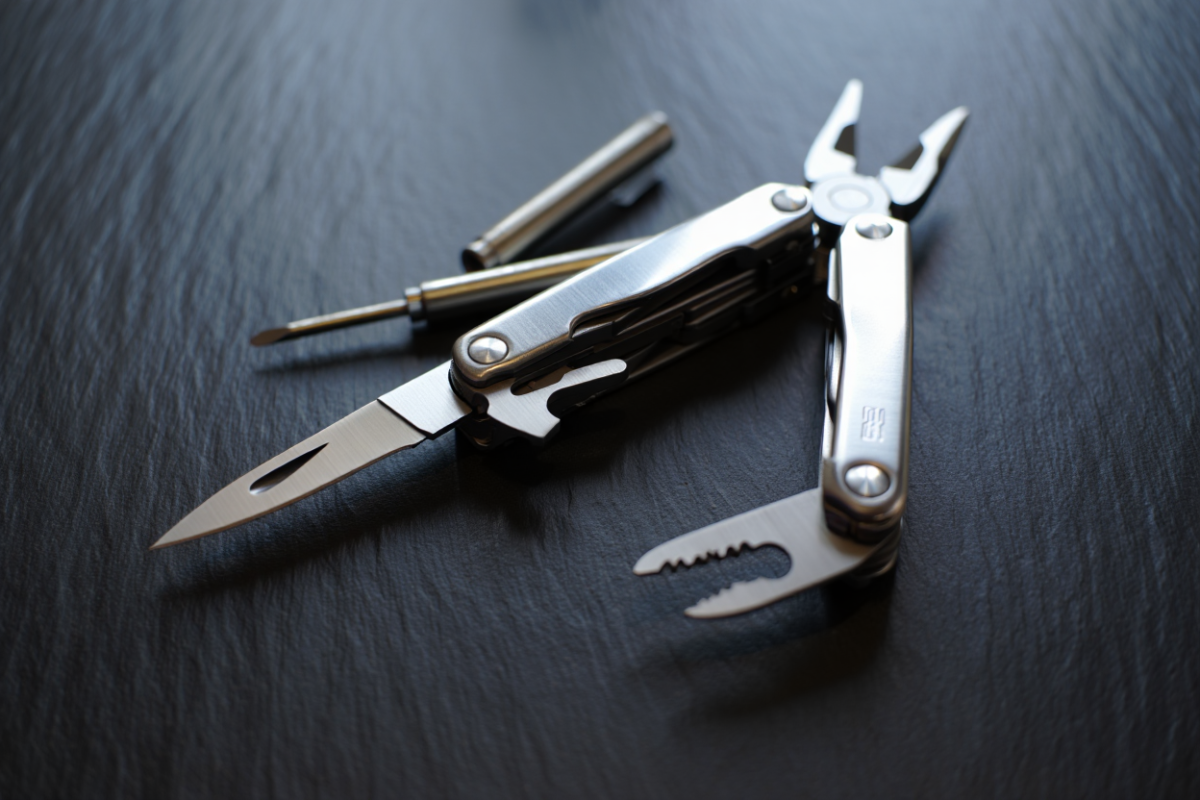
A compact multi tool with pliers and blades on a workbench, illustrating an all-in-one utility gadget for daily tasks. In a busy world, the right multi tool can be a lifesaver. By combining many functions into one gadget, a multi tool lets you solve common problems without carrying a full toolbox. For example, Leatherman notes that “the best tool is the one you have with you” – highlighting how modern multi tools are portable and comfortable to hold. From opening boxes to tightening a bolt, these devices pack knives, pliers, screwdrivers and more in a single unit. In this guide, we’ll explore what a multi tool is, the benefits of using one, top brands (Leatherman, Gerber, DeWalt, Milwaukee, etc.), and how to choose the best multi tool for everyday tasks like DIY repairs, camping, or EDC. We’ll also share stats and expert insights to help you pick a tool that really works for you.
What Is a Multi Tool?
A multi tool (or “multitool”) is a versatile hand tool that integrates several individual functions into one portable device. As Merriam-Webster defines it, it’s “a compact, portable device that has blades and extensions for many tools (such as knives, screwdrivers, pliers, scissors, openers, and saw blades)”. In other words, a multi tool is literally a miniature toolbox you can carry in your pocket or clip to your belt. The idea dates back to the Swiss Army knife, but today’s multi tools range from tiny keychain gadgets to full-size folding tools with pliers.
-
Size Varieties: Multi tools come in many sizes. The smallest may be credit-card or key-chain sized (for light tasks), while larger folding tools include strong pliers and multiple implements. No matter the size, the goal is the same: “one tool, many uses.”
-
Common Features: Most pocket multi tools include pliers (often needle-nose), wire cutters, serrated and plain knife blades, flat and Phillips screwdrivers, bottle/can openers, file, and scissors. Many also add specialty bits (Torx, Allen keys) or camping-oriented tools. Some even include LED lights or fire-starters.
-
How It Works: Typically, folding knives or pliers are the core. Other tools swing out from the handle or frame. Some models allow tools to lock open for safety. For example, the Leatherman Rev multi-tool has a locking knife blade and a replaceable pocket clip, and it’s “made to handle everyday tasks and weekend jobs”.
By consolidating many tools into one unit, a multi tool greatly increases convenience. Rather than hunting through a toolbox for the right screwdriver or pliers, you just reach into your pocket. Studies show that DIYers and outdoor enthusiasts especially value this versatility – indeed, analysts report the global multi tool market was about $2.7 billion in 2023 and growing at roughly 5% per year. This popularity isn’t surprising when a single gadget can tighten a screw, strip wire, open a can, and more – all in a flash.
Key Benefits of Using a Multi Tool
Carrying a quality multi tool brings several advantages for everyday problems. Here are the main benefits:
-
Compact Versatility: Instead of many loose tools, you get multiple tools in one unit. A single multi tool can replace a separate knife, screwdriver set, bottle opener, and pliers. This cuts down on bulk and ensures you always have the right tool at hand. In short, it’s like “carrying a mini toolbox without the weight or hassle.”
-
Everyday Preparedness: Life throws little tasks at us constantly (fixing a loose screw, opening packages, opening bottles, cutting zip ties, etc.). With a multi tool on hand, you’re always ready for these “surprises.” Gear blogs note that a multi-tool “makes you the person who’s always ready… like carrying a mini toolbox”. For example, Leatherman markets the Rev multi-tool with the slogan: “Use it to fix cars, set up camp, do chores, or even open bottles at a tailgate”. That covers many common situations – from home repairs to outdoor parties – in one sentence.
-
Cost & Space Efficiency: Buying one multi-tool is often cheaper than buying the equivalent set of separate tools. It also saves space: one multi tool takes up a pocket, whereas scissors + pliers + screwdrivers + knife would be dozens of times larger. For EDC (everyday carry) enthusiasts, a multi tool is considered “one of the smartest additions” to gear. Instead of owning a toolbox for small jobs, you have a single gadget.
-
Durability with Portability: High-quality multi tools are built from durable materials (like stainless steel). They’re designed for real use, not just novelty. For instance, the Leatherman Rev uses 420HC stainless steel for its blade and pliers, and comes with a 25-year warranty. Yet it still folds up to a pocket-friendly size. This means you get a tough, heavy-duty tool that doesn’t weigh you down. Leatherman sums it up: “Whether you like to carry a little or a lot, all of these tools are portable and comfortable to hold.”.
-
Wide Range of Functions: One multi tool often includes pliers, wire cutters, blades (plain and serrated), multiple screwdrivers (flat, Phillips, Torx), can/bottle openers, saws, and more. Newer models even add specialty tools (like hook removers or fire-starting bits) or modular attachments. This breadth means a single multi tool can tackle tasks from opening a soda can to cutting rope to trimming wood. In summary, a good multi tool “earns its place” in your gear by overdelivering utility.
In short, multi tools shine in versatility. Instead of rummaging for the right tool, you just pull one gadget out of your pocket and you’re ready. This increases productivity and reduces stress when small tasks crop up. Whether you’re a DIY hobbyist, an outdoors adventurer, or just someone who likes being prepared, a multi tool is a very handy ally.
Popular Multi-Tool Brands & Options
The multi-tool market includes many well-known brands, each with its own strengths. Here are some top players and what they offer:
-
Leatherman: A household name in folding multi tools. Invented by Tim Leatherman in the 1980s, Leatherman’s pocket plier-tools are famous for rugged build and long warranties (typically 25 years). Models like the Wave, Rev, and Signal pack pliers, blades, bitdrivers, and more. Leatherman tools are built in the USA and often praised for ergonomics and durability. For example, the Rev is “made to handle everyday tasks and weekend jobs”. Leatherman emphasizes portability – “the best tool is the one you have with you,” and their EDC-focused collection notes these tools “are portable and comfortable to hold”. They include easily accessible blades and bottle openers for quick use.
-
Victorinox & Wenger (Swiss Army Knives): These Swiss companies originated the pocket multi-tool concept. The classic Swiss Army Knife (Victorinox) offers smaller folding knives that include scissors, drivers, awls, etc. SwissTool and SwissChamp models pack many implements (some up to 33 tools). They shine for everyday carry and camping – lightweight yet offering the basics (knife, can opener, screwdriver, etc.). People trust Victorinox/Wenger for precision and quality build. Many specialized Swiss Army models exist for hikers, hunters, cyclists, etc.
-
Gerber Gear: Known for both folding and one-hand opening multi tools. Gerber’s motto notes its multi-tools are built “to tackle tasks from the everyday craftsman’s requirements, to the demands of the U.S. Military”. They offer plier-based tools like the Gerber MP600 (“rugged workhorse” with smooth plier deployment), as well as compact EDC models like the Gerber Dime keychain tool. Gerber blends affordability with solid performance. Their tools often feature black coatings for tactical look and corrosion resistance. (Gerber even advertises: “With a Gerber multi-tool strapped to your belt, you’re unstoppable”.)
-
SOG, CRKT, Kershaw, Buck: These knife companies also make popular multi tools. SOG and CRKT offer innovative designs (e.g. assisted opening blades, specialized survival tools). Buck and Kershaw are renowned for knives but also have multi tools or knife+bit kits. These brands compete on pricing and niche features.
-
DeWalt: A leading power-tool brand, DeWalt entered the “multi tool” space with oscillating power tools. The DeWalt 20V MAX XR oscillating multi-tool (model DCS356) is a cordless rechargeable unit. It uses a brushless motor for more runtime. With a universal quick-change blade system, it can cut, sand, grind, or scrape. The DCS356 kit includes wood-cutting blades and accepts a wide range of attachments. Such power multi tools are for serious DIYers and pros tackling wood, metal, drywall, flooring, etc. DeWalt’s offering is lighter and more affordable than some competitors, making it a go-to for home projects.
-
Milwaukee: Another top power-tool name. Milwaukee’s M18 FUEL Oscillating Multi-Tool features a very powerful brushless motor. Milwaukee advertises it “generates the fastest cuts, the power for demolition, and the lowest full tool vibration.” Its POWERSTATE™ motor delivers 10,000–20,000 OPM (oscillations per minute) for aggressive cutting speed. It has a 10-speed dial (with an auto-load feature) and an integrated 180° LED for visibility. Heavy-duty users praise Milwaukee’s tool for ripping through hardwoods and even nail-embedded wood. Overall, Milwaukee’s M18 tool tends to outperform many competitors in speed and comfort, though it requires their battery platform.
-
Craftsman, Ryobi, Bosch: These brands (often at home centers like Home Depot) also sell oscillating multi-tools, typically at lower price points. For example, Home Depot’s own brand offers kits and blade sets for DIYers. These budget options cover basic cutting/sanding needs for home repair. For just occasional use, they can be good value.
-
Multi Tool Sets (Kits): Many retailers sell multi-tool sets that bundle a multi tool with extra blades, bits, or accessories. For instance, a set might include a rechargeable oscillating tool plus wood, metal, and grout blades. Or a pocket multi tool kit might come with extra screw bits and a carrying case. Buying a set can be cost-effective for someone starting out. Home improvement stores (like Home Depot) and online retailers offer countless multi tool kits.
Regardless of brand, look for respected names with warranties. Leatherman and Swiss Army tools come with decades-long guarantees. Power tool multi-tools often have 3–5 year warranties. Ultimately, the best multi tool brand depends on your use: Leatherman or Victorinox for EDC/home use, and Milwaukee or DeWalt for heavy-duty cutting tasks.
Types of Multi Tools
Multi tools come in several formats, each suited to different uses:
-
Keychain Multi-Tools: Ultra-compact (credit-card or bottle-opener size). Often include a small blade or two, mini screwdriver(s), a bottle opener, and sometimes a mini flashlight. Examples: Gerber Dime, Victorinox Classic SD. Ideal for ultra-light everyday carry, quick fixes, and keys. They won’t handle heavy-duty jobs, but are handy for opening packages, minor repairs, or as backup tools.
-
Pocket Folding Multi-Tools: Mid-size folding tools with pliers as the core. These often feel like a mini pair of pliers or folding pliers device. Standard offerings (e.g. Leatherman Wave, Gerber MP600, SOG PowerAccess) include multiple screwdrivers, a good knife blade, wire cutters, can/bottle opener, saw blade, file, etc. They are bulkier (typically 4–5 inches long folded) but can tackle tougher tasks. The pliers allow gripping nuts/bolts, pulling nails, or crimping wires. These are the workhorses for mechanics, campers, and techies. Many come with a sheath or pocket clip.
-
Specialized Multi-Tools: These are tailored for specific activities. For example, bike multi-tools include hex keys and spoke wrenches for on-the-road repairs. Fishing multi-tools may have hook removers, line cutters, and pliers optimized for splitting rings. Some camping/survival tools include fire-starters, whistle, saw, or small hatchet attachments. Tactical multi-tools (often military-grade) might have breacher tools, wire cutters, and robust build for emergency services. Essentially, specialized multi-tools swap out general implements for those needed in a particular domain.
-
Oscillating (Power) Multi-Tools: Not to be confused with pocket tools, these are power tools that oscillate blades for cutting and sanding. They plug into mains or run on batteries. Brands like Fein, DeWalt, Milwaukee, Bosch make these. They accept various blades (saws, scrapers, sanding pads). Because they’re powered, they handle tasks regular hand tools cannot – e.g., plunge-cutting into drywall, trimming floor tiles, sanding wood in tight spots. The attachments swivel back and forth (usually 3–4° range) at high speed (up to ~20,000 oscillations/min). These oscillating multi-tools are a must-have for serious DIY or renovation work. (We’ll cover them more below.)
-
Multi Tool Sets: Some products are sold as sets that include a main tool plus extras. For example, a DeWalt set might include the oscillating tool, batteries, and several blades. Or a bit kit set for a pocket multi-tool (adding specialty screwdriver bits or pliers attachments). Sets can also include sheaths, dogtags, or carrying cases. If you want spare parts or plan to use the tool in one location (like a home workshop), a set is often a smart purchase.
Each type has its place. For camping, a pocket or specialized multi-tool with an axe or fire-starter might be ideal. For everyday carry, a lightweight keychain or slim folding tool is best. For power or home renovation, an oscillating multi-tool is unmatched. The key is to match the tool’s form-factor to your use-case – but always remember: one tool, many uses.
Practical Uses of Multi Tools in Daily Life
So what do people actually use multi tools for? The applications are surprisingly varied. Here are common everyday tasks tackled by multi tools (with examples):
-
Home Repairs & DIY: Tighten or loosen screws, bolts, and nuts using the multi-tool’s screwdrivers and pliers. Cut electrical wires and strip insulation with the wire cutters. Open or close plastic packages and letters with a blade. Tighten small nuts with a wrench feature. Measure small lengths using built-in rulers. When a door catches, use the file or small saw to shave wood (some tools even include tiny saw blades). For quick plumbing fixes, needle-nose pliers can clamp pipes or twist connectors. As Leatherman highlights, use your multi tool to “fix cars, set up camp, do chores, or even open bottles” – demonstrating its usefulness in dozens of routine chores.
-
Everyday Carry (EDC) Tasks: For EDC, the multi tool addresses “little surprises”. Need to open a bottle or can at a lunch gathering? That multitool has you covered. Cracking open a package? The blade or scissors comes in handy. Tightening a loose eyeglass screw? Grab the mini screwdriver. Trimming a hangnail or cutting stray threads? Use the small scissors or blade. Even tasks like pulling a splinter (with tweezers on some models) or releasing a stuck zipper (using the pliers) become easier. EDC multi tools also serve as handy key organizers (often including a bottle opener in a keychain tool). Essentially, any small fix-it task that you encounter while out running errands can be handled.
-
Outdoor & Camping: A good multi tool is a camping essential. It can open food cans (can opener), cut rope or fishing line (knife blade, scissors), trim small branches (small saw blade), and even help set up a fire (with a ferro rod attachment on some models, or chopping kindling with a small hatchet head). The Sportsman’s Leatherman, for instance, includes fishing tools and a fire striker. Some multi tools have emergency whistles or glass breakers for survival. At camp, open bottles, clean fish (line cutters), and even serve as a makeshift spoon or fork if needed (some tools have spatula ends). When hiking, you can adjust gear (tighten gear straps with pliers, cut bandages). The versatility here is key: one compact tool covers dozens of common camping tasks. Statistics show that growing outdoor recreation directly drives multi-tool demand, since campers and hikers prize these “all-in-one” kits.
-
Automotive Use: Handymen and drivers carry multi tools in the car for on-the-road fixes. Need to remove a broken license plate screw (pliers)? Slice a seat belt or trim interior (blade)? Snap off a trailer tie (pliers)? The multi-tool can help with spare tire mounts, battery changes (plugs), or emergency situations. Its compact size means it fits in the glove box. The Rev’s tagline “fix cars… at a tailgate” hints at this: whether adjusting something on your bike or car, a multi-tool’s screwdrivers and pliers can often do the job.
-
Work & Trades: Electricians, plumbers, and technicians often keep a multi tool on hand. Electricians appreciate insulated pliers and bitdrivers for wiring work. Plumbers use the pliers to grip pipes and the cutters to snip wire or thin gauge. Mechanics use the socket wrenches or pliers for engine work. Even in office settings, a multi-tool can replace a screwdriver set for IT repairs. Its impact in professional settings explains why power-tool oscillating multi-tools (like DeWalt’s) exist: to handle construction and renovation tasks that require saws and sanders in tight spots.
-
Emergency/Safety: For first responders or car kits, multi-tools often include glass breakers and seat-belt cutters. They can also serve as improvised first-aid tools (scissors to cut bandages, tweezers for splinters). Being prepared with a multi-tool can be useful in unexpected situations where you need to cut or pry quickly.
A Fein MultiMaster oscillating multi-tool (with blade attached), designed for cutting and sanding tasks in tight spaces. In addition to manual tools, oscillating multi-tools (the power tool variety) have their own everyday uses. These electric or battery-powered multi-tools have tiny oscillating blades and accessories that allow very precise cutting and sanding. For example, with a flush-cut blade you can trim floorboards or door casings flush against a wall – something few tools can do neatly. They are perfect for cutting drywall openings for electrical boxes, cutting tile or grout, sanding wood edges, or removing old caulk. Modern oscillating multi-tools (like the Fein Multimaster, DeWalt 20V Max, or Milwaukee M18) make small remodeling jobs much faster. In fact, Milwaukee’s M18 FUEL tool boasts up to 20,000 OPM and vibration-dampening so you can cut through wood or nails with comfort. An oscillating tool’s narrow oscillation angle also lets its sanders or grinders reach into corners and confined spaces – tasks a regular rotary tool cannot easily do.
No matter the type, the principle remains the same: a multi tool (hand or power) is designed to address many tasks with one device, saving time and effort. For instance, Fein’s original oscillating tool could perform jobs you might otherwise do with a jigsaw, chisel, or hammer. Today’s combos of pockets and power make multi-tools indispensable.
Choosing the Right Multi Tool for Your Needs
With so many options, how do you pick the best multi tool? Consider the following factors:
-
Intended Use: First, decide what you’ll use it for. If you need it for daily carry and occasional fixes (EDC), prioritize compactness and pocketability. Keychain-sized or slim plier-tools (like a Leatherman Skeletool or Gerber Dime) work well for EDC. If you need it for camping and survival, look for tools with saws, axes, or fire-starters, even if that means it’s a bit bulkier (models like the Leatherman Signal or Victorinox SwissTool). For home DIY or professional work, a full-size plier multi-tool (Leatherman Charge, Gerber MP600) or an oscillating power tool (DeWalt/Milwaukee) might be appropriate. Identify your primary tasks (e.g. camping vs. workshop use) and choose accordingly.
-
Number of Tools: Count the implements you really need. More isn’t always better if it adds weight or bulk. For EDC, a tool with 7–10 key functions may suffice (needle-nose pliers, scissors, a couple of screwdrivers, small knife, opener). For camping or survival, a larger model with specialized tools (can opener, saw, hammer, etc.) can be justified. Remember, unused tools add weight. If portability is crucial, smaller keychain multi-tools are better. If versatility is key, a bigger plier multi-tool or set is better.
-
Ease of Access: Decide between one-hand opening vs. two-hand. Many modern multi tools allow one-handed opening of a blade or implements (spring-assist, thumb holes), which is useful if one hand is occupied. This is especially handy when camping or fishing (as one camp guide notes, one-hand tools let you cut line without setting down your rod). Some tools (like Swiss Army knives) require two hands to open certain blades. If you often work with gloves or need speed, consider one-hand operable models.
-
Build Quality: Look for durable materials. Stainless steel is common for frames and tools, giving corrosion resistance and strength. High-end models (like Leatherman’s Titanium Series) use stronger steels or titanium for weight savings. Check that locking mechanisms (for blades/tools) are solid – many folks prefer locking pliers and blades for safety. A robust spring in the pliers and quality fasteners matter. Reviews often praise multi tools for their toughness; as one blogger notes, the Gerber MP600 is a “rugged workhorse” with solid stainless build.
-
Comfort and Ergonomics: Since you’ll be holding it for tasks, grip and usability matter. Does it fit your hand? Are the handles non-slip (rubberized or textured)? Can you easily deploy the tools you need without fiddling? Many Leathermans have contoured handles and replaceable pocket clips to aid carry. Test or read reviews for ease of opening tools. Some designs (like Leatherman’s butterfly vs. drop-point) might suit your grip better.
-
Power (for oscillating tools): If you’re buying a power multi-tool, battery voltage and motor type are key. Brushless motors (in DeWalt and Milwaukee’s latest models) give more runtime and power. Check if it comes with battery or if it’s tool-only. The oscillation angle (e.g. 4.2° for Milwaukee vs. 3.6° for others) and blade-change system (tool-free or not) are important. As DeWalt’s spec sheet highlights, look for features like a 3-speed selector, LED light, and universal blade adapter.
-
Brand & Warranty: Reputable brands typically ensure quality control. Leatherman, Victorinox, Gerber, and Millercoors brands have long track records. Check the warranty – Leatherman offers 25 years, for example. A good warranty can pay off if something breaks. Also, consider customer support and part availability (extra bits, blades).
-
Price vs. Value: Multi tools range from ~$15 keychain tools to hundreds of dollars for top-tier plier models, or for battery power kits. Determine your budget. Often, mid-range tools ($50–100) from big brands give excellent value. For power tools, kits with battery may be pricier (~$200+). Remember the cost of replacement blades/accessories over time. Sometimes buying a set or bundle saves money if you need the extras.
By matching the tool’s features to your primary needs, you’ll find an ideal multi tool. For example, if camping is a priority, look for a model with a saw blade and fire-starting steel. If daily office/household tasks are what you face, a slim multi tool with screwdrivers and scissors might suffice. The right multi tool becomes an extension of your hand – saving you time whenever quick fixes arise.
Multi Tools for Camping and Outdoor Use
Outdoor adventurers often rely on multi tools far more than casual users. If you’re buying a multi tool for camping or hiking, consider these tips:
-
Essential Attachments: Outdoor-oriented tools frequently include a small axe head or hatchet blade for chopping kindling, a saw blade for cutting branches, and a hook-remover/scissors for fishing lines. As one camping guide explains, must-have features include pliers (for fishing hook removal), spring-loaded scissors (for cutting line quickly), and even small shovels or wire cutters. A ferrocerium rod (fire-starter) is often built in for emergencies. Many camping multi-tools also carry a whistle or compass.
-
Durability and Weather Resistance: Camp environments can be harsh. Look for stainless steel or coated blades that resist rust, and check if the tool is solid enough to handle being dropped or rained on. Some survival multi-tools have rubberized or textured grips to stay secure even when wet. The build quality is key here; a flimsy tool will fail under outdoor conditions.
-
Packability: Weight matters when hiking. Choose a tool that balances functionality with weight. If you plan on carrying multiple gadgets (knife, first-aid kit, etc.), you may favor a mid-size multi tool over a huge one. Nevertheless, many campers choose larger models (like the Leatherman Signal or Surge) because they can perform so many tasks. If weight is critical, look at “ultra-light” series by various brands that use lighter alloys.
-
Fixed vs. Folding Tools: Some camping multi tools come with a fixed straight knife blade (good for chopping and durability), rather than folding. Others fold all implements. A fixed blade is stronger but often means a heavier, bulkier tool. Choose based on whether you prioritize strength (fixed blade) or compactness (folding).
-
Multi Tool vs. Separate Tools: Remember that a multi tool is very handy, but sometimes a dedicated tool is better for specific tasks. For example, an axe or hatchet is far more effective for chopping than any multi-tool. Multi-tools complement your kit, but don’t entirely replace specialized tools if you’re going on a serious expedition. However, they can replace dozens of small tools (screwdriver, pliers, opener, etc.) that you’d otherwise carry.
In practice, campers often report using the multi tool almost every day: opening cans, adjusting gear buckles, cutting rope, fixing tent poles, and even carving wood for a fire. For example, the Victorinox SwissTool or Leatherman Charge are popular with campers due to their robust saw blades and variety of functions. Remember that waterproof pouches or sheaths can help protect the tool during rain.
Multi Tools for Everyday Carry (EDC)
For everyday carry, convenience and quick access are paramount. If you want a multi tool for EDC, consider these:
-
Size and Weight: EDC tools should be small enough to fit in your pocket or on a keychain. Typical EDC multi-tools weigh between 1–6 ounces. The lighter the better for day-long carry. Stainless or titanium frames keep weight down. Multi-tools like the Gerber Dime (~2 oz) or Victorinox Classic SD (~1.5 oz) are popular EDC picks. Even a Leatherman Skeletool (2.6 oz) or Wingman (7 oz) is considered slim.
-
Key Functions: Since you’ll have it on you every day, focus on tools you actually use. For many, that means a decent blade (lockable or not), pliers (for minor fixes), a screwdriver, and perhaps a bottle opener. Some EDC tools add a small serrated blade or scissors. If you frequently need a screwdriver or hex keys on the go (e.g. tech cables, assembling furniture), prioritize models with easily accessible bits. If you just want to open mail and bottles, a tiny Swiss Army style tool might suffice.
-
Carry Mechanism: EDC tools should be easy to access. Options include: pocket clip (so the tool sticks out of your pocket for quick grab), belt sheath (more secure but less immediate), or keychain loop (for smaller tools). Many wallet-friendly multi tools come as flat plates that slip into a wallet or pocket. Others fold into compact shapes. Think about how you’ll carry it daily.
-
One-Hand Access: If your multi-tool includes a knife you use a lot, one-handed opening (thumb stud or hole) is a nice feature. Some EDC tools have quick-access blades. Also, tools like nail files or scissors can be handy for office EDC (trimming paper edges, etc.).
-
Style: Many EDC multi-tools also serve as accessories. Brands often offer colored or sleek finishes. For instance, Leatherman’s Skeletool and Tread bracelets combine utility with style. Choose a look you like, which will make you more likely to carry it.
In summary, a multi tool for EDC should be light, pocketable, and tailored to minor daily tasks. Even a small tool like the Gerber Dime (with micro pliers, small blade, scissors, and bottle opener) can prove invaluable – as one user noted, they use pliers and screwdrivers daily for random fixes. Keeping it with your keys or in your bag means you always have a set of tools ready.
Multi Tools for Home and DIY Projects
Around the house or workshop, you can exploit a multi tool’s versatility even further. Consider the following:
-
Heavier-Duty Functions: For home improvement, you may need stronger tools. Here, full-size multi-tools with locking pliers and stronger blades shine. Models like the Leatherman Wave+, Charge, or SOG PowerAccess are built to handle tougher tasks (tightening plumbing fittings, cutting thicker cables, etc.). The pliers can even be used as a small wrench. These tools usually come with replaceable wire cutters and often multi-bit drivers for versatility.
-
Special Blades: Some multi-tools offer specialty blades ideal for home jobs. Wood/metal files for sanding, wood saws for pruning or small carpentry tasks, and metal files for deburring. These allow one tool to handle small carpentry or automotive maintenance tasks. If you do a lot of home projects, ensure your multi tool has a comfortable saw blade (coarse teeth) and at least one fine file.
-
Multi Tool Sets at Home Depot: If you’re equipping a home workshop, consider multi-tool kits. Home improvement stores often sell sets including an oscillating tool with blades, or multi-tools with bit sets. Brands like Stanley or Dewalt offer multi function tools in kits (e.g. a drill + multi-tool bundle). Also, some home centers sell their own brand of multi-tool blades sets. Searching “multi tool set” or “oscillating tool blade set” at Home Depot will reveal combo kits that are great value for homeowners needing various attachments.
-
Safety & Convenience: In a home environment, a multi-tool can save trips to the garage. For example, use it to cut small nails, tighten shelf brackets, or remove battery covers. When doing indoor projects like assembling furniture, the pliers and screwdriver of a multi tool come in handy. Just remember to retract sharp tools after use (many modern multi tools auto-lock blades). Keep a designated spot (like a workshop drawer or the kitchen junk drawer) for your multi tool so it’s always within reach.
By having a multi tool in your home, you increase productivity on small projects. Instead of pulling out a drill for every screw, you may just grab the multi-tool’s bits. Instead of hunting down scissors, you use the built-in cutter. Many homeowners find that investing in a good multi tool reduces the time and mess of small tasks. It truly becomes a go-to gadget for daily home maintenance.
Meta Tips for Using Your Multi Tool Safely
-
Always Lock Blades: If your multi tool has locking blades or tools, always engage the lock before using the blade or tool. This prevents the blade from folding back. Practice opening and locking in a safe environment.
-
Use Correctly: Don’t misuse tools (e.g. don’t use a blade as a pry bar). The components are strong, but forcing them outside their design can damage the tool or cause injury.
-
Maintain and Clean: Wipe and oil pivot joints regularly, especially after outdoor or wet use. Sharpen knife blades and saws when dull. A well-maintained multi tool stays useful longer.
-
Secure Carry: When carrying on your person (pocket or belt), always fold tools in and clip/pouch securely to avoid accidental opening. Children shouldn’t be given pocket multi-tools unsupervised.
Figure: Leatherman’s multi tools range from compact EDC models to heavy-duty folding plier-tools. As the company puts it, “the best tool is the one you have with you,” highlighting portability as key.
Frequently Asked Questions
Q: What is the difference between a multi tool and a Swiss Army Knife?
A: In essence, a Swiss Army Knife is one type of multi tool. Generally, “multi tool” refers to any multi-function hand tool. Swiss Army Knives (by Victorinox/Wenger) are typically smaller pocket knives with integrated tools (blades, scissors, can opener, etc.). Other multi tools (like Leatherman or Gerber models) tend to be larger and built around pliers. The term “multi tool” covers both manual gadgets and power oscillating tools. See the multi-tool Wikipedia entry for more.
Q: Do I need an oscillating multi-tool if I own other power tools?
A: Yes, oscillating multi-tools serve unique functions. They can cut flush into floors or walls, sand in corners, or grind precisely – tasks most power tools can’t handle. For instance, an oscillating multi-tool can slice out flooring around a door frame without removing the frame. So even if you have drills or saws, an oscillating tool is often a valuable complement for fine work or awkward spaces.
Q: Is a cheap multi tool worth it?
A: Budget multi tools (under ~$20) can serve light, casual use (like a simple bottle opener or keychain tool). However, for heavy-duty or professional use, they often fall short in build quality and durability. Mid-range ($50–100) tools from established brands usually offer much better performance and longevity. It often pays off to invest in a reputable multi-tool with a warranty, as it will last for years of regular use.
Q: What is the best multi tool for camping?
A: The best camping multi tool depends on your needs. Look for one with camping-specific features: a saw blade, fire-starter rod, can opener, and possibly an axe or hammerhead attachment. Models like the Leatherman Signal or Victorinox SwissTool Spirit are popular for campers. Ensure it’s lightweight enough to carry but packed with essentials. (Remember to pair it with a fixed-blade survival knife and first-aid kit.)
Q: Can I use a multi tool from Home Depot?
A: Absolutely. Home improvement stores sell many quality multi-tools, including bundles. You’ll find brands like DeWalt, Craftsman, and Stanley. For example, Home Depot often carries DeWalt 20V oscillating multi-tool kits and Milwaukee kits. They also stock multi-tool blade sets and Leatherman/Gerber products. Shop by your task needs; many online reviews and in-store displays can guide you.
Q: What is a multi tool set?
A: A multi tool set typically refers to a bundle of a multi tool with additional accessories. This could be a cordless oscillating tool plus extra blades in one pack, or a folding multi tool that comes with a case and spare bits. The idea is to provide you a full kit for various tasks. Buying a set can save money if you need the attachments or extras – for example, an oscillating tool set may include wood, metal, and grout blades right out of the box.
Q: How often should I maintain or replace a multi tool?
A: Inspect your multi tool periodically. Clean and oil the pivot joints every few months or after messy jobs. Sharpen blades when they dull. Replace any bits or blades as needed (most brands sell replacement parts). A well-kept multi tool can last decades (Leatherman’s 25-year warranty attests to this). Replace it only if wear or damage prevents safe operation. Otherwise, treat it as an investment – it’s built to last.
Q: Are there any safety tips?
A: Always use each tool for its intended purpose (e.g., don’t use the knife as a prying bar). Keep blades clean and sharp (dull blades slip). Engage blade locks if present. Store the multi tool folded up when not in use to avoid cuts. And never leave it open or on a countertop where it can fall.
Conclusion and Call to Action
A multi tool is truly the Swiss Army knife of gadgets – an all-purpose utility tool that belongs in every toolbox, backpack, and pocket. Whether you need a quick fix at home, a handy gadget on a camping trip, or a reliable everyday carry item, the right multi tool makes many tasks simpler. Remember to choose a tool that fits your routine: small and lightweight for EDC, feature-rich and rugged for outdoor adventure, or powerful and corded/battery-operated for heavy home projects. As the multi-tool market grows (approaching $3 billion globally), the options expand, but the principles stay the same: versatility, convenience, and preparedness.
We hope this guide helps you find your perfect multi tool. If it did, please share it with fellow DIYers and travelers who might benefit – and feel free to comment below with your favorite multi tool tips or brands. What’s your go-to multi tool for daily tasks? Let us know! Happy fixing and exploring – with your mini-toolbox by your side.