
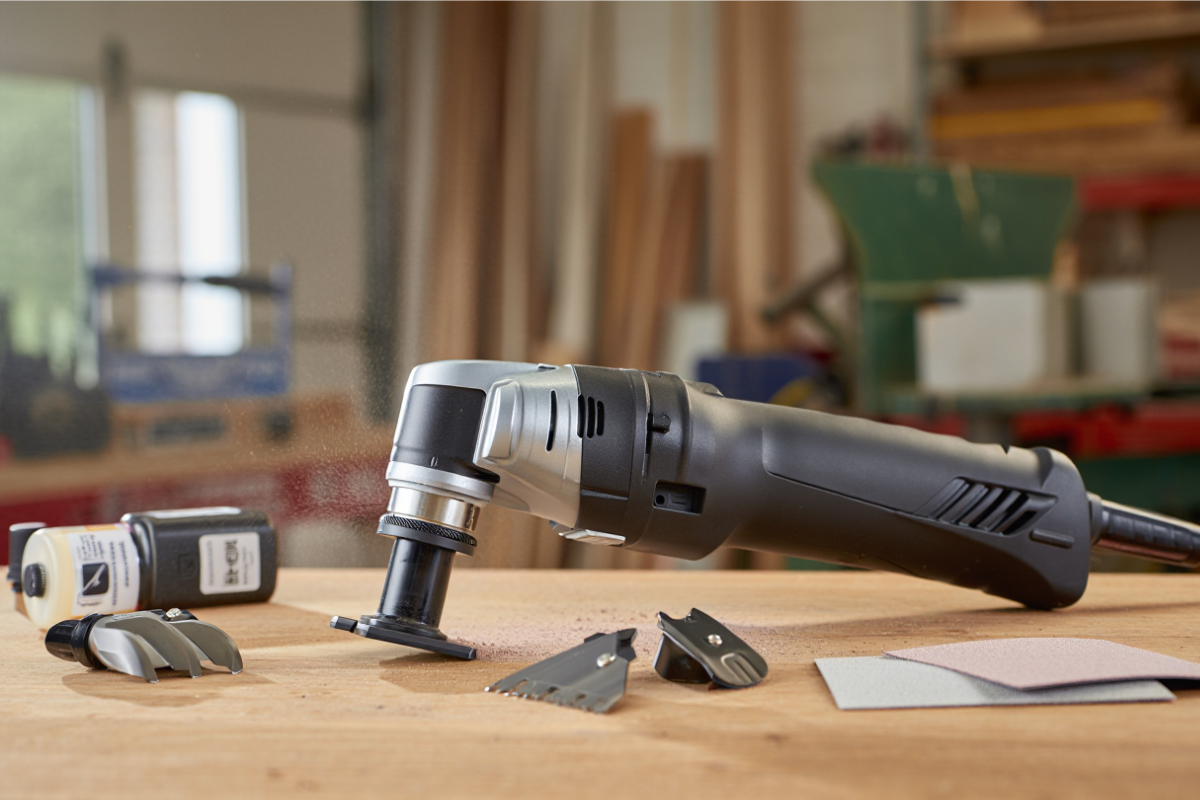
An oscillating tool (also called an oscillating multi-tool) is a versatile power multitool that “oscillates (rather than rotating or reciprocating)”. Its rapid side-to-side motion drives interchangeable blades and attachments, enabling the tool to saw, sand, scrape, grind, cut and polish with precision. In fact, these tools are sometimes called “Master Tools” (a trade name by Fein) because of their many functions. According to industry data, the global oscillating tools market was about $859.7 million in 2023, underscoring their popularity among DIYers and professionals. As Bob Vila’s tool experts explain, the oscillating tool “works well for cutting materials like metal, wood, and drywall and, with the right attachments, can also sand and file”, all in tight spaces where bulkier tools can’t reach.
This in-depth guide reviews the best oscillating tools for home and workshop use. We’ll cover key oscillating tool uses, the most useful blades and attachments, and major brand comparisons (DeWalt, Milwaukee, Makita, Bosch/Fein, etc.). You’ll learn how to choose the right tool (corded vs. battery, blade-system, power) and where to buy one (retailers like Home Depot carry many models). Whether you’re cutting trim, removing grout, or sanding corners, this guide will help you pick the ideal oscillating tool and use it safely and effectively.
Oscillating Tool Uses and Applications
Oscillating tools excel at detailed, small-scale tasks that larger saws and sanders cannot do easily. They are highly effective for cutting, sanding, scraping, grinding, and polishing. Because the blade oscillates at high speed, you can make flush, precise cuts in wood, drywall or metal right next to walls or floor, or plunge-cut holes (e.g. for outlet boxes) without overcutting. They also shine at finishing and renovation work – for example, trimming door jambs or baseboards, cutting pipes and nails in tight spots, or making plunge cuts to cut out old flooring and linoleum. A popular use is removing grout or adhesive with a carbide blade, as Bob Vila notes: users have even ground out old grout using these tools. Sanding pads turn the oscillating tool into a small sander that can smooth wood or drywall in corners and along edges where a belt sander won’t fit. In short, an oscillating tool can handle jobs like detail sanding, grout removal, flush cutting (molding, nails, screws), paint or caulk scraping, and precise demolition in confined spaces.
-
Cutting: Make flush cuts in wood, drywall or metal (e.g. trimming door jambs, cutting PVC pipe or nails). The small blade oscillates to cut quickly without kickback.
-
Sanding: Attach sanding pads (usually triangular) to sand wood, metal or plaster. The oscillating motion is great for finishing corners and edges.
-
Grout/Tile Work: Use carbide or diamond-grit blades to remove grout lines or cut tile/concrete in renovation projects.
-
Scraping: Use flat scraper blades to strip paint, adhesive, mortar or caulk from surfaces. The scraper vibrates rapidly to chip away material.
-
Detail Work: Make plunge cuts or precise recesses (e.g. in tight flooring or drywall cuts) that larger saws can’t manage easily.
Each of these applications is possible because oscillating tools are designed to accommodate many tasks. As Wikipedia notes, their attachments are available for sawing, sanding, rasping, grinding, scraping, cutting, and polishing. This adaptability – plus their compact size – is why oscillating tools have become indispensable in home improvement kits. (For example, a remodeler can carry one oscillating multi-tool with different blades instead of multiple saws and sanders.)
Oscillating Tool Attachments and Blades
Oscillating tools rely on a wide variety of specialized attachments (blades, scrapers, pads) to handle different materials. Modern tools often use quick-change interfaces (such as Bosch/Fein’s Starlock system or proprietary clamps) so you can swap blades without tools. The Fein MultiMaster pictured below is a classic example – notice its compact build and the toolless StarlockMax blade interface.
Figure: Fein Multimaster oscillating multi-tool (Model 350Q) with a standard Starlock blade. Oscillating tools like this can accept many blade types via quick-change mounts.
Common oscillating tool blades include:
-
Wood-Cutting Blades: High-Carbon Steel (HCS) blades with coarse teeth for fast cuts in wood and drywall. These blades plunge easily and make clean cuts in framing lumber or drywall.
-
Metal/Cutting Blades: Bi-Metal (BIM) blades designed for cutting screws, nails, copper pipe or thin metal studs. They have finer teeth and stronger steel to resist heat and metal fatigue.
-
Multi-Material Blades: Universal-fit blades that can cut wood, PVC, drywall and even nails. For example, Bosch Starlock “Wood & Metal” blades or DeWalt BIM universal blades.
-
Grout/Tile Blades: Diamond-grit or carbide blades for cutting grout, ceramic tile or cement board. These are very rigid (often little or no teeth) and grind through hard materials quickly.
-
Plaster & Paint Scrapers: Flat scraper blades (carbide or steel) used to scrape off old grout, mortar, plaster, caulk or paint. They simply vibrate against the surface to chip away material.
-
Sanding Pads: Triangular or rectangular pads that hold sandpaper (usually hook-and-loop). These turn the tool into a detail sander for smoothing wood, metal, or drywall in corners.
Having the right blade for the job is key. As the market research report observes, oscillating tools shine because of their “extensive range of interchangeable attachments” that let users customize the tool for each task. When shopping or budgeting, look for kits that include a variety of blades (wood, metal, scraper, etc.). Many brands also offer blade kits with 10, 20 or more pieces. For example, Home Depot stocks Milwaukee and Diablo blade sets with multiple wood and metal-cutting blades (see Home Depot’s “Oscillating Tool Attachments” section).
Top Oscillating Tool Brands
Several power-tool manufacturers make high-quality oscillating tools. Each brand has its strengths:
-
DeWalt: DeWalt’s 20V MAX XR series (e.g. model DCS356B) is very popular. These tools use DeWalt’s OIS clamping system for quick blade changes (a universal adapter is included for non-OIS blades). Pro reviewers note DeWalt’s tools have “very good vibration control” and “quick accessory changes,” with a comfortable slim grip. They tend to be lighter and more affordable than premium models, making them a great value. DeWalt kits often include batteries and an assortment of blades. (For example, Home Depot lists a 20V DeWalt “Atomic” oscillating tool kit with battery & charger for about $119.)
-
Milwaukee: Milwaukee’s M18 Fuel oscillating tools are known for their power and durability. The flagship Milwaukee M18 Fuel (model 2836) has a brushless motor and “is a huge step forward” with performance and vibration control that are “top-notch”. They often include features like Auto-Load (which senses pressure and boosts speed) and come in kits with high-capacity batteries. Milwaukee tools tend to feel very sturdy; reviewers often praise their grip comfort. For example, Home Depot offers the Milwaukee M18 18V oscillating tool kit (2-battery) at about $299, reflecting its popularity.
-
Makita: Makita produces several oscillating multi-tools. Their 18V LXT series (e.g. XMT03/XMT04) is noted for excellent vibration control – Pro Tool Reviews found the Makita XMT04 led in damping vibration. In 2025, Makita also introduced a new 40V StarlockMax model (GMT01), which offers 10,000–20,000 OPM speed and up to 85% reduced vibration thanks to AVT (Anti-Vibration Technology). Makita’s StarlockMax interface works with Bosch/Fein blades. These tools have high performance (cordless power nearly on par with corded units) and build quality, though they can be bulkier.
-
Bosch and Fein: Bosch (in partnership with Fein) pioneered the Starlock blade interface, and their oscillating tools are built for professional use. Bosch’s cordless GOP18V-34N (brushless Starlock Plus) delivers excellent vibration control. Fein originally invented the oscillating multi-tool (“MultiMaster”) in 1967 and remains a leader. Fein’s current MultiMaster and cordless variants are premium products – known for top-tier vibration reduction and durability. Fein is also part of the AMPShare battery alliance (with Bosch), so its 18V tools use Bosch batteries.
-
Other Brands: There are also offerings from Ryobi (budget-friendly 18V tools), Dremel (their Milwaukee-made attachments kits), Porter-Cable, Ridgid, Hilti (high-end pro), etc. Ryobi’s One+ 18V kits are inexpensive and include batteries, while Hilti’s 22V Nuron oscillating tool (SMT 6-22) is a heavy-duty pro tool with long warranty (but is expensive). Generally, DeWalt, Milwaukee, Makita, Bosch/Fein are the top names to consider for quality and support.
How to Choose the Right Oscillating Tool
When selecting an oscillating tool, consider these key factors:
-
Corded vs. Cordless: Corded tools (plug-in) offer unlimited runtime and usually more power at a lower cost, but tether you to an outlet. Cordless (battery) oscillating tools give portability and are convenient for field work or quick tasks. If you have an existing 18V platform (DeWalt, Milwaukee M18, Makita LXT, etc.), a compatible cordless unit makes sense. Otherwise, a corded 3–5 Amp tool is a bargain if you don’t need extreme portability.
-
Power and Speed: Look at motor power (amps for corded, or battery volts/amp-hours for cordless). High-power tools can cut faster through thick wood or metal. Also check OPM range (oscillations per minute). Many tools offer ~10,000–20,000 OPM with variable speed dial – good for adjusting to the material.
-
Blade Change System: Some tools use a universal clamped interface (often with a locking lever), while others use proprietary systems. Bosch/Fein use the Starlock/StarlockPlus/Max systems, which lock blades in place (with quick toolless changes). DeWalt uses OIS clamp (fast but needs adapter for universal blades). Universal adapters let any blade fit, but may add a step. A toolless, magnetic or lever-lock system (often found on newer models) makes blade swaps very fast. Consider how often you’ll change accessories.
-
Attachments Compatibility: Check whether the tool comes with a universal adapter or which blade standards it accepts (OIS, Starlock, multi-brand, etc.). Kits often include a set of common blades. If you already own blades for another brand, ensure cross-compatibility or get an adapter.
-
Ergonomics and Vibration: Weight, grip size, and vibration damping affect comfort. Look for tools with anti-vibration features (Makita’s AVT, Milwaukee’s SPRAT-R or rubber grip) if you’ll use it a lot. DeWalt’s slim handle or Milwaukee’s comfort grip are pros for some users. Try holding the tool if you can – a compact, balanced design is easier to control.
-
Battery System: If cordless, consider the battery platform. DeWalt and Makita have extensive 18V lines; Milwaukee uses M18; Bosch/Fein use Bosch 18V. If you already have batteries for drills/impacts, sticking to that system saves money. Note Amp-hours (Ah): a 4Ah or higher battery will run longer under load.
-
Included Accessories: Compare what blades and tools come in the kit. Some kits bundle multiple blades, sanding pads, and even additional attachments (like an extension handle). These can add value.
-
Price and Warranty: Oscillating tools range from ~$50 (Ryobi or Black+Decker basic kits) up to $400+ (Fein, Hilti). Set a budget and weight features accordingly. Major brands often offer 3–5 year warranties; decide if a higher-priced model’s durability and warranty are worth it for professional use.
By weighing these factors, you can pick the best oscillating tool for your needs (and budget). For example, a DIY homeowner might favor a DeWalt Atomic 20V kit (light, inexpensive, easy blade changes), while a pro might invest in a Milwaukee M18 Fuel or Makita XGT StarlockMax for maximum power and vibration control.
Oscillating Tools at Home Depot and Other Retailers
You can purchase oscillating tools at hardware stores, home centers, and online retailers. For example, The Home Depot stocks a wide selection of kits from major brands. Home Depot’s website shows options like the Milwaukee M18 Cordless Oscillating Multi-Tool Kit (with 2 batteries and charger) – rated 4.7/5 stars – on sale for about $299. It also lists a DEWALT Atomic 20V MAX Cordless Oscillating Tool Kit (with 20V 2.0Ah battery and charger) for about $119. These listings demonstrate the range of oscillating tools available: from basic cordless kits to advanced multi-battery sets. Many other retailers carry them as well (Lowe’s, Amazon, Acme Tools, etc.). Home Depot and similar stores often have display models to try, and their online filters let you compare by brand, voltage, and features.
When shopping, compare bundle contents and prices. Some listings (like those above) include batteries and chargers; others may be tool-only (and cheaper). Check for promotions – oscillating tool kits often go on sale during tool events. Also look at user reviews on retailer sites to see how each model performs in real DIY projects.
Oscillating Tool Maintenance & Safety Tips
Oscillating tools are generally safe and easy to use, but follow these best practices for longevity and safety:
-
Use Proper PPE: Always wear safety goggles and hearing protection. Oscillating blades can kick up debris and are loud. Gloves are recommended when handling blades or rough materials.
-
Secure the Work: Clamp or secure your workpiece. Because oscillating tools have a low kickback tendency, you can hold small parts in place, but it’s safer and more precise to use clamps or a vise when possible.
-
Let the Tool Do the Work: Do not force the blade; apply steady pressure. The high-speed oscillation will cut or sand efficiently. Pushing too hard can wear out blades prematurely or stall the motor.
-
Keep Blades Sharp: Dull blades create more heat and chattering. Replace or sharpen blades if cutting becomes slow or rough. Always unplug or remove the battery before changing blades.
-
Check Attachments: Ensure the blade or accessory is fully locked in before use. Loose blades can wobble or come off at high speed.
-
Avoid Bending: Oscillating blades are not designed like hacksaw blades; do not twist them or use them to pry. Replace if bent.
-
Be Cautious with Dust: Some oscillating tasks (like cutting wood or drywall) generate dust. Wear a dust mask or use vacuum attachments if available.
-
Follow Manufacturer Guidelines: Read the tool’s manual for the correct speed settings and recommended materials for each blade. Do not cut or sand materials the manufacturer advises against (e.g., cutting metal with a wood blade).
By treating the oscillating tool with respect and following safety precautions, you’ll get clean cuts and long tool life.
FAQs
Q: What is an oscillating tool used for?
A: An oscillating tool is used for precision cutting, sanding, scraping, and grinding in tight spaces. With the appropriate blade, it can cut wood, metal, drywall, and grout, and can also sand or remove material (paint, grout, adhesive) in corners. (Wikipedia notes its attachments let it saw, sand, grind, scrape, cut and polish.)
Q: What blades come with an oscillating tool, and what are they for?
A: Common blades include wood-cutting HCS blades (for framing lumber, drywall), bi-metal blades (for metal or clean cuts), carbide or diamond blades (for tile and grout), scraper blades (for paint/cement), and sanding pads. Blades are chosen based on the material: wood blades for lumber, metal blades for pipes/nails, carbide for grout or cement, etc. Some kits bundle 10–20 blades.
Q: How do I change attachments on an oscillating tool?
A: Most modern oscillating tools allow tool-free blade changes. For example, Bosch/Fein Starlock tools use a quick-release lever, while DeWalt’s OIS system has a locking lever. To change, rotate or release the lock, remove the old blade, then insert and lock the new blade in place. Always unplug or remove the battery first.
Q: Which oscillating tool brand is best for home use: DeWalt, Milwaukee, or Makita?
A: It depends on priorities. DeWalt offers good value and ease of use (noted for quick changes and vibration control). Milwaukee’s M18 Fuel tools deliver highest performance and rugged build. Makita’s tools often have lower vibration and brushless motors. For typical home DIY, many recommend a DeWalt 20V kit for its balance of power and price. If you already have batteries from any system (DeWalt, Milwaukee M18, Makita LXT), sticking with that brand gives added value.
Q: Can an oscillating tool cut tile or metal pipes?
A: Yes. With the proper blade, oscillating tools can cut both. For tile or grout, use a diamond/grit blade. For metal pipes or nails, use a bi-metal metal-cutting blade. (However, for large thick metal cuts, a reciprocating saw or circular saw might be faster.) The oscillating action cuts thin metal effectively when you use the correct accessory.
Q: Should I get a corded or cordless oscillating tool?
A: Corded oscillating tools have more continuous power and are usually less expensive. Cordless tools offer mobility and are great for quick jobs or areas without power outlets. Choose corded if you do heavy repetitive cutting and don’t need to move around much, or if budget is tight. Choose cordless if convenience and portability matter (just check battery charge). Many pros prefer cordless for the freedom to move, especially with their existing battery platforms.
Conclusion
Oscillating tools are among the most versatile DIY power tools, capable of handling a surprising range of home and workshop tasks from cutting and sanding to grout removal. By choosing the right model—whether it’s a budget-friendly DeWalt kit, a high-power Milwaukee M18 set, or Makita’s advanced XGT model—and using the appropriate blade, you can tackle detail cuts, renovation jobs, and finish work more efficiently. Remember to consider factors like power source, blade compatibility, and ergonomic comfort.
Now that you’re armed with this oscillating tool guide, pick the best oscillating tool for your needs and get to work on that next project! 👍 Share this article if you found it helpful, and feel free to leave a comment with your favorite oscillating tool tips or questions. Happy cutting, sanding, and DIYing!