
Cluttered tools slow you down. Studies show workers can waste up to 47% of their time locating tools. A well-organized tool chest gives every wrench, socket and screwdriver a home, saving time and frustration. Instead of hunting for tools, you can “spend less time searching and more time wrenching”. By using a high-quality tool chest, each item has a dedicated spot – boosting productivity, safety and even tool longevity. Imagine a garage where every socket and drill has its place. That order not only speeds up repairs but also creates a tidy, motivating workspace. In this guide we’ll explore how to choose the right tool chest and organize it for maximum efficiency.
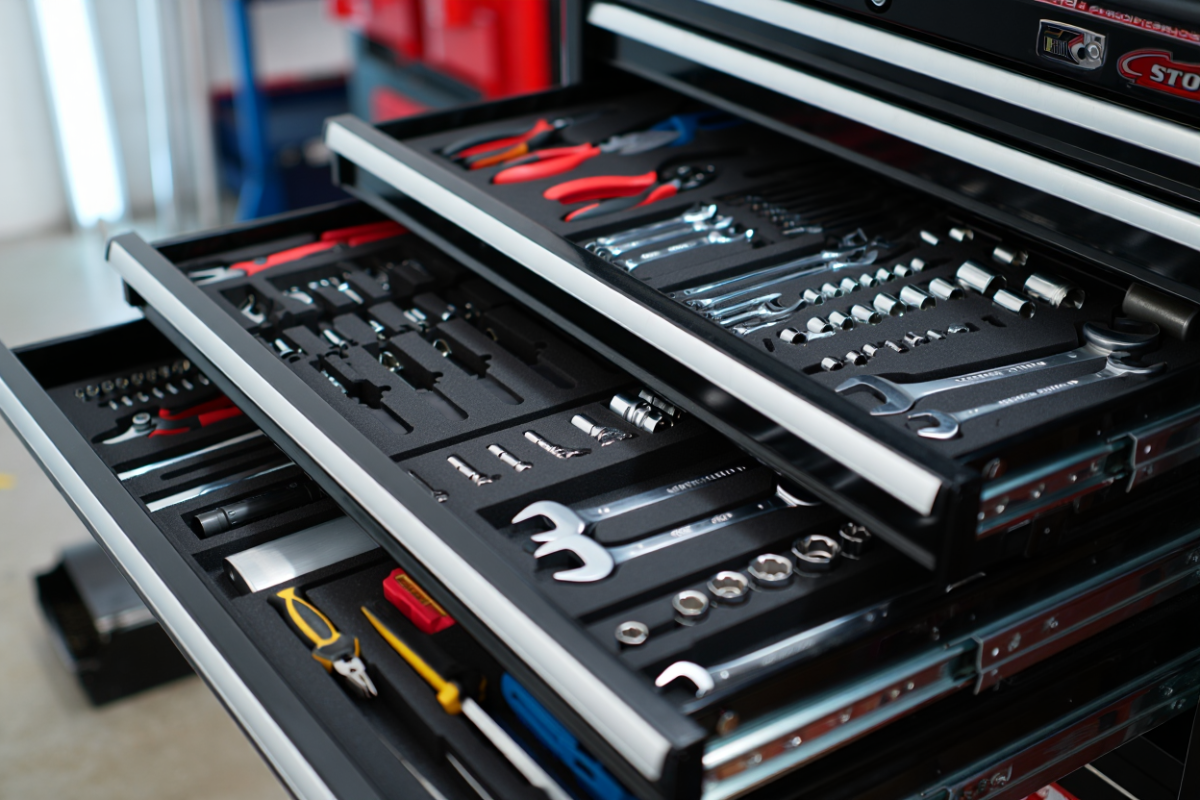
A close-up of organized workshop screwdrivers and wrenches as an example of tool chest organization.
Why Use a Tool Chest for Organization
Organizing gear in a tool chest offers many benefits:
-
Save Time & Increase Productivity: With tools neatly stored by type, you’re not wasting minutes searching through piles. As experts note, a dedicated place for all your tools “can save you both time and frustration”. Finding the right wrench or socket instantly means jobs get done faster.
-
Improve Safety: Proper storage secures sharp or heavy tools, reducing the chance of accidents. A well-organized workshop “saves time, reduces frustration, and enhances safety”. No more stepping on nails or tripping over loose gear.
-
Protect Your Tools: Tools stored in a chest are shielded from dust, moisture and damage. A chest with a powder-coated steel body can even resist rust, extending the life of your gear.
-
Maximize Space: A good tool chest makes vertical use of space. Instead of piling tools on a bench, you stack drawers and cabinets upward. This frees up your workbench and floor. For the ultimate storage solution, consider a tool chest combo (a top chest plus bottom rolling cabinet) which stacks vertically to save floor space.
-
Enhance Workflow: With everything in place, workflow is smoother. A tidy environment “promotes order and calmness,” encouraging you to keep tools organized. In short, a tool chest transforms chaos into a well-oiled workshop.
Types of Tool Chests and Storage Solutions
There are several styles of tool chest to fit different needs:
-
Top Chest (Tool Box): A compact, portable chest with a hinged lid and drawers. Handy for light use or for carrying a basic kit. Great for DIYers who want a small tool chest in the car or on the move.
-
Roller Cabinet (Tool Cart): A heavy-duty cabinet on caster wheels, often with 6+ drawers. This tool chest with wheels can store a large collection of tools. You can roll it to where you work (e.g. your car) and then park it. Though bulkier, roller cabinets typically have deep drawers for power tools and large items.
-
Tool Chest Combo: The combination of a bottom roller cabinet and a matching top chest. These two-piece units stack vertically, maximizing storage in a small footprint. The top chest lifts off for easy access. Many combos come with built-in power strips and USB ports so you can charge cordless tools right in the cabinet. Brands like Husky and Kobalt offer popular tool chest combos (e.g. a 36-inch Kobalt or 42-inch Husky combo) that provide hundreds of cubic inches of space.
-
Portable Toolbox: A simple box (metal or plastic) with a handle. Ideal for very basic tasks or taking a minimal set of hand tools on the road. Not as organized as a chest, but very mobile.
Each style serves different purposes. For a home workshop, a combination of a large, rolling tool chest and a small portable box often works best. The big chest (e.g. a 52-inch Husky at Home Depot) holds bulk tools, while the toolbox carries just what you need for a quick fix.
Choosing the Right Tool Chest
Selecting the ideal tool chest depends on your garage setup and tool collection. Consider these factors:
-
Size & Capacity: Count your tools and think about future additions. A small tool chest (like a 26-inch model) may suffice for hobbyists with dozens of hand tools. A large chest or combo (42–52 inches) is better if you have many power tools or long items. Check the total storage capacity (cubic inches) – bigger numbers mean more space. For example, Husky’s 52-inch combo offers over 20,000 cu. in. Remember not to overload drawers beyond their rated weight (most slides handle ~100–120 lb).
-
Drawer Configuration: Look at the number and size of drawers. Lots of shallow drawers are good for hand tools (wrenches, sockets). Fewer, deeper drawers hold drills or large accessories. A top chest with small trays is useful for nuts, bolts and sockets. For instance, the Husky chest has multiple small drawers plus full-width slides for heavy gear.
-
Material & Durability: Most chests are built from steel. Heavy-gauge (18- or 19-gauge) steel construction means strength. A rust-resistant powder-coat finish protects against scratches and corrosion. Plastic chests exist but aren’t as durable. You’ll want welded seams and reinforced corners on a metal chest. Many trusted brands (Husky, Craftsman, Kobalt) use steel bodies for longevity.
-
Mobility: If you’ll move the chest often, get one with sturdy wheels or casters. Lockable caster sets let you roll the chest around and then lock it in place for stability. Some chests use solid poly wheels (quiet, long-lasting) and ergonomic side handles to make rolling easier. If you lack space, a large stationary chest might not fit – consider a medium cabinet on wheels instead.
-
Security: Look for a reliable locking system. Many chests have a keyed central lock that secures all drawers. Some even offer a privacy drawer (a separately keyed tray) for expensive tools. A heavy-duty chest will have a robust lock and solid handles. A lockable tool chest organizer keeps your set safe from theft or kids.
-
Additional Features: Modern chests often include built-in outlets or USB ports. For example, Husky combos include 6 outlets and 2 USB ports in the top lid, so you can charge cordless batteries inside the chest. Soft-close drawers, drawer liners, gas-strut lids and ergonomic handles are nice bonuses that improve usability. Decide which features matter most for your work.
In short, match the chest to your tools and workspace: if you have a home gym’s worth of equipment, go big; if you have a modest set, a smaller cabinet or bench-top chest may be enough.
Organizing Your Tool Chest Effectively
Once you have the right chest, the way you fill it will make all the difference. Follow these organization tips:
-
Group Like Tools: Store similar items together. For example, keep all wrenches in one drawer and all screwdrivers in another. Many experts advise arranging tools by function or size. A popular method is to dedicate specific drawers for sockets, pliers, hammers, etc., so you always know where to look. Grouping not only saves time, it helps keep the system intact.
-
Use Drawer Liners and Foam: Non-slip drawer liners prevent small tools from sliding around. Better yet, consider custom foam inserts. You can cut foam to fit the shape of each tool so every wrench and ratchet has its own slot. This “shadow foam” approach makes tools easy to spot and impossible to misplace. Foam inserts are a bit of work up front, but they keep tools from jingling and make inventory checks instant.
-
Label Everything: Label the outside of drawers or tool bins (e.g. “Wrenches”, “Drill Bits”, “Pliers”). Clear labels remove guesswork. Some DIYers even use pegboards with numbered tags (as shown below) so every tool’s spot is obvious. When gear goes back to its labeled spot, the chest stays organized.
-
Heavy Items Low: Store bulky, heavy items in the lowest drawers or shelves. This lowers the center of gravity and makes the chest safer and easier to move. It also makes heavy tools easier to lift in and out. As one workshop guide recommends, keep large, bulky items within easy reach – often on the bottom – so returning tools requires less effort.
-
Frequently Used Tools Handy: Put the tools you use most often in the top drawers or the top chest. That way you don’t have to bend or roll the chest around for everyday tasks. Reserve lower or back drawers for specialty tools used less frequently.
-
Maintain the Order: When done with a tool, return it to its spot immediately. This simple habit preserves your system. You may even tie tape or color-code sets (e.g., blue tape for woodshop tools, red for automotive) to reinforce organization. A clean, orderly chest encourages you to keep it that way. In fact, a tidy workspace “promotes order and calmness” and motivates you to work more efficiently.
Pegboard with hand tools (wrenches, pliers, screwdrivers) neatly organized and labeled, illustrating efficient tool chest storage in a workshop.
Beyond Tools: Other Uses for a Tool Chest
A sturdy tool chest isn’t just for hammers and sockets. Its secure, compartmentalized design makes it useful for many types of gear:
-
Automotive Supplies: Store oil, antifreeze, rags, air hoses and small spare parts in a tool chest. Each garage fluid or cable can have its own drawer or bin.
-
Sports & Camping Gear: Keep camping stoves, rope, tire repair kits, or hunting accessories in a chest. A lockable drawer is great for valuables like GPS units or binoculars.
-
Hobby/Electronics: Electronics hobbyists use tool chests to organize wires, soldering tools, multimeters and hardware. Craft items like paints, glues and scissors can also fit neatly in drawers.
-
Home Projects & Office: Smaller tools like scissors, measuring tape, drill bits and fasteners are easy to misplace. A tool chest can double as a home-workshop cabinet or even hold printer ink, cables and batteries in a home office.
In general, any gear that benefits from organized storage can live in a tool chest. By treating it as a general gear cabinet, you leverage its durability and portability for more than just wrenches and sockets.
Maintaining Your Tool Chest
A little maintenance keeps your chest running like new:
-
Keep It Clean: Wipe down metal surfaces occasionally to remove dust and grease. Vacuum out drawers to clear metal shavings or debris. A clean chest prevents rust and keeps slides moving smoothly.
-
Lubricate Slide Rails: Periodically lubricate drawer slides and hinges with a light machine oil or spray lubricant. This ensures drawers open and close easily under heavy load.
-
Protect the Finish: If the chest is metal, touch up any scratches in the paint to prevent rust. Use liners or mats in the drawers to catch spills and prevent staining.
-
Balance the Load: Don’t overload one side or exceed weight limits on any single drawer. Evenly distribute tools to prevent undue stress on the cabinet. This maintains smooth operation and avoids warping.
-
Secure When Moving: If your chest is on wheels, lock the casters before placing heavy items on top or working at it. When moving the chest, close and lock drawers to avoid tipping.
With these simple steps, a quality tool chest can last for decades and stay in prime condition.
FAQs (Frequently Asked Questions)
Q: What is the difference between a tool chest and a toolbox?
A tool chest is generally a larger, multi-drawer cabinet made of metal and designed for workshops. It often sits on the floor or on a rolling base and can hold a vast number of tools. A toolbox is typically a smaller, portable box (sometimes plastic or metal) with a handle, meant for carrying a limited set of tools. In short, tool chests store more and stay in one place, while toolboxes are for on-the-go convenience.
Q: Why is tool organization important?
Poor organization wastes time and money. Research shows workers can spend nearly half their day searching for misplaced tools. By organizing tools in a chest, you eliminate that wasted time. Everything has a place – you spend less time hunting and more time working. Better organization also protects tools from damage and reduces shop accidents.
Q: How should I maintain or clean my tool chest?
Periodically wipe the chest and vacuum the drawers to remove dust and debris. Make sure drawer slides remain free of dirt; lubricate them if they stick. Keep liquids and corrosive chemicals off the chest (wipe spills promptly). When moving a wheeled chest, close the lid/drawers or lock them to prevent tipping. These simple habits will keep your chest functioning smoothly.
Q: How many tools can fit in a typical tool chest?
This varies with size. A small bench-top chest might hold a few dozen hand tools, whereas a large 52-inch combo can hold hundreds of items (sockets, screwdrivers, power tools, etc.). Instead of counting tools, look at total storage capacity and number of drawers. Fill each drawer thoughtfully – for example, all wrenches in one drawer, all drill bits in another – and you’ll be surprised how much fits.
Conclusion
A well-chosen tool chest transforms your workspace. By giving each piece of gear a home, a good chest lets you “organize gear smartly” and work more efficiently. Whether you opt for a compact portable chest or a full-size rolling cabinet, the key is thoughtful organization: group like items, label drawers, and maintain the system over time. Your future self will thank you when projects flow smoothly and you always know exactly where your tools are.
Ready to get organized? Look for chests with sturdy steel construction and the features you need (casters, power outlets, locks) at retailers like Home Depot or Lowe’s. Share this guide with fellow DIY enthusiasts, and comment below with your favorite tool chest organization tips. With the right chest and a smart setup, you’ll spend less time searching and more time building!