
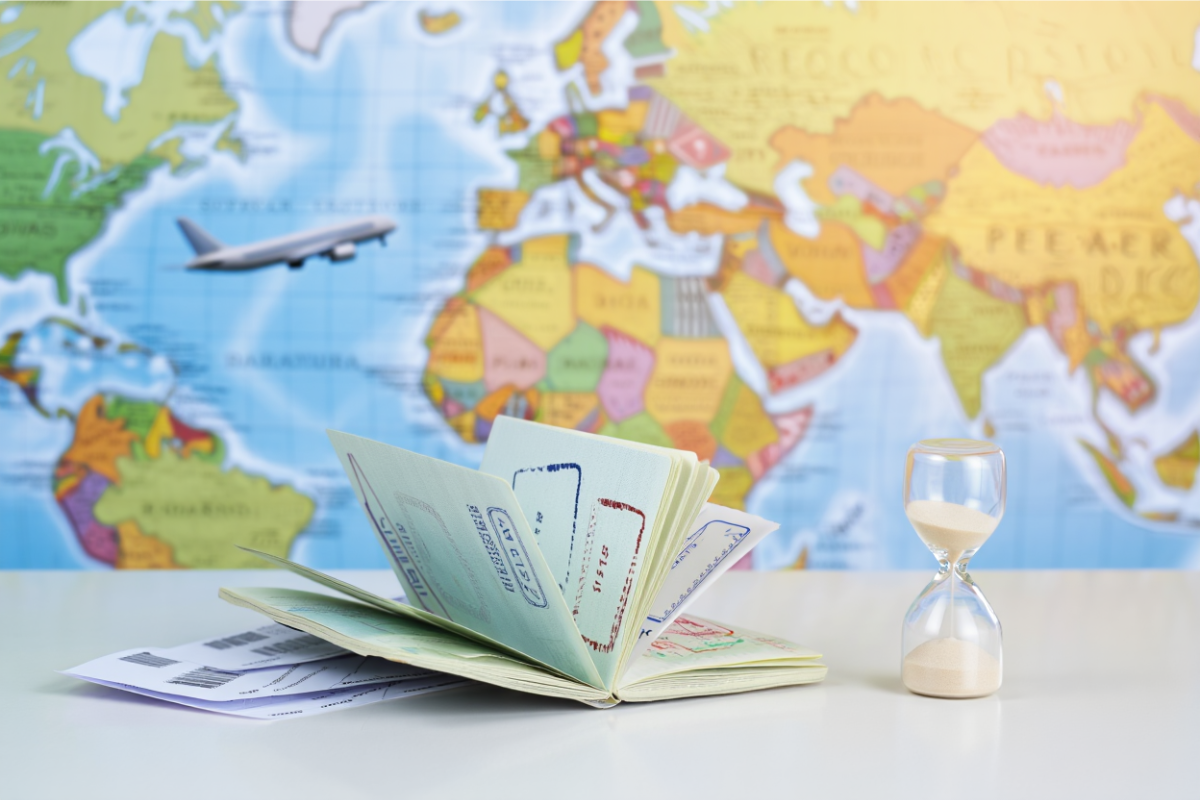
Planning international travel means accounting for travel visa processing time—the interval from application to visa approval. This timeline can range from a few days to many months, depending on your destination and circumstances. For example, if visa processing typically takes 2–4 weeks, experts recommend applying well before your trip to buffer any delays. (Busy seasons or sudden policy changes can extend those estimates.) Understanding the key factors and country-specific timelines helps you avoid last-minute surprises and ensure smooth travel preparation.
Passport pages stamped with visas, illustrating travel visa processing time. Visa issuance is only complete once you hold the stamped passport, so processing time ultimately dictates how soon you can depart. Factors like incomplete paperwork, high application volume, or extra security checks can add delays. By learning typical waits (and checking official visa processing time updates regularly), you can plan well ahead and minimize stress.
Factors Affecting Visa Processing Time
Several common factors influence travel visa processing time:
-
Application completeness: Missing or incorrect documents are a top delay cause. Consulates will not proceed until your file is complete. Always double-check forms, fees, and papers.
-
Seasonal demand: High travel seasons (summer, holidays) swell the number of applications, lengthening waits. For example, student or tourist visa offices can backlog during peak times
-
.
-
Nationality and visa type: Applications from some countries or for complex visas (work, family, study) often require more scrutiny. Citizens of high-risk countries may face additional security checks. Conversely, simple tourist visas for low-risk travelers tend to process faster.
-
.
-
Local consulate workload: Smaller embassies or those with limited staff handle fewer cases, so applicants there usually see shorter waits. By contrast, oversubscribed consulates (e.g. in major cities) can have long queues.
-
Administrative processing: Certain visas (notably U.S. visas) may be subjected to extra “administrative processing” (security clearance) after the interview. This step is unpredictable and can add weeks or even months to the timeline.
-
Policy changes/events: Sudden rule changes, global events (like a pandemic), or security alerts can create backlogs. For instance, COVID-19 caused surges in visa demand once borders reopened. Any new immigration policy may temporarily slow things down.
Being aware of these factors lets you set realistic expectations. Prepare thoroughly and apply early to mitigate the most common delays.
Visa Processing Times by Country/Region
Visa waits vary widely around the world. Below we summarize current guidelines and data for major destinations, based on official sources and recent reports.
United States (USA)
Travel visa processing time USA can be lengthy and varies by embassy or consulate. U.S. nonimmigrant visas (e.g., tourist/business B1/B2) involve two main waits: scheduling the interview and post-interview processing. Interview appointment waits range from a few days to many months, depending on local demand. For example, current State Department data show some posts with interview wait times exceeding 6–9 months (e.g. Abuja reports ~9 months). (The Department of State’s Global Visa Wait Times tool is updated monthly to reflect such backlogs.)
After the interview, approved visas typically require a few days to a couple of weeks for passport return. If additional administrative processing is triggered, this adds unpredictable delays. In practice, applicants should allow at least 4–8 weeks from application to visa in hand. Smaller consulates and off-peak periods can be faster, but high-volume posts demand patient planning. Checking the State Dept’s wait-time tool or your local embassy’s website is wise for the latest estimates.
Canada
Travel visa processing time Canada is highly variable. Canada’s official site notes that processing “varies by country”. According to IRCC data, a Canadian visitor visa can take anywhere from about 18 to 400 days depending on where you apply. In practical terms, applicants from well-served countries (like the USA or India) often see approvals in roughly 20–25 days, whereas high-traffic countries (e.g. Nigeria, UAE) may wait many months.
-
For eligible travelers (visa-exempt nationals), Canadian eTAs are processed nearly instantly (often in minutes).
-
Traditional paper Visitor Visas require biometrics and vary by visa office. For example, mid-2025 data showed average processing ~20 days for U.S. applicants and ~24 days for India, versus ~85 days for some other countries.
-
IRCC updates its published processing time estimates regularly, but always give yourself a 2–3 month lead time before travel to account for any processing time delays.
United Kingdom (UK)
Travel visa processing time UK for applications made outside the UK is relatively short for standard visits. The UK government publishes service standards: a Standard Visitor visa (tourist or short business trip) is typically decided within about 3 weeks. Similarly, short-term Study and Transit visas are ~3 weeks.
More complex visas take longer: partner/spouse or family visas applied from abroad can take up to 12 weeks. (Note: paying for Priority or Super-Priority services can shorten these timelines significantly for many visa types.) If your case requires extra documentation or scrutiny, waits may extend. In all cases, plan at least a month for a tourist visa and up to several months for dependent/work visas. UK applicants can also use the official online “check your visa processing time” service to get current estimates.
Schengen Area (Europe)
Travel visa processing time Schengen (short-stay visas for the Schengen Zone) is typically swift by rule. EU law mandates that a Schengen (C-type) visa decision be made within 15 calendar days of a complete application. This period can be extended up to 45 days if further examination is needed. In practice, consulates often complete most decisions in about two weeks provided your paperwork is in order.
Applicants are advised to apply as early as 6 months and at least 15 days before travel. Because processing is relatively fast, embassies rarely require several months of lead time, but during peak season it’s safer to apply well in advance. Always check the embassy or visa center website for any local processing targets. (For example, some Schengen countries publish their own median times, but all must adhere to the EU maximums.)
Australia
Travel visa processing time Australia depends on visa category. Australia’s Department of Home Affairs publishes median processing times (updated monthly) for key visas. Recent data show: visitor visas (including electronic ETA or eVisitor) are extremely fast – often under 1 day for straightforward applications. This reflects the automated online system for many visitor and working holiday visas.
For other visa types:
-
Temporary skilled visas had a median of about 92 days as of late 2025.
-
Student visas averaged 36 days.
Keep in mind: these are medians for completed applications. Incomplete applications or additional health/character checks can add time. Also note that permanent visas (e.g. PR) take much longer. For travel planning, rely on the Home Affairs “Visa Processing Times” tool and apply online if possible, since e-applications tend to process faster.
India
Travel visa processing time India varies by visa method. For traditional tourist visas (sticker visas via consulate or visa center), typical processing is quite fast. U.S. passport holders often see a 4–5 working day turnaround for tourist visas when the application is complete. An Indian e-Visa (electronic visa) is generally processed within 1–2 business days, although applicants are required to apply at least 4 days before arrival. In busy periods, it’s prudent to allow a week. Note that non-tourist visas (work, student) may involve longer checks or interviews. Always check the website of the Indian mission where you apply for the most current instructions and timelines.
Visa Appointment Wait Times and Delays
In many cases, scheduling an appointment adds to the overall timeline. Countries that require visa interviews or biometric appointments can have their own queues. For example, U.S. visa applicants often face an initial wait for a consular interview slot. Even after booking, applicants should regularly check for earlier openings (since new slots are added and cancellations occur). Similarly, some Schengen/UK centers allow appointment re-scheduling.
Delays can also arise if requests for additional documents or background checks occur after submission. Visa centers in places like India or Canada may schedule biometrics appointments weeks out if busy. Always book required appointments promptly once you’re invited. Keep in mind that posted processing times usually exclude these appointment wait periods; they begin after you’ve submitted all biometrics or attended the interview.
Tips to avoid visa delays:
-
Apply early: Submit your visa application 2–3 months before travel. This provides time for all steps (biometrics, verifications) and for any unexpected back-and-forth.
-
Use official processing time estimates: Many governments publish tools or guides. For instance, IRCC’s site (Canada) and Home Affairs (Australia) let you check current timelines. The U.S. and UK also have published averages. Use these processing time estimates to set expectations.
-
Prepare complete documents: Include all required forms, photos, and supporting papers (like bank statements or invitation letters). Incomplete or poor-quality submissions often trigger processing time delays.
-
Schedule appointments promptly: When notified of a required biometrics or interview date, book the earliest slot. A delayed appointment can push your visa decision back substantially. If you already have biometrics on file (IRCC, for example), check if you qualify for an exemption to skip this step.
-
Track your application: Use any available tracking/online portal. For example, Canada’s IRCC portal updates status, and the U.S. Visa Appointment System shows interview availability. Set calendar reminders to follow up if you reach the published processing time without hearing back.
-
Avoid non-refundable bookings: Until your visa is approved, avoid locking in flights or hotels you can’t cancel. That way, if there is an unforeseen delay, you won’t incur losses.
By following these steps—double-checking requirements, applying early, and responding quickly to any requests—you can minimize processing delays. Remember that sometimes even a well-prepared application meets unexpected waits; staying informed (e.g. via consulate newsletters or official social media) can alert you to system-wide backlogs or temporary closures.
Frequently Asked Questions (FAQs)
Q: What factors can delay travel visa processing?
A: Many common issues cause delays. These include incomplete applications, missing documents (e.g. untranslated papers), and busy seasons when visa offices face high volumes. Additional security checks or mandatory interviews can also extend the process. For example, if an applicant’s name hits a security watchlist, the application may enter administrative processing for several weeks. Always ensure your paperwork is accurate and respond promptly to any consulate queries to avoid these holdups.
Q: How can I check or estimate my visa processing time?
A: The best way is to use official government tools or resources. For instance, the U.S. State Department’s Global Visa Wait Times page (updated monthly) shows current interview wait estimates by location. Canada’s IRCC website offers a processing times checker (note: results vary by visa office). Many countries (UK, Australia, Schengen embassies) publish target decision times on their websites. Checking these before you apply gives a rough idea of how long you’ll wait. Also look for travel forums or recent surveys for up-to-date user experiences, but rely mainly on official estimates.
Q: Can I expedite or speed up my travel visa application?
A: Generally, standard tourist visa processes cannot be officially expedited beyond priority services. Some countries do offer paid fast-track options for certain visas (e.g. the UK’s priority visa service). In emergencies, a few places allow urgent requests: for example, Canada and India consider emergency applications (medical or family crises) for faster handling. The U.S. doesn’t allow expedited tourist visas, but sometimes interview waivers shorten the wait for returning travelers. Always check with the embassy if any “super-priority” or expedited channels exist; otherwise, the best approach is to prepare a complete application early.
Q: How far in advance should I apply for a travel visa?
A: It’s wise to apply as early as the consulate permits. A common recommendation is at least 2–3 months before your trip. This accounts for time to schedule biometrics/interviews, complete background checks, and handle any additional requests. Some visas (like Schengen) can be applied for up to 6 months ahead. If you wait too long, you risk an unapproved visa arrival. Remember to check the visa requirements page for each country: many will note the earliest you can apply (often several months in advance).
Q: Why is my travel visa application taking longer than expected?
A: If you’re beyond the usual processing window, the delay often comes down to specific issues. Common reasons include incomplete documentation, the need for supplementary information, or a sudden surge in applications. Seasonal backlogs (e.g. holiday peaks) can cause many visas to take longer than the posted average. If you paid for standard processing, most embassies instruct applicants to wait out the current published time before inquiring. For example, UKVI advises contacting them only after the stated processing time has passed. If in doubt, reach out politely to the visa office or your visa service center for an update.
Understanding travel visa processing time is key to stress-free trip planning. It varies widely by destination and visa type, so always consult the latest official guidelines and build extra cushion into your schedule. By applying early, providing complete information, and monitoring updates, you can reduce uncertainties and be ready for your travels.