
Watermelon seeds are often discarded when enjoying a juicy slice of watermelon, but these tiny seeds are actually nutrient powerhouses. In fact, watermelon seeds contain various nutrients – protein, healthy fats, calcium, iron, zinc, phosphorus, selenium and B/E vitamins. A 100-gram serving of dried watermelon seed kernels provides roughly 28–30 grams of protein, about 50–51 grams of fat and over 550 calories. They are also rich in minerals like magnesium, phosphorus and zinc (over 90% of the daily value per serving). These nutrients translate into surprising health benefits: watermelon seeds can boost energy, support heart health, improve hair and skin, aid digestion, and more. In this comprehensive guide, we explore watermelon seeds’ nutrition, benefits, uses (including hair and skin), how to eat them, potential side effects, and even compare them with pumpkin seeds.
Nutritional Profile of Watermelon Seeds
Watermelon seeds are unusually high in protein and healthy fats for a seed. According to nutrition data (USDA and hospitals), 1 cup (~108 g) of dried watermelon seed kernels provides about 30.6 g protein, 51.2 g fat, 16.5 g carbs and 602 calories That’s roughly 28–30 g protein per 100 g (about 57% daily value) and 47–51 g fat (73–77% DV) The fat is largely unsaturated: about 30 g polyunsaturated and 8 g monounsaturated per cup, with only ~10 g saturated fat. In other words, watermelon seeds are rich in heart-healthy omega-6 fatty acids (linoleic acid) and contain some omega-3 as well.
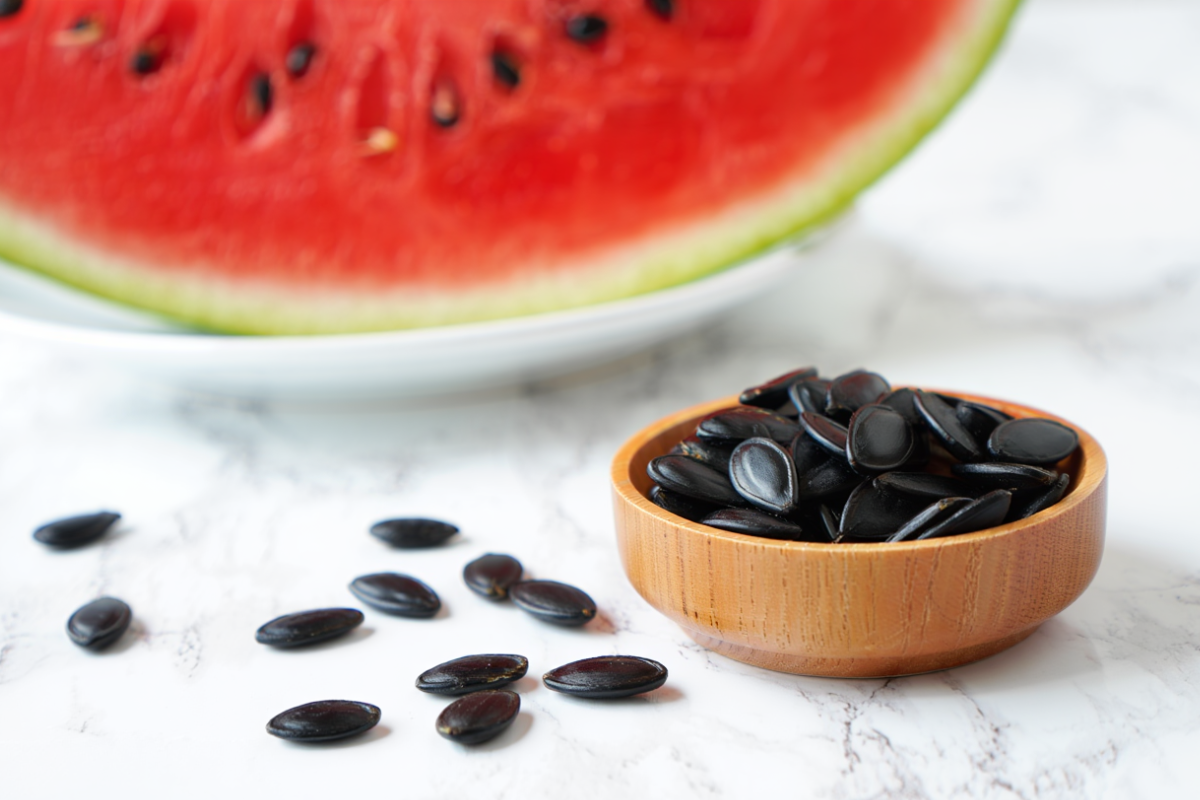
Figure: Shelled white watermelon seeds (ready to roast or eat). These edible seeds are high in protein, healthy fats, and key minerals.
In addition to macros, watermelon seeds are mineral-rich. One serving delivers a whopping 556 mg magnesium and 815 mg phosphorus (over 100% DV each). It also provides zinc (11 mg, ~100% DV), iron (7.9 mg), copper (0.74 mg) and manganese (1.74 mg) per cup. These minerals support energy metabolism, bone health and immunity. The seeds also contain small amounts of potassium, calcium and B vitamins (niacin, B2, B6), though vitamins A and C are negligible. Overall, watermelon seeds pack fiber, protein, and beneficial fats in a small package, making them a superfood snack.
Health Benefits of Watermelon Seeds
Watermelon seeds deliver a range of health benefits, largely due to their nutrient profile. They are best known as a plant-based protein source, and also contain compounds that promote heart health, blood sugar control, immunity, and more. Here are some of the top benefits:
-
High Protein & Energy: Watermelon seeds offer a plant-rich protein source (~28 g per 100 g) that can help boost energy and muscle repair. The magnesium and zinc in these seeds aid energy metabolism. A study on rats showed watermelon seed extract improved body weight and muscle function, likely due to this protein content
-
Heart Health: The healthy unsaturated fats in watermelon seeds (linoleic and oleic acids) can help lower LDL (bad) cholesterol and raise HDL (good) cholesterol. Magnesium also supports normal blood pressure and heart rhythm. According to Healthline, seeds like watermelon and pumpkin (their counterparts) are “rich in fiber, healthy fats, amino acids, antioxidants,” all of which protect cardiovascular health. In fact, studies suggest that eating seeds regularly (including watermelon seeds) may help reduce stroke and arteriosclerosis risk by improving blood lipid profiles.
-
Blood Sugar Control: Watermelon seeds may help regulate blood glucose. A rat study found that watermelon seed extract significantly reduced blood sugar levels. The fiber and magnesium in the seeds also improve insulin sensitivity. NDTV notes that seeds’ fiber helps digestive health and insulin function. Drinking watermelon seed tea (boiled seeds) is a traditional remedy in some cultures for diabetes management.
-
Bone and Mineral Support: High levels of magnesium, phosphorus, zinc and calcium in watermelon seeds all contribute to bone density and strength. Magnesium (556 mg per cup) along with calcium and vitamin D aid bone formation. Zinc supports bone protein synthesis and mineralization. A Vinmec article highlights that amino acids in the seeds “promote increased bone density,” helping prevent osteoporosis.
-
Immune Boost: Watermelon seeds are a good source of zinc (nearly 100% DV per cup) and vitamin E, two nutrients essential for immunity. Zinc strengthens immune cells and helps fight infection, while vitamin E’s antioxidant power protects cells from oxidative stress. NDTV confirms watermelon seeds are “a good source of zinc which strengthens the body’s immune system”.
-
Skin & Hair Health: The protein, iron, and B vitamins (like niacin) in watermelon seeds support healthy skin and hair. Zinc and vitamin E help skin repair and hydration. In particular, linoleic acid helps maintain the skin barrier, preventing dryness. Many beauty blogs note that watermelon seed oil (otoñanga oil) is lightweight and moisturizing without clogging pores. Copper in the seeds aids melanin production, giving hair natural pigment and shine. Health guides often list protein, iron and zinc from these seeds as factors that can “support hair growth and reduce hair loss”.
Overall, the mix of protein, healthy fats, minerals and antioxidants in watermelon seeds means they can boost overall wellness. They provide a nutrient-dense alternative snack that rivals nuts and other seeds.
Watermelon Seeds for Hair and Skin
Watermelon seeds (and their oil) are gaining popularity in hair and skincare routines. The oil, sometimes called kalahari oil, is prized for its lightweight yet nourishing properties. Studies and beauty experts note several benefits:
-
Hair Moisture & Strength: Watermelon seed oil penetrates easily, deeply moisturizing hair without greasiness. Its linoleic and oleic fatty acids hydrate hair strands and scalp, reducing dryness and itch. As Clinikally reports, “Hair can be moisturized, strengthened, and given a glossy finish” by watermelon seed oil. The protein and zinc content help strengthen hair roots and reduce breakage. Copper in the seeds may enhance natural shine and pigment
-
Scalp Health: The oil’s fatty acids also help balance scalp oil (sebum) production. For oily or acne-prone scalp, watermelon seed oil is non-comedogenic (it won’t clog pores) and can reduce excess oil. Vitamin E and zinc nourish hair follicles and may improve growth. Anecdotal reports and small studies suggest that applying or consuming watermelon seeds can reduce hair fall from nutrient deficiencies Skin Hydration & Anti-Aging: For skin, watermelon seed oil is celebrated as a light moisturizer. It locks in moisture and softens skin without feeling heavy. It’s rich in vitamin E antioxidants, which protect against free radical damage (sun, pollution) and help maintain skin elasticity. Clearstem notes that the oil supports collagen and elastin, reducing wrinkles and improving firmness. Watermelon seeds’ zinc content also helps with wound healing and inflammation control. Because the oil is high in linoleic acid, it can help balance oily skin and reduce acne by normalizing sebum.
-
Soothing & Anti-inflammatory: Phytosterols in watermelon seed oil have anti-inflammatory effects. This can soothe irritated, sensitive or acne-prone skin. The oil is gentle and often well-tolerated on all skin types. Its high antioxidant content may also even skin tone and calm redness.
In summary, watermelon seeds support hair and skin thanks to their amino acids, minerals and healthy oils. Whether eaten or applied topically (as an oil), they provide hydration, strength and protective antioxidants to hair follicles and skin cells.
How to Eat Watermelon Seeds (Roasted, Sprouted, Raw)
You can enjoy watermelon seeds in many tasty ways. Cooking or processing them helps unlock nutrients:
-
Roasted Seeds: Roasting watermelon seeds with a pinch of salt is very popular. Roast the washed seeds in an oven or skillet until golden – this makes a crunchy, nutty snack. PharmEasy notes that roasted watermelon seeds are easy and delicious: “You can easily roast them by sprinkling some salt… it makes a healthy snack”. Roasted seeds also make a great salad or soup topping.
-
Sprouted Seeds: Some people sprout watermelon seeds (soak and germinate them for a couple of days) to increase nutrient availability. Sprouting breaks down phytic acid and may enhance protein and vitamin absorption. The sprouts can be eaten raw (sprinkled on salads) or lightly roasted.
-
Raw or Boiled: You can chew raw seeds (though they are harder and have a slight bitterness) or boil them. Watermelon seed tea (boiling seeds in water) is a traditional remedy in parts of Asia for digestion and diabetes Boiled seeds or their water can be sipped for hydration and nutrients.
-
Seed Flour and Mixes: Grind roasted seeds into a watermelon seed flour. This protein- and nutrient-rich flour can be added to smoothies, dips or energy bars. Some recipes combine ground seeds into nut butters or protein balls. PharmEasy recipes include watermelon seed protein bars and even savory seed rice: “bar made of watermelon seeds, dried fruits, oats, and sugar syrup” or “rice topped with ground roasted watermelon seeds”.
-
Other Recipes: Incorporate seeds into trail mix, granola, or bake them into bread for extra crunch. In West Africa and some Asian cuisines, watermelon seeds (egusi) are used like groundnuts or pumpkin seeds in stews.
Tips: Remove any commercial colorings on black watermelon seeds (some are dyed) to avoid additives. Start with small amounts (a few tablespoons) and gradually increase, to let your digestive system adjust. Storing in the fridge after roasting can keep them fresh longer.
Watermelon Seeds vs Pumpkin Seeds
People often compare watermelon seeds to pumpkin seeds, as both are nutrient-dense snacks. There are some key differences:
-
Protein: Interestingly, watermelon seeds pack more protein. A recent study found watermelon seeds are ~35.4% protein by weight, compared to ~23.6% for pumpkin seeds. That means per 100 g, watermelon seeds give more grams of protein than pumpkin seeds.
-
Fats: Pumpkin seeds (pepitas) typically have higher total fat (about 19 g per 28 g serving) and more fiber. Watermelon seeds also have healthy fats (~47 g per 100 g) but a bit less fiber (around 3–4 g per 100 g). Both are rich in unsaturated oils.
-
Minerals: Both seeds are mineral powerhouses. Watermelon seeds are exceptionally high in magnesium (515–556 mg per cup) and zinc (10–11 mg per cup). Pumpkin seeds also contain magnesium and zinc but generally a bit less. Pumpkin seeds shine in iron and fiber: one ounce of pumpkin seeds has about 15% DV fiber vs only ~2% in 1 oz of watermelon seeds.
-
Vitamins: Neither seed has much vitamin C or A, but pumpkin seeds have a good amount of vitamin K and may contain more carotenoids. Watermelon seeds have B vitamins (niacin, folate). The difference in micronutrients is not huge, but pumpkin seeds contain some antioxidants like tryptophan that watermelon seeds lack.
-
Calories: They are both calorie-dense. Watermelon seeds contain about 557 kcal per 100 g (per Food mstruct) while pumpkin seeds have around 446 kcal per 100 g.
-
Taste & Use: Watermelon seeds have a mild nutty flavor (often roasted/salted). Pumpkin seeds are nuttier with a distinct taste. Watermelon seeds are smaller and often removed from fruit; pumpkin seeds are larger and easier to shell. Nutritionally, watermelon seeds offer more protein and certain minerals, whereas pumpkin seeds have more fiber and perhaps broader antioxidant benefits.
In short, both are healthy seeds, but if you want extra protein and magnesium, watermelon seeds have the edge. If you want fiber and vitamin K, pumpkin seeds win. Including both in your diet gives a great variety of nutrients.
Watermelon Seeds Side Effects and Safety
While watermelon seeds are nutritious, there are a few caveats:
-
Digestive Discomfort: The high fiber and fat content means overeating watermelon seeds can cause digestive upset (gas or bloating) in sensitive individuals. Vinmec cautions that “overconsumption…can irritate the throat and cause discomfort”. Eating a handful or two a day is generally safe for most adults; avoid huge quantities at once. Drinking water with the seeds or soaking them can make them easier on the stomach.
-
Calorie Load: They are calorie-rich. A small cup has over 600 calories, so eating many can contribute to weight gain if not accounted for. Portion control is key.
-
Allergies: Seed allergies are uncommon, but if you have known seed or nut allergies, test a tiny amount first. There are no widespread reports of watermelon seed allergy, but it’s wise to be cautious if you’re prone to allergic reactions.
-
Choking Hazard: The hard shells (if not chewed) can be a choking risk, especially for young children. Ensure seeds are fully chewed or ground when serving kids.
-
Contaminants: Some commercially sold watermelon seeds (especially black melon seeds) are colored with food dyes. Choose natural or lightly roasted varieties to avoid additives
-
Animal Studies: In rat studies, extremely high dietary intakes (2.5–5% of diet) showed potential kidney and fertility effects. However, this was at very high doses (not typical human consumption). There’s no evidence of toxicity at normal serving sizes in humans.
-
Pregnancy: Eating moderate amounts of watermelon seeds can be beneficial in pregnancy (for nutrients like iron and protein) and is generally considered safe, but always consult your doctor if in doubt.
Overall, watermelon seeds have no serious side effects when eaten in moderation. If any digestive issue arises, reduce the serving or soak/roast them. The benefits generally outweigh the risks for most people.
Frequently Asked Questions (FAQs)
Q: Are watermelon seeds good for you?
A: Yes. Watermelon seeds are nutrient-rich. They provide plant protein, healthy fats, fiber, and minerals like magnesium, zinc and iron. These nutrients support heart, bone, hair and skin health. In small amounts, they can be part of a healthy diet.
Q: Can you eat watermelon seeds raw?
A: You can, but they are hard and bitter when raw. Many people prefer them roasted or sprouted. Roasting makes them crunchy and tasty. You can also chew or soak them – they are safe either way. Chewing raw seeds slowly helps digestion, or soak/boil them for a softer texture.
Q: How many calories are in watermelon seeds?
A: Watermelon seeds are calorie-dense. One ounce (~28 g) contains about 158 calories A 100-gram serving has roughly 557–602 kcal. Most calories come from fat (about 47–51 g per 100 g) and some protein (28–30 g). Use them sparingly if you’re watching calories.
Q: Do watermelon seeds help with hair growth?
A: They can help indirectly. Watermelon seeds are high in protein, iron and zinc, all of which are important for hair growth and strength. Drinking watermelon seed extract or oil might reduce hair fall by providing these nutrients. Additionally, applying watermelon seed oil can moisturize and protect hair. While not a miracle cure, they support overall hair health.
Q: What is the difference between watermelon and pumpkin seeds?
A: Both are healthy seeds, but watermelon seeds have more protein (≈35% vs 23% in pumpkin seeds) and slightly higher magnesium and zinc content. Pumpkin seeds have more fiber and certain antioxidants. Watermelon seeds and pumpkin seeds have similar amounts of fat. Use whichever you prefer; both boost nutrition.
Q: Are there any side effects of eating watermelon seeds?
A: Generally they are safe in moderate amounts. Overeating can cause stomach upset due to high fat/fiber. Seeds can also irritate a sore throat if eaten dry. There’s no known major toxicity for normal consumption, but stick to recommended serving sizes. Pregnant women can eat them in moderation.
Conclusion
In conclusion, watermelon seeds are far more than waste – they are tiny nutritional powerhouses with surprising health benefits. Packed with protein, healthy fats, fiber and essential minerals, they support heart health, blood sugar control, immune function, and bone strength They are also great for skin and hair health, both eaten and used topically. Whether you roast them with a bit of salt, grind them into smoothies or even apply their oil, integrating watermelon seeds into your diet and beauty routine can give you a natural boost. Remember to enjoy them in moderation (they are calorie-dense), and experiment with different ways of preparation. Share this post with friends to spread the word about the benefits of watermelon seeds, and let us know in the comments how you like to use them!