
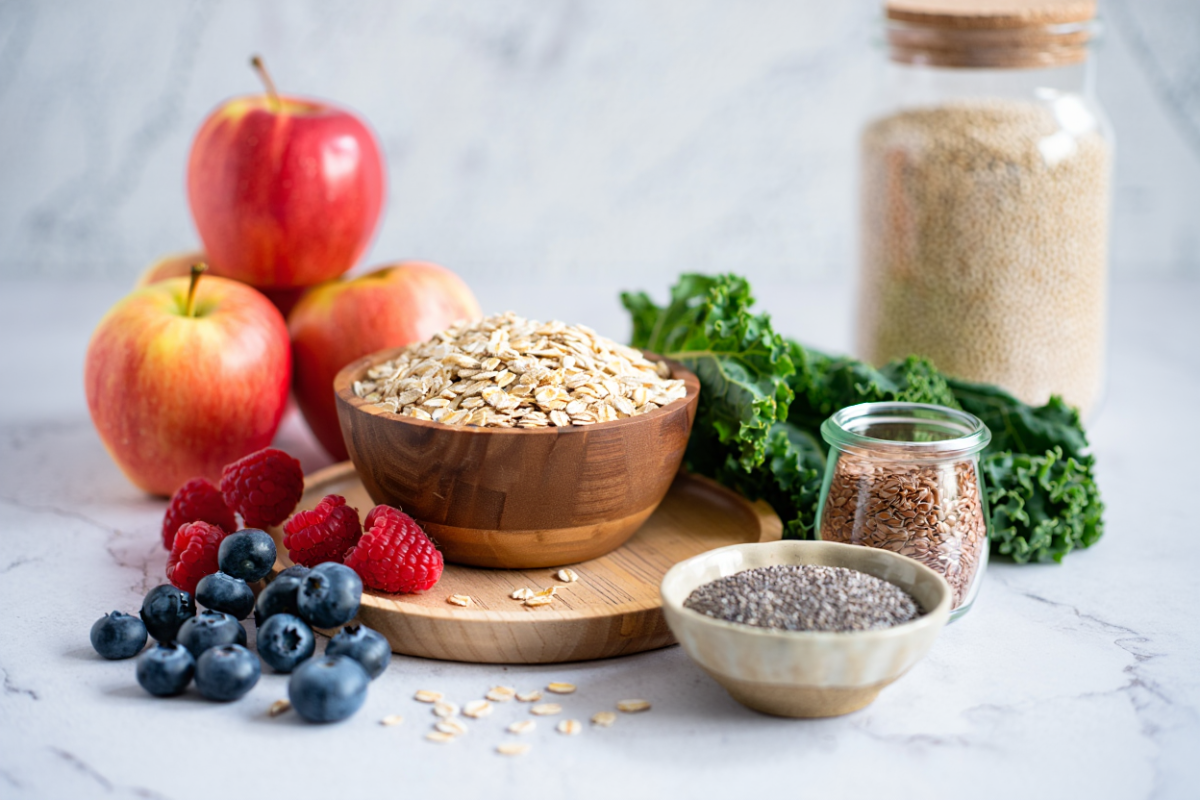
Fiber is a crucial nutrient for digestive wellness, but most people don’t get nearly enough of it. Studies show roughly 90–95% of American adults fail to meet recommended fiber intakes. In fact, Americans consume only about 10–15 grams of fiber per day, far below the 25–38 grams recommended for healthy adults Fiber (found in whole grains, fruits, vegetables, and legumes) supports gut health by feeding beneficial microbes and adding bulk to stools High-fiber diets are linked to better digestive regularity and significantly lower risks of chronic disease; for example, a large review found that every additional 8 grams of fiber per day cut heart disease, stroke, diabetes and colon cancer risk by 5–27% When whole foods don’t provide enough fiber, high-quality supplements can help bridge the ga;
Alt: Illustration of the human gut microbiome and digestive tract. Fiber supplements come in various forms (powder, capsules, gummies) and contain different fiber types (such as psyllium husk, inulin, or guar gum) Choose a supplement that matches your goals: for example, bulk-forming fibers like psyllium are great for constipation, while prebiotic fibers (inulin, PHGG) support the gut flora. Below, we explain how to pick and use a fiber supplement for gut health and related needs.
Why Fiber is Essential for Gut Health
Fiber profoundly influences the gut microbiome and digestive function. Soluble fibers (such as inulin and partially hydrolyzed guar gum) act as prebiotics: they resist digestion in the small intestine and travel to the colon, where they feed beneficial bacteria. Those bacteria ferment the fiber into short-chain fatty acids (SCFAs) like butyrate, which nourish colon cells and reduce inflammation Insoluble fiber, by contrast, passes through the gut mostly unchanged, adding bulk to stool and helping waste move out efficiently. This prevents constipation and keeps the intestinal lining healthy. The result of this fiber–microbe interaction is a healthier gut ecosystem: diverse, fiber-fed bacteria support immune balance, produce vitamins, and even influence mood-regulating hormones. Adequate fiber is also linked to broader health benefits: for example, high-fiber diets aid weight control (studies show people who eat more whole-grain fiber tend to gain less weight over time and dramatically reduce the risk of chronic diseases
Types of Fiber: Soluble vs. Insoluble
Dietary fiber comes in two main forms: soluble (dissolves in water, forming a gel) and insoluble (does not dissolve, adding bulk). Each serves a purpose. Soluble fiber (e.g. pectins, gums, mucilages) can help lower LDL (“bad”) cholesterol and regulate blood sugar It’s found in foods like oats, beans, carrots, and apples Insoluble fiber (e.g. cellulose, hemicellulose) primarily adds bulk to stool, speeding transit and preventing constipation. It is abundant in whole-wheat foods, wheat bran, and many vegetables (such as cauliflower and green beans) Most fiber supplements specify the type: some are purely soluble (psyllium, inulin), some purely insoluble (cellulose), and some blends include both for broad support.
How to Choose a Fiber Supplement
When selecting a fiber supplement, keep these factors in mind:
-
Fiber source/type: Check the ingredient. Psyllium husk (Plantago ovata) is a gel-forming soluble fiber proven to improve cholesterol and stool consistency. Inulin or FOS (from chicory root) are soluble prebiotic fibers Partially hydrolyzed guar gum (PHGG) is another soluble prebiotic, favored for gentle digestion Methylcellulose and cellulose are examples of fibers that are mostly insoluble (they bulken stools). Choose a source that fits your need (cholesterol-lowering, regularity, etc.).
-
Form and dose: Fiber supplements come as powders, capsules, tablets, or gummies. Powders typically provide larger doses per serving (a scoop might deliver 5–9g fiber), while pills or gummies often have 3–5g fiber each. Consider which form you will use consistently, and check how many grams of fiber per serving you actually get. Also note flavor and texture: powders can be gritty or thick, whereas gummies taste like candy.
-
Carbohydrate content: Check for added sugars or fillers. People on low-carb or diabetic diets should choose sugar-free, low-net-carb options. For example, pure psyllium husk contains virtually no digestible carbs, making it keto-friendly. Nature-made advises that soluble fibers help cholesterol, while insoluble fibers focus on stool bulk
-
Digestive tolerance: Highly fermentable fibers (inulin, FOS, GOS) can cause gas or bloating in sensitive individuals. Monash University notes that less-gassy fibers like psyllium, oats, and methylcellulose are often better tolerated, especially for IBS. If you have GI issues, start with a mild fiber (like acacia or PHGG) and increase slowly.
-
Cost and quality: Compare the cost per gram of fiber. Some fiber powders offer a lot of fiber for a modest price, while specialty blends or gummies may be pricier. Choose reputable brands with quality testing (look for USP or NSF certification). Read labels for unnecessary additives and avoid those if possible.
This checklist will help you pick a fiber supplement that matches your health goals and lifestyle.
Top Fiber Supplements for Gut Health
Alt: Fiber supplement capsules spilled from a bottle on a wooden table. Popular fiber supplements come in many forms (powder, capsules, gummies) and sources. Some focus on a single fiber (like psyllium), while others combine multiple fibers. For example, one scoop of some powders can deliver 6–9g of fiber, whereas capsules or gummies often give 3–5g per serving. Below are examples of common fiber supplements and what they offer:
-
Psyllium Husk (e.g. Metamucil, Konsyl): A gel-forming soluble fiber from the husks of Plantago seeds. One teaspoon (~5g) yields ~3–5g fiber. In water it swells into a soft bulk that soothes and bulks stool, and studies show it effectively lowers LDL cholesterol. Pros: Very effective and well-studied. Cons: Must drink plenty of water; can be thick or gritty if not mixed fully.
-
Inulin/FOS (e.g. Fiber Choice Prebiotic, Benefiber Prebiotic): Soluble, fermentable fibers (from chicory root or agave) usually found in powders or gummies. A serving typically provides 3–5g of fiber They feed gut bacteria (promoting bifidobacteria growth). Pros: Support the microbiome; gummies taste good. Cons: Can cause gas or bloating, especially when you first start using them. Take them with meals or water and build up slowly.
-
Partially Hydrolyzed Guar Gum (PHGG) (e.g. Sunfiber, Thorne FiberMend): A highly soluble, prebiotic fiber derived from guar beans. One scoop provides about 5–7g fiber. PHGG ferments very slowly, so it rarely causes gas and is well tolerated even in IBS It can normalize stool consistency whether you have constipation or diarrhea Pros: Gentle on the gut; good prebiotic. Cons: Less bulking effect than psyllium, so it may not produce rapid bowel movements.
-
Wheat Dextrin (e.g. Benefiber Clear & Natural, Metamucil Smooth): A fully soluble fiber made from wheat starch. It dissolves clear and has a neutral taste, delivering about 3g fiber per serving. Pros: Easy to mix in any drink or food without thickening. Cons: Lower fiber per dose; may contain trace gluten (choose gluten-free versions if needed); doesn’t bulk as much as psyllium.
-
Organic Fiber Blends (e.g. Garden of Life Raw Organic Fiber): Powders that combine fibers like flaxseed, chia, acacia, and oat bran. These blends can offer ~6–9g fiber per scoop plus nutrients from the plant sources. Pros: Whole-food variety; high fiber dose. Cons: Can be very thick or gritty; flavor may be earthy. Often mixed into smoothies or yogurt.
-
Fiber Gummies (e.g. Vitafusion Fiber Well, HUM Daily Fiber): Chewable supplements that pack fiber (usually inulin or polydextrose) into candy-like gummies. They typically provide ~2–5g fiber in a few gummiesPros: Convenient and tasty for those who dislike powders. Cons: Usually contain sugars or sugar alcohols; often more expensive per gram of fiber; lower total fiber per dose, so may require multiple servings.
Best Fiber Supplement for Constipation
To relieve constipation, aim to increase stool bulk and hydration. Insoluble fiber (like wheat bran) works well for this but a gel-forming soluble fiber like psyllium husk is also highly effective Psyllium swells with water to soften and bulk stool, easing its passage. Clinical studies report that daily psyllium significantly improves stool frequency and consistency. If you’re new to fiber, start with ½–1 teaspoon of psyllium per day and drink plenty of water, then gradually increase as tolerated. Another gentle option is methylcellulose (found in Citrucel): it’s a non-fermentable fiber that bulks stools with minimal gas. Note that fiber supplements are not immediate solutions – they typically take 1–3 days of regular use to produce results. For urgent relief, a stool softener or laxative might be needed, but for long-term health, daily fiber is the key.
Best Fiber Supplement for Weight Loss
Fiber can aid weight management by promoting fullness and slowing digestion The most effective fibers for this purpose are viscous soluble fibers. When mixed with liquid, they form a thick gel that remains in the stomach longer, helping you feel full. Glucomannan (from konjac root) is a top example: one study showed that adding glucomannan supplements led to significant weight loss and improved blood sugar in overweight adults Psyllium is another good option for satiety. (To use, take glucomannan or psyllium 20–30 minutes before a meal with a glass of water.) That said, experts stress that fiber supplements alone have modest effects; they work best as part of a balanced diet and exercise plan. In other words, fiber can help curb appetite, but it’s most effective when paired with healthy eating and activity.
Fiber Supplements for Gut Health
For overall gut health, emphasize prebiotic fibers that nourish your microbiome. Soluble fibers like inulin, FOS, PHGG, and acacia gum are top choices. These selectively feed beneficial gut bacteria (like bifidobacteria), which produce SCFAs that maintain gut lining health. For example, inulin supplements are known to promote favorable changes in colon bacteria. PHGG (found in products like Sunfiber) is often recommended for gut support because it ferments slowly and is very well-toleratedMany nutritionists suggest fiber mixes with multiple sources (e.g. psyllium + inulin + acacia) to provide both bulk and microbial nourishment. When choosing a gut-supportive supplement, look for terms like “prebiotic fiber” or check if the label mentions feeding good bacteria.
Fiber Supplements for Men
Men generally require more daily fiber (roughly 31–38 grams under age 50) than women, so many men use supplements to help reach that target. For example, adding 1–2 scoops of a fiber powder (each scoop often yields 6–9g fiber) to a meal can significantly boost intake Fiber also supports men’s health by helping to lower cholesterol and stabilize blood sugar, protecting against heart disease and diabetes. In particular, soluble fibers like psyllium or oat bran are known to improve lipid profiles. Men on low-carb diets should choose sugar-free, low-carb fibers (like psyllium husk) to avoid extra carbs. Overall, a mixed fiber supplement or adding a fiber-rich powder to foods can help men meet the higher recommended intake.
Best Fiber Supplement for Women
Women need about 25–28 grams of fiber per day (under age 50), though most consume less. Fiber aids women’s health by regulating digestion and blood sugar, and it may even influence hormone balance. For example, high-fiber diets have been linked to lower risks of type 2 diabetes and hormone-related cancers Many women use fiber supplements for digestive comfort, especially during pregnancy or when under stress. Gentle fiber options—such as acacia gum, ground flaxseed, or blends of soluble fiber—tend to be well tolerated. A practical tip: add a spoonful of fiber powder to your morning smoothie or yogurt. This controlled dose of fiber (mixed with a nutritious meal) can help you meet your daily goal while providing vitamins and minerals from real foods.
Best Fiber Supplement for IBS
IBS (irritable bowel syndrome) often requires a delicate fiber approach. Many IBS sufferers do better with low-gas fibers Psyllium husk is commonly recommended: it is generally well tolerated and can relieve constipation (IBS-C) without the explosive fermentation of some oligosaccharides On the other hand, rapidly fermentable fibers like inulin, FOS or GOS often trigger gas and discomfort in IBS, so those should be used cautiously or avoided. A top IBS-friendly supplement is PHGG (Sunfiber): clinical reports show it improves symptoms in both IBS-C and IBS-D by normalizing stool consistency. Monash University even highlights psyllium, oats, and methylcellulose as fibers that tend to be better tolerated in IBS. In summary, IBS patients should favor soluble, low-FODMAP fibers (like psyllium, guar gum, acacia) and introduce them slowly.
Best Fiber Supplement for Cholesterol
To lower cholesterol, focus on viscous soluble fibers. Psyllium husk is a proven choice: its sticky fiber binds bile acids in the gut, causing the body to use more cholesterol to make bile Clinical trials show that daily psyllium can significantly reduce total and LDL cholesterol. Other soluble fibers (oat beta-glucan, pectin from apples, guar gum) also help lower cholesterol, though usually to a lesser degree. Insoluble fibers alone have minimal effect on blood lipids, so ensure your supplement is high in soluble (viscous) fiber. Combining fiber supplements with a heart-healthy diet (low in saturated fat) will maximize cholesterol benefits.
Best Natural Fiber Supplement
“Natural” fiber supplements are simply those made from whole-plant sources without synthetic additives. Common examples include powders of ground flaxseed, chia seed, psyllium husk, oat bran, and acacia gum. These products deliver fiber in much the same form as eating beans or bran flakes. For instance, two tablespoons of flaxseed meal provide about 8g of fiber plus omega-3 fats. A scoop of pure psyllium husk gives ~6g fiber. Natural supplements often carry organic or non-GMO labels. Many health experts emphasize that fiber from whole foods also provides vitamins, minerals, and antioxidants, so consider fiber supplements as a complement, not a replacement, to a veggie- and fruit-rich diet.
Best Fiber Supplement for Keto
The ketogenic diet is very low in carbs, which often means too little fiber. Harvard Health notes that many keto dieters suffer constipation because the diet excludes many fibrous foods (no grains, few starchy vegetables) Adding a fiber supplement is highly recommended. Choose “keto-friendly” fibers: for example, sugar-free psyllium husk (plain Metamucil) is a classic choice. It adds substantial fiber with almost zero net carbs. Guar gum (glucomannan) and acacia are also very low in digestible carbs. Whatever supplement you pick, be sure to drink extra water, since ketosis can dehydrate you and fiber needs fluids to work. In short, a supplemental fiber (often psyllium-based) is considered very keto-compatible and helps prevent or relieve the constipation common on keto.
When to Take a Fiber Supplement
You can take a fiber supplement at any time of day, but keep these tips in mind. Start slowly: begin with half the recommended dose and gradually work up. Even high-quality fiber can cause gas or bloating if you jump in too fast. Always drink a full glass of water with your fiber dose, and stay well-hydrated throughout the day. Timing with meals: fiber can be taken with breakfast, lunch, or dinner. Some people prefer a morning dose to help digestion all day; others take it at night so it works overnight. Both are fine – consistency is more important than timing. Medications: fiber can interfere with the absorption of certain drugs. To avoid interactions, take your fiber supplement 1–2 hours away from any prescription medications. For example, if you take your supplements in the morning, consider taking fiber at night (or vice versa). Following these guidelines will maximize benefits and minimize discomfort.
Frequently Asked Questions
Q: What is the best fiber supplement for gut health?
A: There is no single “best” supplement for everyone, but many experts favor prebiotic fibers like psyllium husk or partially hydrolyzed guar gum (PHGG) for gut health. These fibers feed beneficial gut bacteria and improve regularity. For example, taking psyllium daily can bulk up stools and support a healthy microbiome, while PHGG (Sunfiber) is very well tolerated in IBS and promotes gut flora. Ultimately, choose a high-quality supplement that fits your goals – for general gut health, a combination of soluble fibers (like psyllium + acacia) is often recommended.
Q: Which fiber supplement is best for weight loss?
A: Fiber supplements help weight loss mainly by increasing feelings of fullness. The most effective fibers for weight loss tend to be viscous soluble fibers. Glucomannan is one example: studies found that adding glucomannan to the diet led to modest weight reduction in overweight adults. Psyllium is another good option, since it forms a thick gel in the stomach which can curb appetite To use them, people often take these fibers 20–30 minutes before meals with water. Remember, however, that fiber supplements are not a magic bullet – they help when combined with a healthy diet and exercise
Q: When is the best time to take a fiber supplement?
A: You can take fiber supplements with any meal or snack, but remember: increase your dose gradually and always drink plenty of water to avoid gas Many people take their fiber with breakfast to start the day, or with dinner to aid overnight digestion. The key is consistency: take it every day at the same time. Also, if you take prescription medications, take your fiber at least a couple of hours apart from them (for example, fiber at bedtime if your pills are in the morning). This spacing helps avoid interfering with drug absorption.
Q: Can fiber supplements cause any side effects?
A: Yes. Common side effects include gas, bloating, and mild cramps, especially if you increase your dose too quickly. These usually improve as your gut adjusts. Starting with a smaller dose and drinking extra fluids can minimize discomfort. Some people (especially those with IBS) may find that certain fibers (like inulin or FOS) worsen symptoms; in such cases, switch to a gentler fiber like psyllium or PHGG. In rare cases, very high fiber intake can interfere with medication absorption or cause blockage in people with swallowing issues, so take precautions: always drink water, and if you have any health concerns, consult your doctor before starting a supplement.
Q: How much fiber supplement should I take per day?
A: It depends on your diet. Dietary guidelines suggest about 25 grams daily for adult women and 30–38 grams for men. If you eat few fibrous foods, a supplement can help you approach that goal. For example, one or two servings of a fiber powder (each serving ~5–10g fiber) could fill part of the gap. A typical dose of psyllium might be 5g (1 teaspoon) twice a day. Do not exceed the product’s recommended dose, and aim to reach at least the minimum daily fiber target through a combination of food and supplements. Also, remember that fiber supplements do not provide the vitamins and nutrients of whole foods, so they should complement a diet of fruits, vegetables, and whole grains
Conclusion:
Choosing the best fiber supplement depends on your personal needs: gut health, constipation relief, weight management, or other goals. The supplements highlighted here (psyllium husk, inulin/FOS, PHGG, etc.) all have science-backed benefits and can safely boost your daily fiber intake Remember to start slowly, drink plenty of water, and let your body adjust. Consistent use of a high-quality fiber supplement — alongside a fiber-rich diet — can improve your digestion and overall health. If you found this guide helpful, consider sharing it on social media and let us know your favorite fiber supplement in the comments below!