
Many of us spend hours a day in front of screens, and blue light glasses have become a popular solution to reduce eye strain and improve sleep. These specially tinted or coated lenses filter the short-wavelength blue light emitted by computers, smartphones and LEDs. Proponents claim they ease digital eye strain symptoms (like dry eyes, headaches and blurred vision) and protect sleep by limiting blue-light’s effect on melatonin. But what does the science say? In this guide we explain how blue-blocking lenses work, look at their real benefits (and limitations), and highlight top picks for 2025. We’ll cover options for computer use, gaming, night-time screen use, and even prescription blue light glasses.
Studies show that artificial blue light can indeed affect our bodies. For example, Harvard researchers found that 6.5 hours of blue-light exposure suppressed melatonin (the sleep hormone) for about twice as long as green light In other words, being on devices late at night under bright white/blue screens could delay sleep by several hours. In one experiment, volunteers wearing amber-tinted “blue-blocking” goggles kept normal melatonin levels despite bright light – matching the levels of people in dim light. This suggests that blue-blocking eyewear can help night-shift workers or late-night screen users protect their sleep hormones. In fact, Harvard experts recommend that if you use devices in the evening, you should “consider wearing blue-blocking glasses or installing an app that filters the blue/green wavelength at night.”
However, not everyone agrees on their effectiveness. A comprehensive Cochrane review (2023) of 17 trials concluded that blue-light filtering lenses probably make no short-term difference for eye strain or sleep quality. In other words, the best evidence so far finds no clear benefit of these glasses over normal lenses. Lead author Dr. Laura Downie noted that filtering only 10–25% of blue light (typical of many glasses) may be insufficient to see big effects. (Blocking more would require very orange, color-distorting lenses.) On the positive side, the Cochrane team found no consistent side effects – most wearers experienced no more discomfort than with regular glasses. So while prescription of blue-blockers to the general population is not strongly supported by evidence, trying a pair is generally low-risk. Many eye doctors suggest that if screens bother you, testing blue-light glasses is a harmless experiment
Benefits of Blue Light Glasses: Users and some optometrists report several practical benefits when wearing blue-filter lenses:
-
Reduce eye strain. By filtering harsh blue wavelengths and often featuring anti-reflective coatings, these glasses cut screen glare and visual fatigue. In one survey, over 80% of heavy screen users reported frequent headaches, burning eyes or blurred vision. Blue-blockers aim to lessen these symptoms by reducing flicker and contrast issues from screens.
-
Improve comfort & focus. Many people feel less tired during long computer sessions when wearing them. Gamers especially note that with blue-light glasses they blink more and strain less, so their eyes stay more focused during extended play. (See the Gaming section below.)
-
Support better sleep. As noted, blue light delays melatonin release By blocking evening screen light, these glasses may help night owls or shift workers fall asleep faster. One Harvard review suggests their use as part of good sleep hygien While results vary, some users do report falling asleep more easily after trying blue-blocking lenses at night.
-
Prevent digital vision problems. Along with proper screen ergonomics, blue-filter lenses are often recommended as one tool against Computer Vision Syndrome (digital eye strain). They don’t cure vision problems, but as part of a strategy (including 20-20-20 breaks and good lighting) they can ease digital discomfort.
-
Stylish and safe. Today’s blue light glasses come in many fashionable frames for both men and women. Brands like Felix Gray, Warby Parker and Gunnar offer lenses that look like regular glasses (clear or slightly yellow tint) but still filter high-energy visible light. Importantly, studies report no harmful side effects from wearing blue-blockers so there’s little risk—only potential upside—for people troubled by screen glare.
For quick reference, here are the key benefits of blue-blocking glasses:
-
Cut down screen glare and reflections (especially with anti-glare coatings)
-
Alleviate computer eye strain (dryness, headaches, blurred vision).
-
Potentially improve sleep by protecting melatonin levels at night
-
Provide comfortable vision for gamers and office workers (some brands include extra contrast filters).
-
Available in men’s and women’s styles, often unisex – so you can protect your eyes without sacrificing fashion.
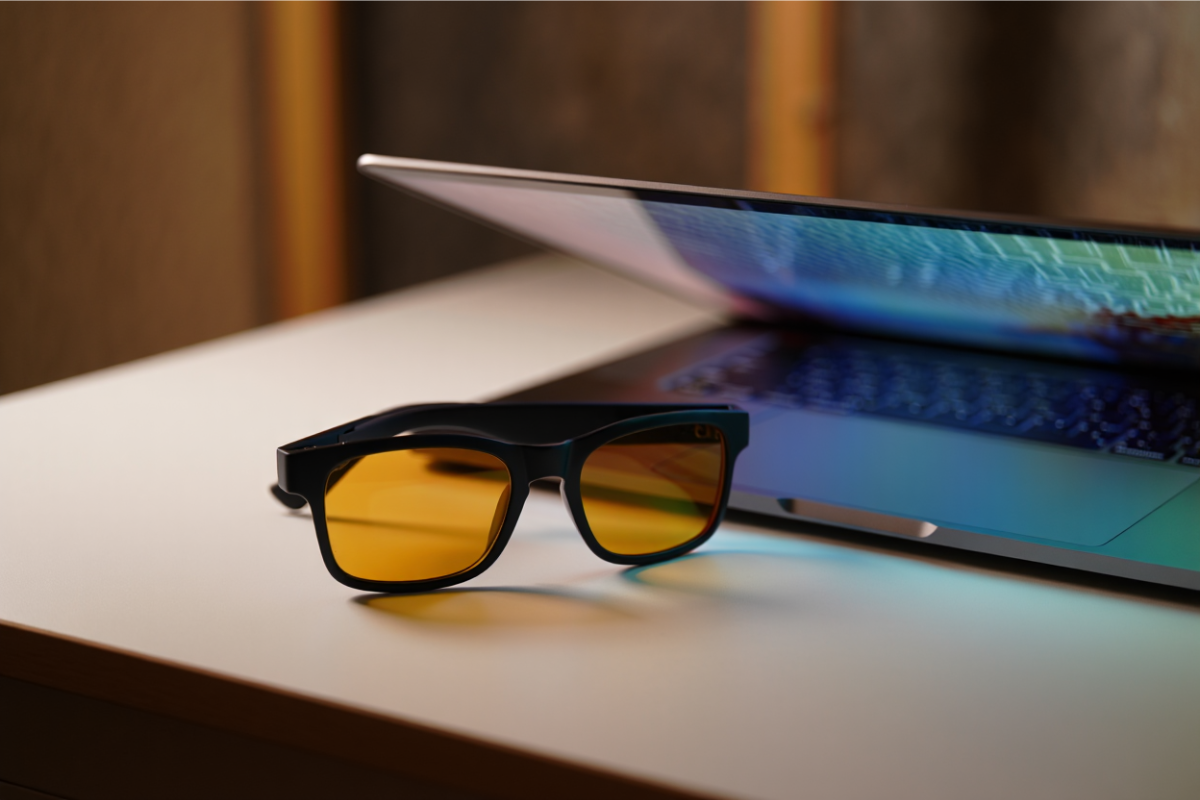
Blue light blocking glasses on a desk near a laptop and notebook.
How Blue Light Glasses Work
Blue light glasses use tinted or coated lenses to reduce the amount of short-wavelength (blue) light reaching your eyes. Some have a slight yellow or amber tint (filtering out up to ~35% of blue light), while others use clear coatings that block a portion of blue LED wavelengths. In practice, most filter only a fraction (10–25%) of blue light, which appears as a subtle yellowish cast when you look through them. Heavily tinted lenses (deep orange) block more blue light, but they also alter color perception significantly.
The idea is that by cutting blue light, these glasses reduce glare, increase contrast on screens, and lessen the triggering of the brain’s alert response. Blue light in the evening tells our brain “it’s daytime” by suppressing melatonin Blocking that light (especially in the 460–480 nm range) is believed to keep melatonin levels higher, mimicking the effect of dim light. At a minimum, they may take the edge off harsh fluorescent or LED screen light. Combined with shorter screen time and breaks, the glasses can give your eyes a rest.
It’s worth noting the limits: typical blue-light glasses do not block all blue light – natural daylight (which is much brighter than our screens) still dominates how much blue light reaches your eyes. A Cochrane review pointed out that screens emit about 1/1000th the blue light of daylight. In other words, wearing blue blockers indoors at night is like slightly dimming the sun. So they’re not a magic cure, but rather one part of an “up to you” strategy: use them, adjust your screen brightness and habits, and see if you personally feel better. Many eye experts simply say it’s a low-cost experiment worth trying, especially since no harm is expected
Blue Light Glasses for Computer Use
If you work at a computer all day, blue light glasses for computer use can be helpful. Long hours at a desk often cause computer vision syndrome: dry eyes, blurred distance vision, headaches and neck stiffness. In one study of IT professionals, 82% reported computer-related vision problems (headaches 81%, burning eyes 76%, blurred vision 70%). Another survey found nearly 90% of contact-lens wearers who use screens reported frequent eye fatigue These figures show how widespread digital eye strain is.
Blue-blocking computer glasses aim to alleviate this. By filtering part of the screen’s blue light and cutting reflections (especially if they have anti-reflective coating), they make screen time more comfortable. Many models are essentially like reading glasses or sunglasses, so you can wear them all day. They don’t replace good ergonomics (proper monitor distance, 20-20-20 rule, correct lighting), but they can complement it. In fact, a review on digital eye strain recommends blue-light filtering lenses with anti-reflective coating as one measure to ease computer-related symptoms.
For everyday office use, look for lightweight frames (to avoid pressure on nose/ears) with clear or mildly tinted lenses. Some users prefer no tint at all (just a coating), so their perception of colors isn’t altered. Others find a slight yellow lens helps reduce glare more. Brands like Prospek, Felix Gray and Gunnar offer multiple styles (some sized like regular reading glasses). Gunnar’s classic “Intercept” and “Optiks” lines, for example, come in both clear and amber tints with an anti-glare finish. Whichever you choose, consider pairing them with digital eye care habits: 20-20-20 breaks (every 20 minutes, look 20 feet away for 20 seconds) and ensuring your workstation is well lit.
In summary, blue light glasses for computer use are an accessory to reduce fatigue during long screen sessions. They may slightly improve visual comfort and reduce after-hours eye irritation. They won’t fix underlying vision issues (like uncorrected nearsightedness), but they can be a useful layer of protection in a high-screen workday
Blue Light Glasses for Gaming
Blue light glasses for gaming have grown in popularity among gamers and streamers. Extended gaming exposes your eyes to intense screen light and often distorted contrasts, which can accelerate eye fatigue. Gamers typically blink less and stare more intensely at fast-moving images. Specialized gaming glasses (sometimes called “e-sports glasses”) often have a slight amber tint and are designed to reduce pixel flicker and glare from monitors. Companies like Gunnar and Razer offer gamer-targeted models with wider coverage and interchangeable lenses.
The potential benefits for gamers include: improved focus during long play (your eyes aren’t working as hard against glare), reduced computer vision symptoms (dry eyes, red eyes, headaches), and possibly better sleep if playing late. Many gamers report that blue-blockers allow them to game longer without discomfort. In fact, a marketing study by a blue-light brand lists “better focus,” “less glare,” and “reduced eye strain and fatigue” as key benefits for gamers. (We won’t cite that industry blog, but it echoes common claims.)
Note that top gamers still emphasize moderation: breaks and good lighting are crucial. However, brands like Gunnar have become staples in the gaming community, partnering with franchises like Assassin’s Creed and Fallout. These frames are designed to look like gaming gear but filter blue light. Similarly, even general blue-blockers work for gaming – the effect is mostly about eye comfort. If you play competitively or late into the night, trying a pair during your next marathon session could help reduce that midday eye ache and make your eyes feel fresher afterward. Just remember to remove them if you’re doing color-sensitive tasks (the amber lenses do tint everything slightly).
Blue Light Glasses for Sleep
One of the main claims of blue-blocking glasses is better sleep. Blue light glasses for sleep are typically worn in the 1-2 hours before bedtime, when we often scroll on phones or watch TV. By reducing blue wavelengths that powerfully suppress melatonin, these glasses can make the brain think it’s later in the evening (and boost the sleep hormone). Users who follow this routine report falling asleep faster and feeling more rested.
Research is mixed, but some studies do show small improvements. For example, one trial found people wearing amber-blue-blocking glasses in the evening fell asleep about 30 minutes faster on average. Other studies showed longer total sleep and better sleep quality. However, some similar experiments found no difference between real blue-blockers and placebo lenses. In practice, the effect likely depends on individual sensitivity and consistency of use.
Regardless, there’s good evidence blue light delays sleep. The Harvard experiment mentioned earlier showed blue light (6.5h) pushed sleep time back more than green light. And wearing blue-blockers made nighttime light as harmless as dim light Based on such findings, experts suggest nighttime users consider blue filters. For example, Harvard Health’s “Protect yourself from blue light” tips explicitly say: “If you work a night shift or use a lot of electronic devices at night, consider wearing blue-blocking glasses”.
If you suffer from insomnia or don’t naturally sleep well, a pair of blue-blocking glasses (or simply using your device’s night mode) can be part of a broader sleep-hygiene strategy. Combine them with dimming room lights, setting devices to “night mode” (amber filter), and avoiding bright screens 1-2 hours before bed. The glasses alone aren’t a cure-all, but they reduce one disruptive input to your circadian clock. Anecdotally, many night-shift nurses, doctors and gamers swear by them. And even if the objective benefit is small, trying them in the hours before sleep is essentially risk-free – the worst outcome is your vision gets a slight yellow tint!
Prescription Blue Light Glasses
If you normally need glasses (for nearsightedness, farsightedness, or reading), you can also get prescription blue light glasses. These are essentially your regular prescription lenses with an added blue-light filtering coating. Popular optical retailers (Warby Parker, LensCrafters, Zenni, etc.) and online sites (Felix Gray, LensDirect) offer clear prescription lenses that include the blue-block filter. This way, you don’t need to switch between regular and blue-blocking readers or contacts. Many office workers upgrade their daily specs to have the blue filter built-in.
Prescription blue-light lenses typically use a clear AR coating (no yellow tint) so everything looks normal. The filtering percentage is modest (since a very strong filter would distort vision), but it still cuts some high-energy blue light. For computer or gaming glasses, you might choose a mild yellow tint version. Just keep in mind that any lens added to block blue light can slightly affect color balance, so if color accuracy is critical (design work, photo editing), you may want to use them only when precision isn’t needed.
Advantages of prescription blue-blockers include: no need to carry extra glasses, the convenience of keeping blue-blocking on all day if desired, and the ability to get multi-purpose lenses (e.g. progressive bifocals with blue filter). The LensDirect Emory glasses are a good budget option: you can add a blue-light filter to any prescription cheaply. Felix Gray is another brand specializing in high-index clear lenses with blue tint. In short, prescription blue light glasses offer the same eye protection for people who cannot use off-the-shelf readers.
Blue Light Glasses for Men vs Women
There’s no functional difference between blue-blocking lenses marketed to men or women – the filter works the same. However, frame styles often differ. Men’s blue light glasses tend to have broader, more angular frames (wayfarer, rectangular or aviator shapes). Look for brands like Gunnar or Pixel that offer sturdy, oversized designs. Women’s blue light glasses often feature smaller or more decorative frames (cat-eye, round, or slim rectangular) and a wider color palette (rose gold, tortoise, etc.). Some companies explicitly label frames as “mens” or “womens”, while others sell unisex styles.
In general, shop for a frame that fits your face comfortably and suits your personal style. Key features for both genders include lightweight materials, spring hinges for comfort, and lenses rated to block a high percentage of blue light (often around 30% for tinted lenses). Since gaming and computer sessions are common to all, don’t worry if a frame isn’t in a specific “men’s” or “women’s” section – focus on fit and lens quality. For example, both men and women might like Gunnar’s “Griffin” or Felix Gray’s “Marathon” frames. Warby Parker’s Thurston and Beauford styles (one of their picks) are classic unisex shapes
In short: blue light blocking glasses for men and women work the same way – the choice is in style and fit. Be sure the pair you choose covers enough of the eye area (to minimize stray blue light from the sides) and feels comfortable over long periods.
Best Blue Light Glasses of 2025 – Our Picks
Our research and expert reviews suggest several top blue-light glasses for various needs in 2025. High-quality brands consistently earn praise:
-
Benicci Stylish Blue Light Glasses (Best Overall) – Praised by editors for their lightweight yet durable frame. These clear-lens glasses fit easily and feel almost indestructible, making them ideal for all-day office wear. They block blue light without distorting colors at all
-
Felix Gray Jemison (Best for Work) – A premium option with nearly invisible lenses. Reviewers wore them during Zoom meetings and noted no reflective glare at all. The Jemison model is very comfortable on the nose and has a slick anti-glare coating. If you need clear vision and comfort during long workdays, these are highly rated.
-
Gunnar Gaming Glasses (Best for Gamers) – Designed specifically for gamers, with options like amber-tinted and prescription lenses. Reviewers often say Gunnar’s build quality feels like normal glasses (not cheap plastic) and they come in fun designs (Marvel/Assassin’s Creed editions) They’re more expensive, but users “think they’re worth it” for extended play
-
Warby Parker Thurston (Most Versatile) – An all-around solid choice. Comes in multiple lens options (reading, computer “fatigue”, progressive), and can be prescription or non-prescription. Testers found them lightweight and effective – after a few days of use, “our eyes felt less tired than they usually do midweek.”
-
LensDirect Emory (Best Budget/Prescription) – Great if you want prescription glasses. They allow you to add blue-light filters to any Rx frames at a low cost. Reviewers noted they fit well and cut glare effectively.
-
Peepers Shine On (Best for Headaches) – These were favorites for headache relief. In testing, a user who often had headaches after screen time “no longer experienced headaches after just one day” of wearing them. The sturdy frame and snug fit keep them from sliding.
-
Caddis Miklos (Best for Reading) – If you need reading glasses, this bold, oversized frame is comfortable and heavy-duty. Testers said they left their eyes feeling “protected and strain-free” after a full day of work
These picks are supported by recent reviews. Notably, the Health.com editors’ top choices included Benicci and Felix Gray (as above) and Warby Parker’s anti-glare model. Tom’s Guide also lists Prospek (best bang for most people) and Gunnar among the best in 2025. When choosing the best blue light glasses, consider: lens clarity and tint, frame comfort, prescription needs, and price. Many brands offer trials or easy returns, so you can test a pair risk-free to see if it helps you.
FAQs
Q: Do blue light glasses really work?
A: The evidence is mixed. Rigorous studies (Cochrane review) have found no clear short-term advantage of blue-blocking lenses for eye strain or sleep. However, these glasses are generally safe to try. Many users feel they reduce glare and eye fatigue during screen use. The key is managing expectations: they’re one tool (alongside breaks and good lighting) that may improve comfort, especially for night-time use. In practice, if screens bother you, testing a pair is low-risk.
Q: Who should use blue light glasses?
A: They’re most useful for heavy screen users: office workers, gamers, students, and shift workers who use devices at night. If you frequently experience digital eye strain (burning, dryness, headache), or have trouble sleeping after evening screen use, blue-blockers might help. Even without definitive proof, many people wear them as a simple ergonomic aid. People with prescription glasses can get filters added to their lenses.
Q: Are blue light glasses bad for your eyes?
A: No harmful effects have been found. The Cochrane review noted that any side effects (like mild headache or minor discomfort) occurred equally with normal lenses. Essentially, wearing blue-light glasses is as safe as wearing regular glasses. The only “downside” is that very strong filters could alter color perception. But typical products filter modestly and do not distort vision noticeably.
Q: How much blue light do these glasses block?
A: It varies by product. Many clear-lens styles filter around 10–20% of blue light, while amber-tinted lenses can block 30–40% or more of the blue spectrum. Blue-light apps on devices can add to the effect. Remember: even with glasses, you’ll still get some blue light from screens. They’re meant to reduce, not eliminate, exposure.
Q: Which blue light glasses are the best?
A: There’s no one “best” pair for everyone. Top-rated models (mentioned above) come from Benicci, Felix Gray, Gunnar, Warby Parker and others. The right choice depends on your needs (style, prescription, tinted vs. clear). Look for reputable brands with good return policies so you can try them on at home. Check reviews for comfort, build quality, and how well they fit your face.
Conclusion
Blue light glasses have become a trendy accessory for anyone glued to screens. While high-quality studies are inconclusive, many users report genuine comfort from wearing them. In summary: if you struggle with midday eye strain, late-night alertness, or simply want extra comfort, a pair of blue-blocking glasses is worth a shot. Key benefits may include less glare, reduced eye fatigue, and (for night-time use) somewhat better sleep. They work for both men and women and come in all sorts of styles and price points. When shopping, focus on good lens clarity, a comfortable fit, and enough blue-block tint.
Remember: glasses are just one piece of digital wellness. Continue following screen-time best practices (regular breaks, proper lighting, screen filters) alongside any eyewear. If you do try a pair and like the feel, that’s a small victory—especially since there’s no downside. For more detailed info, you can read the Harvard article on blue light and its health effects, or see optometry guidelines on computer vision syndrome. Feel free to share this guide if it helped you, and let us know in the comments whether blue-light glasses made a difference in your day. Your feedback can help others navigate this growing trend!