
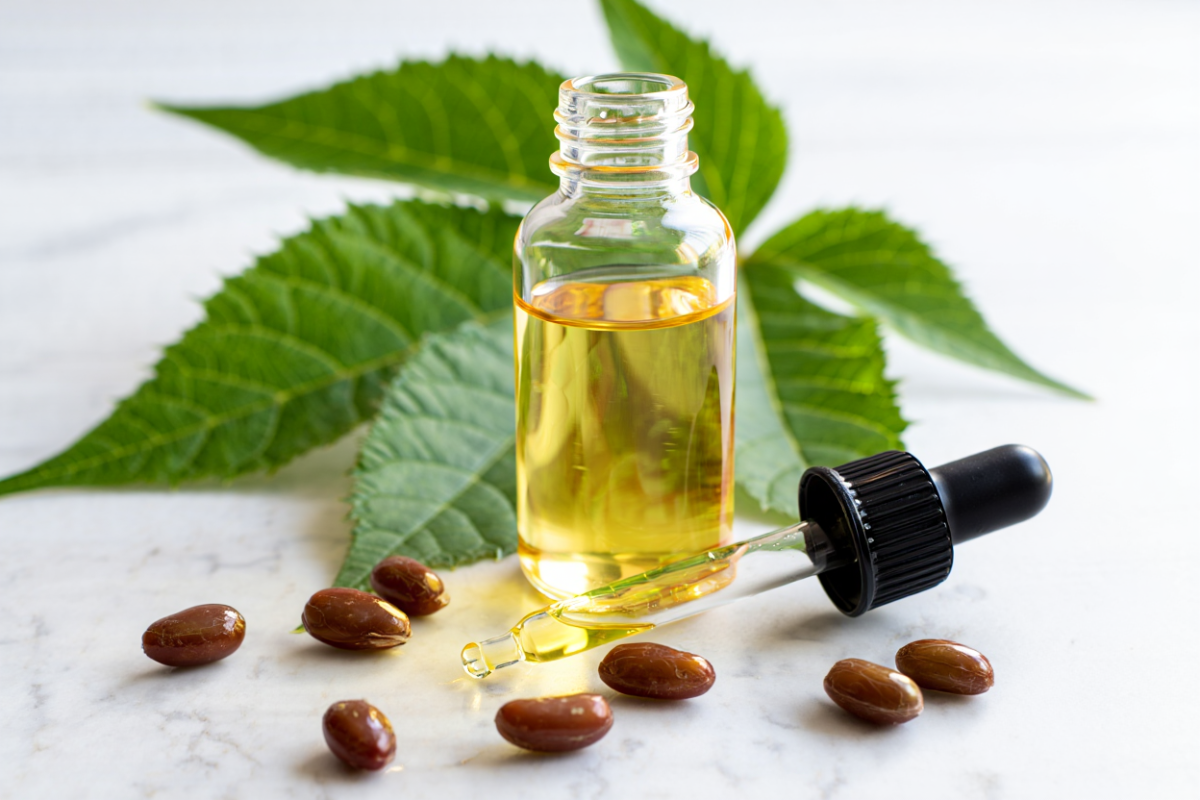
Castor oil, derived from the seeds of the Ricinus communis plant, has been used for centuries in traditional medicine and beauty rituals Rich in ricinoleic acid – a potent fatty acid – this thick oil offers natural moisturizing and anti-inflammatory effects. Research notes that castor oil’s main component, ricinoleic acid, deeply hydrates and protects the skin barrier. Today it’s widely touted for soothing dry skin, scalp conditions, and even as a topical treatment for minor aches
What Is Castor Oil?
Castor oil is a yellowish vegetable oil extracted from castor beans (the seeds of Ricinus communis). Unprocessed castor beans contain the toxin ricin, but during oil production the beans are heated, neutralizing the ricin and leaving behind a safe, non-toxic . Historically, ancient Egyptians and other cultures prized castor oil for many uses – from treating eye irritation to inducing labor Today it’s used in cosmetics (lotions, lip balms, shampoos) and home remedies because of its unique chemical profile.
Castor oil’s composition makes it especially suitable for skin and hair care. About 85–90% of castor oil is ricinoleic acid, a monounsaturated fatty acid known for anti-inflammatory and moisturizing effects. It also contains other fats (linoleic acid, oleic acid) and small amounts of vitamin E (gamma-tocotrienol), which contribute antioxidants. This combination gives castor oil its signature properties: it acts as a humectant (locking in moisture) and has mild antimicrobial and analgesic effects
Key Properties of Castor Oil
-
Anti-inflammatory: Ricinoleic acid helps reduce swelling and irritation. Studies note its inflammation-fighting effects, which support wound healing and ease joint pain
-
Antimicrobial: Castor oil can inhibit certain bacteria and fungi. Its anti-bacterial nature is why it’s often used on acne-prone skin
-
Deep Moisturizer: As a humectant, castor oil seals water into skin and hair. It reduces transepidermal water loss, making skin soft and plump
-
Antioxidant: Castor oil contains natural antioxidants that help neutralize free radicals, potentially slowing aging signs like fine lines
-
Analgesic: Topically, castor oil’s ricinoleic acid offers mild pain relief. In fact, clinical trials have found castor oil can alleviate arthritis pain comparable to an NSAID, but with fewer side effects
Skin Care Benefits of Castor Oil
Castor oil is celebrated for skin moisturization and repair. Its fatty acids form a breathable film on the skin that reduces moisture loss. Dermatologists note that castor oil can help soften dry skin and improve overall skin texture. It also soothes inflammation: studies show castor oil’s anti-inflammatory action can calm redness and swelling from conditions like acne or dermatitis
According to Healthline and MedicalNewsToday, castor oil may offer these skin benefits:
-
Fights Acne: With natural antibacterial and anti-inflammatory compounds, castor oil can help reduce pimples and prevent new breakouts It cleanses and hydrates skin gently, which may keep pores clear.
-
Reduces Wrinkles: Its antioxidants combat free radicals, helping slow the appearance of fine lines. Regular use may make mature skin look firmer and more elastic.
-
Hydrates Dryness: As a potent emollient, castor oil intensely moisturizes dry patches. It’s often recommended for relieving flaky or cracked skin (lips, heels, elbows) by locking in hydration
-
Soothes Irritations: Whether it’s a minor sunburn or windburn, the anti-inflammatory properties of castor oil can ease discomfort and reduce peeling. A single application can leave sunburned skin feeling cooler, much like aloe vera.
-
Scar and Wound Healing: Research suggests castor oil can aid wound healing by keeping tissue moist. One study showed castor oil–based formulations accelerated wound closure in rats. While it cannot erase old scars, a moisturized environment helps new skin heal with less scarring. (Note: A recent review concluded no scientific evidence that castor oil directly fades acne scar)
Castor Oil for Face: Dermatology experts note castor oil’s active ricinoleic acid helps manage acne and reduce pore inflammation. It can be used (diluted) as a gentle cleanser or night-time treatment. Healthline recommends mixing castor oil with a carrier oil (like coconut or almond) before applying to the face to avoid clogging pores Apply a thin layer on clean skin at night and rinse off in the morning – this may soften fine lines and fade blemishes over time. The American Academy of Dermatology even lists castor seed oil as a good ingredient for healing chapped lips, reflecting its broad skin-softening benefits.
Castor Oil for Skin (Key Takeaways):
-
Deep Hydration: Locks in moisture to prevent dryness and cracking
-
Acne Aid: Natural antiseptic that can help clear blemishes.
-
Soothing: Eases inflamed or sensitive skin (sunburn, rashes) with its anti-inflammatory fatty acids
-
Skin Repair: Supports skin barrier health; some evidence shows it speeds wound healing
-
Anti-Aging: Antioxidants fight wrinkle-forming free radicals.
-
Lip & Nail Care: Common in lip balms to treat chapped lips also used on cuticles and brittle nails for conditioning.
Hair and Scalp Benefits of Castor Oil
Castor oil is equally valued in hair care. Its moisturizing fatty acids nourish the scalp and hair follicles, often resulting in shinier, stronger hair. According to Verywell Health, many people use castor oil on the scalp to treat dryness and reduce dandruff. Because castor oil has antibacterial and antifungal properties, it may help eliminate the yeast that can cause flakes; soothing the scalp also prevents itchiness
Popular claims (though not all scientifically proven) include:
-
Scalp Health & Dandruff: Castor oil can moisturize a dry, irritated scalp and fight dandruff-causing fungi. Applying it before shampooing may relieve itch and flaking.
-
Hair Strength & Shine: When massaged into the hair shafts, castor oil’s humectant action smooths cuticles and reduces split ends. Many users report silkier, fuller-looking hair after regular castor oil treatments. Its omega-6 and vitamin E content also strengthen strands from root to tip
-
Hair Growth (Traditional Use): People have long believed castor oil boosts hair growth due to improved scalp circulation. In practice, it may not speed follicle growth, but by moisturizing and nourishing the scalp it creates a healthy environment for hair. (Notably, experts admit no scientific studies confirm accelerated growth.)
Applying Castor Oil to Hair
To use castor oil on hair, dilution is key. Pure castor oil is very thick, so it’s best mixed 1:2 with a lighter oil (coconut, jojoba or olive). Massaging a small amount into the scalp and hair roots can help distribution. Many people cover their hair with a shower cap or towel and leave the oil on for at least 15 minutes – often overnight – then shampoo well to remove residue. This weekly deep conditioning is said to strengthen strands and reduce breakage. (One DIY approach: warm 1–2 tablespoons of castor oil, apply to the scalp with fingertips, wrap the hair, and rinse out in the morning for maximum benefit.)
Castor Oil for Eyebrows and Eyelashes
Many beauty enthusiasts use castor oil to thicken eyebrows and eyelashes. The process is simple: at night, coat your eyebrows or lashes with a few drops of castor oil using a clean mascara wand or cotton swab. Gently brush the oil along the hairs, avoiding direct contact with your eyes; leave it on for several hours or overnight. In the morning, wash it off with a gentle cleanser. Repeat nightly.
According to Healthline, while no clinical trials prove dramatic brow/lash growth, castor oil is a low-risk way to potentially condition hairs. Its nourishing vitamins and fatty acids can strengthen follicles and prevent breakage. Many users report darker, fuller-looking brows/lashes after weeks of use (likely from prevention of fallout). Always patch-test first to rule out allergies, and discontinue if you experience irritation. Avoid getting oil in your eyes – if it happens, rinse with water immediately
Castor Oil for Hair Dandruff
Dandruff (flaky, itchy scalp) can improve with castor oil treatments. The oil’s moisturizing effect prevents excessive dryness, and its antifungal properties may help control the yeast (malassezia) often responsible for dandruff. To try this, massage diluted castor oil into the scalp and leave on for 20–30 minutes before rinsing. Repeat 1–2 times per week. Many people find their flaking is reduced and scalp feels less irritated. However, note that results vary: castor oil may help with mild dandruff, but severe cases might require medicated shampoos.
Health Benefits of Castor Oil
Beyond beauty, castor oil has notable health uses:
-
Natural Laxative (Constipation Relief): Castor oil is FDA-approved as a stimulant laxative. Taken orally (often a tablespoon or two mixed in juice), it triggers the intestines to contract and clear the bowel. Most people experience relief within 2–6 hours. It’s very effective, but also strong – common side effects include abdominal cramping or diarrhea. For this reason, it should be used sparingly and not for long-term constipation. (People often mix 15–30 mL of castor oil into warm milk or water to make it more palatable.) Pregnant women should avoid oral castor oil, as it can induce labor
-
Anti-Inflammatory Pain Relief: Castor oil’s ricinoleic acid doesn’t just hydrate – it also soothes inflammation and pain. In traditional medicine, castor oil packs (a cloth soaked in warm castor oil) are applied to achy joints or muscles to ease soreness. Scientific support exists: one clinical trial showed that oral castor oil relieved knee arthritis pain as effectively as an NSAID (diclofenac), with no adverse effects. Topically, a warm castor oil pack may reduce swelling and improve circulation in inflamed areas (some wellness practices also claim benefits for lymphatic health, though evidence is limited).
-
Skin and Mucous Membrane Healing: Castor oil is included in ointments for burns, ulcers, and wounds (e.g. the medical dressing Venelex) because it keeps tissue moist and clean. A lab study found castor oil could accelerate wound healing on rat skin. For minor skin injuries or cracked heels, applying castor oil can support the body’s natural repair process.
-
Other Traditional Uses: Though less evidence-backed, castor oil has been used (externally) for conditions like hemorrhoids or ear infections, due to its lubricating and mild antiseptic nature. Historically, it was even used to treat ringworm (fungal skin infection) by leveraging its antifungal components
How to Use Castor Oil Safely
-
Patch Test First: Always test castor oil on a small skin area (inner forearm) and wait 24 hours to check for any allergic reaction (redness, itching). If irritation occurs, discontinue use.
-
Dilute When Needed: For skin/hair, castor oil is often mixed with a carrier oil (coconut, jojoba, olive, etc.) in a 1:1 or 1:2 ratio. This makes it easier to spread and wash out.
-
Application Tips:
-
On Skin: After cleansing, apply a thin layer of castor oil (or oil blend) to the target area. For the face, apply at bedtime and either leave on for a few minutes or overnight, then wash off to prevent pore-clogging. Avoid delicate areas around the eyes unless using a specially formulated product.
-
On Scalp/Hair: Massage oil into the scalp with fingertips. Cover hair with a shower cap or towel to keep it warm and prevent dripping. Leave on for 30 minutes to overnight, then shampoo thoroughly. Using too much or too often can make hair greasy or even lead to tangling, so once or twice a week is usually sufficient
-
On Eyelashes/Eyebrows: Use a clean mascara wand or cotton swab to apply a tiny drop along the lash line or brow. Do this at night and rinse off in the morning Be careful to keep oil out of the eyes.
-
-
Quantity for Ingestion: Only take castor oil internally for constipation or other health reasons. Typical adult doses are 15–60 mL (1–4 tablespoons) at once, followed by plenty of fluids. Always follow package instructions or a doctor’s advice.
Precautions and Side Effects
Castor oil is generally safe for most people when used properly, but some precautions apply:
-
Skin Irritation: A few people may experience dermatitis or allergic reactions. Healthline notes that topical castor oil can irritate sensitive skin. Redness, itching or a rash means you should stop using it. Avoid applying castor oil on broken or inflamed skin (e.g., open wounds or active eczema patches) unless advised by a physician.
-
Eye Safety: Never apply castor oil directly into the eye. If it accidentally gets in your eye, flush thoroughly with water. Eye contact can cause severe irritation.
-
Ingestion Warnings: As an oral laxative, castor oil is powerful. Excessive doses can cause nausea, vomiting, cramps or electrolyte imbalance t should not be used in pregnancy (can induce labor or miscarriage). Avoid oral castor oil if you have abdominal pain of unknown cause, inflammatory bowel disease, or any intestinal blockage.
-
Hair Felting: Rarely, castor oil can cause “acute hair felting,” where hair strands mat together irreversibly. This happens when heavy oils are left in too long. To prevent this, avoid applying pure castor oil directly along the length of fine hair, and be sure to shampoo thoroughly.
-
Quality Matters: Always use cold-pressed, hexane-free castor oil labeled as cosmetic or food-grade. Avoid products with additives or synthetic fragrances which could irritate your skin. Store it properly in a cool, dark place and use within its shelf life (about 1 year after opening).
Frequently Asked Questions
Q: Can castor oil really help hair grow faster?
A: There’s a lot of anecdotal talk about “castor oil for hair growth,” but experts say solid scientific proof is lacking. Castor oil won’t magically speed up follicle activity. However, it does moisturize the scalp and hair, which can reduce breakage and create healthier-looking hair. In other words, it may help your hair appear thicker and feel stronger, even if it doesn’t increase the growth rate.
Q: Will castor oil get rid of dandruff?
A: Castor oil can help with dandruff in many cases. Its antifungal and antibacterial properties may target the scalp microbes that contribute to flaking It also soothes dry, itchy skin. Massaging diluted castor oil into the scalp can reduce flaking over time. That said, severe dandruff or dermatitis may require medicated treatments. Castor oil is a gentle home remedy for mild cases, not a guaranteed cure.
Q: Does castor oil fade acne scars?
A: Unfortunately, no reliable evidence shows that castor oil can fade old acne scars While castor oil’s moisturizing and healing effects may improve overall skin health, it doesn’t erase scar tissue. Keeping skin hydrated can help any wound heal with less discoloration, but studies specifically on acne scars report no conclusive benefit from castor . However, castor oil can help with acne itself (see below).
Q: How should I use castor oil for eyelashes and eyebrows?
A: Apply a tiny amount of pure castor oil to your lashes/brows at night. Use a clean brush (mascara wand or spoolie) and lightly coat the hairs – avoid getting it in your eyes. Leave it on for several hours or overnight and wash it off in the morning. Do a patch test first (e.g. inner arm) to check for allergy. Some people do see thicker, more lustrous lashes or brows over weeks of nightly use. Just remember: results are individual and not scientifically guaranteed.
Q: Is castor oil effective for constipation?
A: Yes, castor oil is a well-known stimulant laxative. It’s approved by the FDA for occasional constipation relief. Taken orally (for adults, typically 1–4 tablespoons), it usually produces a bowel movement within a few hours. It works by speeding up gut motility. However, it’s strong: cramps, nausea or diarrhea are common side effects. Use it sparingly and as a one-time remedy; long-term use can disrupt normal digestion. Always follow dosage instructions on the package. Pregnant women should not use it, since it can trigger labor
Q: Can castor oil help relieve joint pain?
A: Castor oil’s anti-inflammatory action (thanks to ricinoleic acid) can relieve pain and swelling in joints. Many people report that warm castor oil packs on arthritic knees or sore muscles bring relief. Scientifically, one randomized trial found oral castor oil as effective as the pain reliever diclofenac for knee arthritis, with fewer side effects. For minor aches, applying castor oil topically (massaged in or with a warm compress) may ease discomfort. Of course, chronic joint issues should be evaluated by a doctor, but castor oil is a low-risk option to try.
Q: Is castor oil good to use on your face?
A: Castor oil can be beneficial for facial skin if used correctly. Its fatty acids and ricinoleic acid can help manage acne by reducing inflammation and bacteria. It’s also very hydrating, which can soften fine lines. However, because it’s thick, it’s usually mixed into formulas or with lighter oils for facial use. Dermatologists note that castor oil is safe in cosmetic products, but there’s limited research on applying raw castor oil directly to the face. If you try it, use it sparingly (perhaps 1–2 drops mixed with another oil), and always wash it off. Monitor your skin for any signs of irritation.
Q: What are the overall benefits of castor oil for health?
A: Beyond beauty, castor oil offers several health perks. It’s a powerful laxative (for occasional use). It has immune-modulating effects in theory, though human studies are limited. When applied to the skin, it can improve wound healing and soothe inflamed tissues Some holistic practitioners use castor oil packs for digestive health or to support lymphatic detox, but evidence there is anecdotal. In short, its most well-documented health benefit is constipation relief; other uses (like joint pain relief) are promising but should complement, not replace, medical advice.
Q: Any precautions I should know?
A: Yes. Castor oil is generally safe, but patch-test any new use to check for skin sensitivity. Keep it away from the eyes. Ingest only in recommended doses (and not during pregnancy). Don’t use it as a daily laxative, since overuse can harm gut function. Also be mindful: very long hair left saturated with castor oil may tangle or matt (a rare condition called acute felting). Using moderate amounts and washing thoroughly usually prevents that. Finally, because it can stain fabrics, cover bedding/clothing after use.
Castor oil remains one of the most versatile natural oils for beauty and wellness. Its rich ricinoleic acid content underlies the many benefits seen in skin, hair, and even joint treatments. While not every claim is backed by science (for example, dramatic hair regrowth or scar fading are not proven) its low cost and multifaceted properties make it worth trying. For skin and hair care, castor oil offers genuine moisturizing and antimicrobial effects; for health, it reliably relieves constipation and may reduce inflammation. Just use it wisely – dilute when needed, do a patch test, and enjoy the natural boost it can give to your beauty routine.