
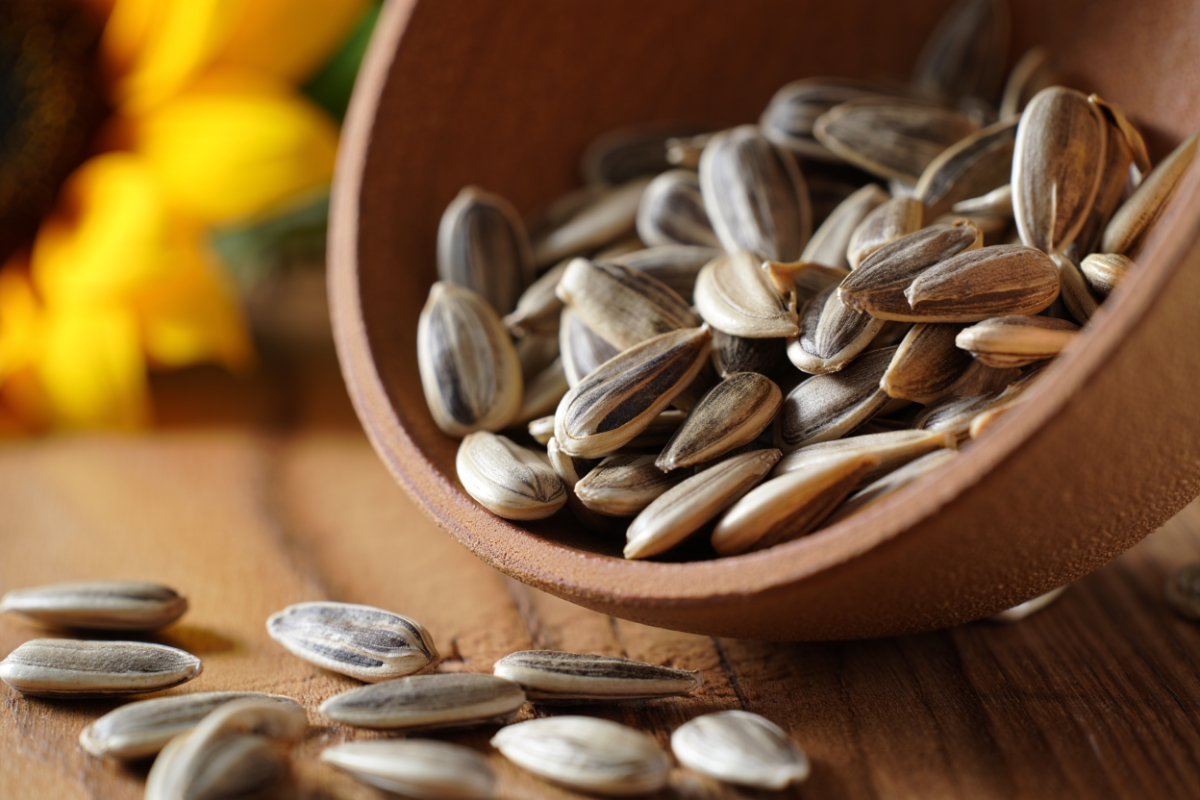
Sunflower seeds are a popular, crunchy snack known for their nutty flavor and impressive nutrition. Just a handful provides a mix of healthy fats, protein and fiber, making them a satisfying treat. In addition to being tasty, sunflower seeds are packed with zinc, a mineral important for immune function, wound healing and skin health. In this article we’ll explore sunflower seeds nutrition, health benefits (for heart, skin, hair and weight loss), how to enjoy them in recipes, and even some precautions (side effects). By the end, you’ll see why these tiny seeds are considered a nutritional powerhouse.
Image: Roasted salted sunflower seeds in a white bowl.
Nutritional Profile of Sunflower Seeds
Sunflower seeds are truly “power-packed” with nutrients. Per 1 ounce (about 28 grams, or 1/4 cup) of hulled, dry-roasted seeds, the nutrition includes roughly 165 calories, 14 g total fat, 5.5 g protein and 3.2 g fiber. They contain a wealth of vitamins and minerals: vitamin E (49% DV per ounce), B vitamins (niacin, B6, folate), and minerals like magnesium, zinc (14% DV per ounce), copper, manganese and selenium. For example, 100 g of sunflower seeds provides about 5 mg zinc (≈50% DV), 325 mg magnesium (≈77% DV), and a whopping 53 µg selenium (96% DV). Copper is particularly high (about 1.8 mg, 200% DV). In short, these seeds deliver healthy fats (mostly unsaturated), fiber, plant protein and important antioxidants.
Key nutrients in sunflower seeds include:
-
Healthy fats: Sunflower seeds contain ~51 g fat per 100 g, including heart-healthy polyunsaturated and monounsaturated fats. These fats (like linoleic acid) help control cholesterol and support heart health.
-
Protein: They provide about 5–6 g protein per ounce (≈21 g per 100 g). This makes them a good plant-based protein source, especially for vegetarians.
-
Fiber: With ~3 g fiber per ounce, they aid digestion and promote fullness.
-
Vitamins/Minerals: High in vitamin E (an antioxidant), B vitamins (niacin, B6, folate) and minerals such as zinc, magnesium, copper, phosphorus and selenium. These nutrients support everything from metabolism to skin repair.
Sunflower seeds are also rich in plant compounds like phenolic acids and flavonoids (antioxidants). Together, their mix of nutrients makes sunflower seeds a nutritious and satisfying snack that can boost your diet in many ways.
Health Benefits of Sunflower Seeds
Sunflower seeds offer a variety of health perks. Research and nutrition experts highlight their benefits for heart health, anti-inflammation, and more In general, adding these seeds to your diet can help:
-
Reduce Inflammation: Sunflower seeds contain vitamin E and phenolic compounds that act as antioxidants. These fight free radicals and lower inflammatory markers like C-reactive protein. In fact, a large study found people who ate seeds (including sunflower seeds) ≥5 times/week had 32% lower C-reactive protein than non-seed-eaters. Vitamin E and flavonoids in sunflower seeds help protect cells and reduce chronic inflammation
-
Support Heart Health: The unsaturated fats in sunflower seeds help lower “bad” LDL cholesterol and raise “good” HDL cholesterol. Magnesium and potassium in the seeds help regulate blood pressure. Vitamin E and other antioxidants protect blood vessels from oxidative stress. Some studies also link sunflower seed consumption to reduced LDL and triglycerides. For example, women with type 2 diabetes who ate ~1 oz daily had a drop in LDL and total cholesterol. Overall, dietitians agree sunflower seeds are heart-healthy due to these benefits.
-
Promote Skin Health: Sunflower seeds’ high vitamin E content (one of the richest sources) helps protect skin cells from UV damage and aging. Vitamin E also supports collagen formation and skin hydration. In addition, the zinc and selenium in sunflower seeds aid skin repair and fighting inflammation Zinc, for instance, is crucial for collagen synthesis and can improve acne and wound healing. Many nutritionists note that regular consumption of vitamin E and zinc–rich foods like sunflower seeds can lead to clearer, healthier skin and a natural “glow”.
-
Support Hair Growth and Strength: Several nutrients in sunflower seeds nourish hair follicles. Vitamin B6 and zinc keep hair follicles healthy, while the protein and iron help strengthen hair strands. Vitamin E also improves circulation to the scalp, which can aid hair growth and prevent dryness. In short, sunflower seeds deliver the building blocks (protein, iron) and cofactors (zinc, B vitamins, E) needed for strong, vibrant hair
-
Boost Immunity: Sunflower seeds are rich in immunity-boosting minerals like zinc and selenium. Zinc is known to support white blood cell production and immune response while selenium is crucial for thyroid and immune health. Vitamin E further strengthens defense by neutralizing free radicals. Together, these nutrients help the immune system function optimally, especially during stress or illness Aid Digestion and Weight Management: The fiber and protein in sunflower seeds promote satiety, helping control appetite. Despite being calorie-dense, a small portion goes a long way: the healthy fats and fiber slow digestion, stabilizing blood sugar and reducing cravings. This makes sunflower seeds a smart addition to weight-loss or maintenance diets when eaten in moderation. One nutritionist notes that the combination of protein, fat and fiber can make people feel full longer, helping prevent overeating
-
Other Potential Benefits: Emerging research also links sunflower seeds to specific benefits like supporting thyroid function (due to selenium) and even fighting cancer. For example, sunflower seeds are a top source of vitamin E, and studies show high dietary vitamin E may lower cancer risk. Dietitians point out that sunflower seeds are among the best food sources of vitamin E, with one cup (in-shell) providing over 100% of the daily value
In summary, these tiny seeds have an outsized impact: their mix of healthy fats, fiber, protein, vitamins and minerals helps protect heart, brain and skin health, among other benefits.
Sunflower Seeds for Weight Loss
Sunflower seeds and weight loss are often linked because seeds can be part of a weight-control diet. Though they are high in calories (~584 kcal per 100 g), their protein, fiber and healthy fats make them very satisfying. Eating a moderate amount can curb hunger pangs and stabilize blood sugar. For example, including sunflower seeds in snacks or meals may help you stay full longer and avoid unhealthy cravings. One study even found that adding sunflower seed flour to bread helped obese participants lower their weight and cholesterol after 4 months.
To use them for weight management, portion control is key. Stick to about 1–2 tablespoons of seeds as a snack or mixed into meals. Choose unsalted or lightly-salted nuts and seeds to avoid extra sodium. Overall, sunflower seeds can support weight loss as part of a balanced diet, thanks to their fiber and protein content
Sunflower Seeds vs Pumpkin Seeds: Which Is Healthier?
Sunflower seeds and pumpkin seeds (pepitas) are both nutrient-dense, but they have different strengths. Nutrition experts note that both seeds offer healthy fats and minerals, but comparisons show:
-
Fiber: Sunflower seeds win on fiber. They contain about 11.1 g fiber per 100 g, versus ~6.5 g in pumpkin seeds. If boosting fiber intake is your goal, sunflower seeds pack more per bite.
-
Protein: Pumpkin seeds have more protein. They provide ~29.8 g protein per 100 g, compared to ~19.3 g for sunflower seeds. So for plant protein, pumpkin seeds hold the edge.
-
Magnesium: Pumpkin seeds far exceed here – around 550 mg per 100 g vs ~129 mg in sunflower seeds. Magnesium supports nerves, bones and heart health, so pumpkin seeds are one of the richest dietary sources.
-
Vitamins/Minerals: Sunflower seeds are higher in vitamin E and selenium, while pumpkin seeds have more iron and potassium. For example, sunflower seeds deliver more zinc and vitamin E, which promote skin and immune health. Pumpkin seeds are often higher in zinc too (7–10 mg per 100g) and have a bit more iron and magnesium.
Bottom line: Both are healthy choices. If you need more fiber or vitamin E, lean on sunflower seeds. If you need extra protein and magnesium, pumpkin seeds shine. Many experts suggest mixing both in your diet to get the “unique benefits” of each. Sprinkle sunflower seeds on salads, add pumpkin seeds to trail mix, or rotate them daily. Either way, you’ll enjoy crunch and nutrition.
Delicious Sunflower Seeds Recipes and Uses
Sunflower seeds are very versatile in the kitchen. Here are some tasty ways to enjoy them:
-
Homemade Pesto: Swap pine nuts for sunflower seeds in pesto. Blend ¼ cup sunflower seeds with basil, garlic, olive oil and Parmesan for a nut-free green sauce.
-
Seed Butter: Grind roasted sunflower seeds into a smooth butter (like peanut butter). It’s a great sandwich spread or dip for fruits.
-
Baked Goods: Stir seeds into bread doughs, muffins or oatmeal cookies for texture and nutrition. They add a nutty crunch to baked treats.
-
Salads & Grain Bowls: Sprinkle a handful over salads, sautéed veggies or grain bowls (quinoa, rice). They boost protein and crunch without overpowering flavor.
-
Snacks & Trail Mix: Mix sunflower seeds with nuts, dried fruit and a few dark chocolate chips for an energizing trail mix. You can roast them with spices (paprika, garlic powder) for a savory snack.
-
Smoothie Topper: Use them as a topping for smoothie bowls or yogurt parfaits. They add extra fiber and healthy fat.
-
Sunflower Seed Milk: Blend soaked sunflower seeds with water, then strain, to make dairy-free milk high in nutrients.
-
Sunflower Seed Tacos or Crumbles: Pulse seeds in a food processor to make a taco meat substitute or seasoned vegan “crumbles.”
These ideas show that sunflower seeds recipes are easy and diverse. Feel free to get creative by adding seeds to soups, rice pilafs or cookies. They can replace nuts in many dishes and provide a gluten-free crunch.
Sunflower Seeds: Nutrition Facts & Calories
As noted, sunflower seeds are fairly calorie-dense due to their healthy oils. On average:
-
Calories: ~584 kcal per 100 g (≈165 kcal per ounce/¼ cup). So a small handful (~1 oz) is about 165 calories.
-
Fat: About 51 g fat per 100 , primarily unsaturated.
-
Protein: ≈21 g per 100 g.
-
Fiber: ≈9 g per 100 g
-
Carbs: ~20 g per 100 g (net carbs ≈11 g after fiber).
-
Vitamins/Minerals: High in vitamin E (≈35–50 mg per 100 g, >100% DV), magnesium (325 mg, 77% DV), phosphorus (660 mg, 94% DV), copper (200% DV) and selenium (96% DV).
Because of the fat content, sunflower seeds keep you full but should be eaten in moderation. A typical serving is 1–2 tablespoons (about 10–20g). Check nutrition labels if you buy pre-roasted or flavored seeds: many are salted or coated in oil, which adds sodium and calories. Always read the label (look for low-sodium or unsalted versions) to manage calorie and salt intake.
Potential Side Effects of Sunflower Seeds
While sunflower seeds are healthy, there are a few things to watch out for:
-
Calories and Sodium: They are high in calories so overeating can contribute to excess calorie intake. Also, many snack sunflower seeds (especially in-shell varieties) are heavily salted. This can lead to high sodium intake if you’re not careful. Choose unsalted or lightly salted seeds when possible.
-
Digestive Issues: Eating a large amount of high-fiber seeds suddenly can cause bloating, gas or diarrhea. In rare cases, ingesting lots of sunflower seeds (especially with shells) has caused stool impaction. Always chew thoroughly and avoid eating too many in one sitting.
-
Allergies: Sunflower seed allergies are uncommon but possible. Symptoms can include mouth/throat irritation, skin rash, or even severe reactions like anaphylaxis. If you have pollen or seed allergies, be cautious and consult a doctor if you suspect a reaction.
-
Heavy Metals: Sunflowers can absorb cadmium from soil. Though normal consumption is safe, chronic heavy intake of seeds could raise cadmium levels. Eating moderate portions (e.g. a small handful daily) is advised.
-
Phytic Acid: Like many seeds, sunflower seeds contain phytic acid, which can bind minerals and reduce their absorption. This is only an issue if sunflower seeds are your only source of minerals. Eating a varied diet mitigates this effect.
In general, the risks are minimal if you eat sunflower seeds in moderation as part of a balanced diet. Choose fresh, properly stored seeds to avoid rancidity (store them in the fridge after opening). Remember to drink water and eat other nutrient-rich foods to balance out the diet.
FAQs about Sunflower Seeds
Q: Are sunflower seeds good for weight loss?
A: Yes, in moderation. Sunflower seeds provide protein, fiber and healthy fats that promote fullness. This can help control appetite. However, they are calorie-dense (~584 kcal/100g), so keep portions small (1–2 Tbsp). As part of a balanced diet, their nutrients support metabolism and satiety, aiding weight management.
Q: Can sunflower seeds improve hair and skin?
A: They can help. Sunflower seeds are rich in nutrients essential for hair and skin health. Vitamin E and zinc promote collagen and cell repair, benefiting skin elasticity and glow. For hair, B6 and zinc support hair follicles, and the protein/iron strengthen strands. Eating them as part of a healthy diet may improve hair thickness and skin quality over time.
Q: How many calories are in sunflower seeds?
A: About 165 calories per 1-ounce (28 g) serving of hulled, dry-roasted sunflower seeds. Per 100 g it’s around 584 calories. Since they are high in fat, it’s easy to consume many calories quickly. Measure out servings to avoid overeating.
Q: Are sunflower seeds healthy compared to pumpkin seeds?
A: Both are nutritious. Sunflower seeds have more fiber and vitamin E, while pumpkin seeds have more protein and magnesium. Each seed has unique strengths, so it’s best to eat both. Variety ensures you get the full range of minerals (zinc, magnesium, selenium etc.) and nutrients
Q: What are the side effects of eating sunflower seeds?
A: The main concerns are overeating, sodium and allergies. They’re high in calories and often salted which can affect weight and blood pressure if eaten in excess. Rarely, people have allergic reactions to sunflower seeds Chew them well to avoid digestive blockages. In general, enjoy them in moderation.
Conclusion
Sunflower seeds are a crunchy snack packed with zinc and many other nutrients. As shown above, they boast healthy fats, protein, fiber and antioxidants that support heart, skin, hair and immune health. With about 165 calories per ounce, a small handful can deliver significant nutrition. Whether you eat them raw, roasted, or in a recipe (like pesto or baked goods), sunflower seeds are versatile and satisfying.
Remember to enjoy them in moderation to manage calories and sodium. Look for unsalted varieties and balance your diet with fruits, vegetables and whole grains. Above all, incorporate sunflower seeds into meals or snacks in ways you enjoy – sprinkle them on salads, stir them into yogurt or blend them into a smoothie.
Share this article if you found it useful, and leave a comment below with your favorite sunflower seed recipe or snack idea! Let us know how you like to enjoy these crunchy, zinc-rich seeds.